News
Why The Blood of Dawnwalker Compares Its Swordplay to Guitar Hero
Rebel Wolves reveals how Guitar Hero and Max Payne inspired the directional swordplay and fluid combat flow in their upcoming vampire RPG.
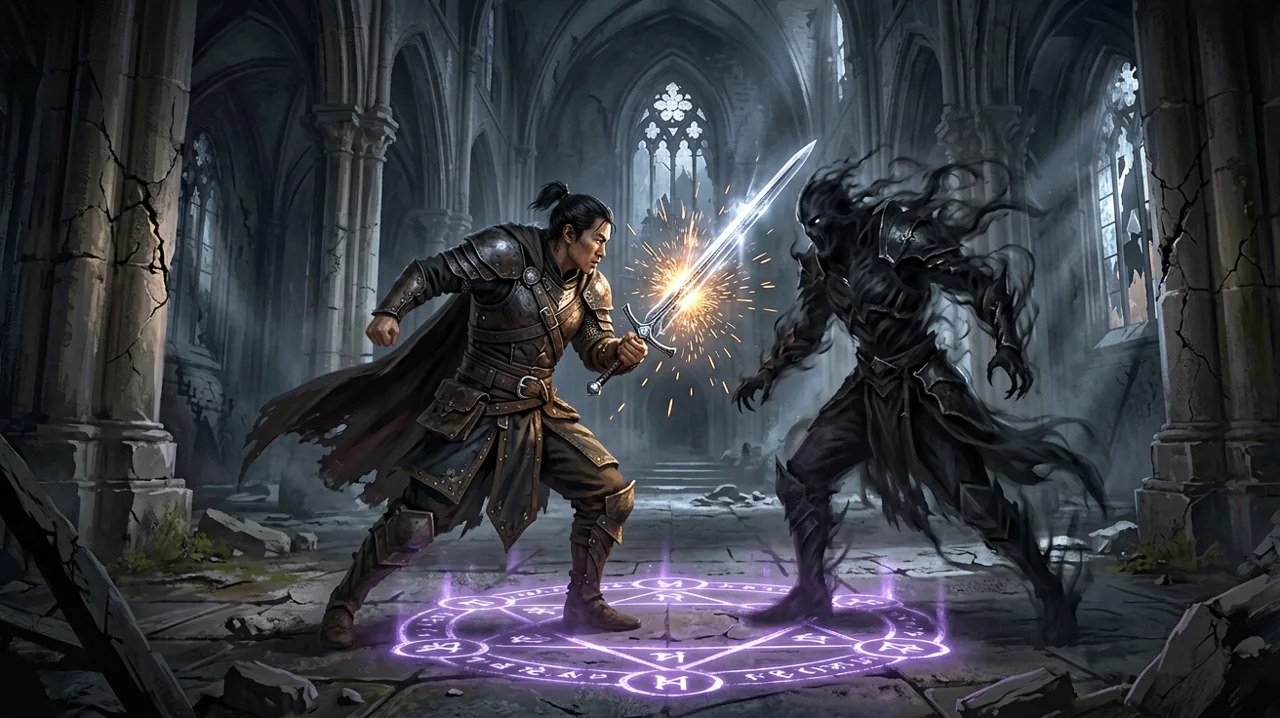
Rebel Wolves is charting a distinct path for their debut RPG, The Blood of Dawnwalker. While the studio’s lineage naturally invites comparisons to dark fantasy giants, their actual design philosophy looks beyond the standard role-playing template. In recent developer discussions, the combat directors pointed to two surprising classic games as major creative touchstones: Guitar Hero and Max Payne.
Rather than adopting a traditional hack-and-slash model, the team focuses heavily on directional action and rhythmic execution to redefine how swordplay feels in a dark fantasy setting.
The Rhythm of the Blade
The comparison to Guitar Hero is not about matching color-coded prompts on a highway, but about capturing a strict sense of timing and cadence. Many modern action RPGs suffer from button-mashing, where players execute attacks regardless of enemy placement or animation frames. Rebel Wolves hopes to challenge this by introducing a combat flow that requires players to read the battlefield and strike on specific beats.
Every swing, parry, and counter-strike demands deliberate timing. Players must sync their inputs with the animation of their opponent, making defense and offense feel like a tense, responsive duet. This emphasis on rhythm is meant to elevate the basic act of swinging a sword from passive input into an active, engaging mechanic.
Bullet Time and Fluid Directional Attacks
Integrating Max Payne as an inspiration points toward combat fluidity and the manipulation of focus. In The Blood of Dawnwalker, players control a protagonist who can harness both human agility and supernatural vampire abilities. The developer notes suggest that players might utilize a slow-motion or heightened focus state during battles to manage multiple threats.
This ties directly into the game’s directional combat. The team wanted a system where players have absolute authority over the angle and trajectory of their strikes. Instead of relying on locked-on animations that execute automatically, players must guide their blades manually. This level of control, combined with potential time-slowing capabilities, allows for precise strikes against weak points in armor or swift defensive dodges.
This approach builds on ideas discussed in previous previews, where the team explained the role of directional mechanics and how they are utilizing expertise from The Witcher 3’s sword master to polish the swordplay.
Balancing Weight and Immersion
Ultimately, Rebel Wolves is prioritizing immersion. Directional combat can often feel clunky if the animations lack weight, but the developers assert that the goal is to make the player feel the impact of every steel-on-steel collision. By blending the rhythm of action games with the tactical positioning of classic shooter focus mechanics, The Blood of Dawnwalker attempts to solve the repetitive nature of late-game RPG combat.
With Steam wishlists officially crossing the two-million mark, anticipation is high. Whether this combination of rhythm and directional precision will deliver on its promises remains to be seen when the game launches on September 3, 2026.