News
The Blood of Dawnwalker Story Guide: Coen's Visions, The Arbiters, and Hidden Lore
Explore the unresolved mysteries of Vale Sangora, from Coen's cryptic visions and Skender's cruelty to Witcher Easter eggs and handheld performance reports.
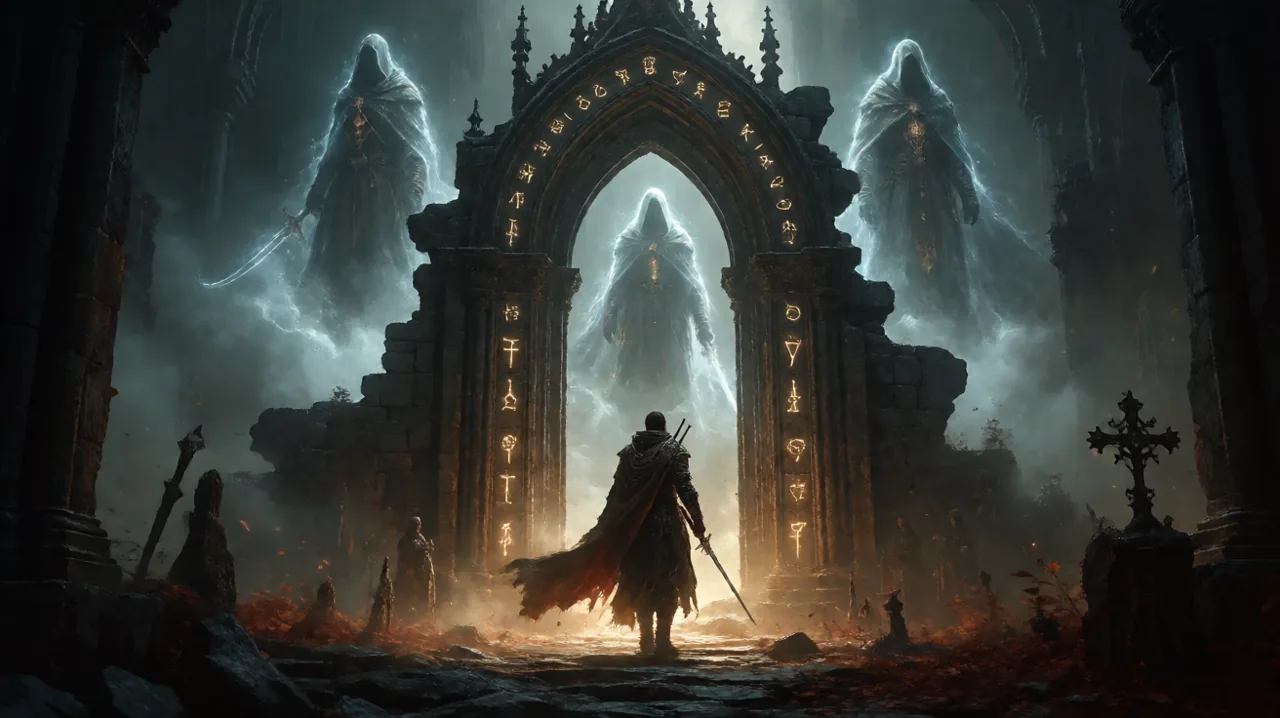
Almost a month after the highly anticipated release of The Blood of Dawnwalker, the dust has settled on the primary narrative, but the community is still untangling the dense web of lore hidden beneath the surface of Vale Sangora. The game’s strict 30-day time limit forces players to make brutal, split-second decisions, often leaving entire questlines and character arcs entirely unexplored on a first playthrough. This relentless pacing means that many of the deeper mysteries are only now coming to light as players embark on their second or third runs, aggressively scouring the map for missed details before the timer runs out. Interestingly, this rigid time constraint has found high-profile support within the industry; recently, the publisher behind Baldur’s Gate 3 publicly defended Dawnwalker’s controversial timer. They argued that such mechanics create genuine stakes and prevent the open world from feeling like a static theme park waiting for the player to act. With the pressure of the ticking clock validated by RPG veterans, the focus of the community has shifted entirely to documenting the secrets that this clock forced players to leave behind.
The Cruelty of Men: Skender and Catalin
When discussing the antagonists of The Blood of Dawnwalker, attention naturally gravitates toward the terrifying Vrakhiri and the formidable Vampire Lords. However, some of the most chilling lore uncovered by the community centers entirely on human cruelty, specifically the dark legacy of Skender and his heir, Catalin. Skender was a human tyrant who ruled his valley long before Coen’s arrival, maintaining control through an iron fist and extreme, ruthless pragmatism. As community members and lore hunters have documented, during a severe plague outbreak, Skender bypassed any attempt at quarantine, treatment, or diplomacy, simply ordering the immediate execution of anyone showing the slightest symptoms. The environmental storytelling in the northern reaches of Vale Sangora reflects this grim history perfectly, with unmarked mass graves and abandoned, burned-out quarantine zones serving as a permanent testament to his reign.
Yet, Skender’s tyranny is somehow overshadowed by the actions of his son, Catalin. While Skender’s atrocities were rooted in a twisted sense of survival and order, Catalin is driven by sheer malice and petty sadism. Reports and lore fragments found scattered throughout the mid-game describe Catalin torturing his own subjects not for the preservation of his rule, but purely for personal amusement. This generational decay of morality creates a fascinating thematic parallel with the supernatural elements of the game. Players on community forums have heavily pointed out the bitter irony that dealing with a literal monster like Brencis—who operates on a strict, albeit alien, code of vampiric honor—often feels more predictable and reasonable than negotiating with the chaotic evil of Catalin. If you are struggling with the vampire hierarchy, you can read more about navigating these politics in our guide on breaking Brencis and deciding Ocha’s fate.
Decoding Coen’s Visions and the Sequel Set-Up
Beyond the political squabbles of human Boyars and Vampire Lords, the narrative of The Blood of Dawnwalker is constantly punctuated by Coen’s sudden, cryptic visions. These hallucinatory sequences occur during intense blood surges or when interacting with highly corrupted artifacts, pulling Coen into a surreal and violent mindscape. Media outlets like GAMINGbible have recently begun analyzing these sequences in detail, attempting to decode the complex visual metaphors. The visions frequently feature recurring and disturbing motifs: a shattered crown bleeding black ichor, a towering figure completely obscured by ash, and a red sun setting over a landscape that seemingly does not match the geography of Vale Sangora at all.
Because these sequences offer little immediate gameplay benefit and are rarely explained by surrounding dialogue, they are widely expected to be narrative seeds planted for the future. Coen’s dual nature—navigating the world as a vulnerable human by day and relying on his supernatural abilities by night—seems inherently tied to the stability of his mind. Players have reported that the visions grow significantly more frequent and violent if you rely heavily on dark magic and rack up a high corruption cost through Anca’s witchcraft skill trees. Many within the community speculate that these hallucinatory flashes are not just side effects of the vampire curse, but actual prophecies of an impending cataclysm that will serve as the focal point for the expected centuries-spanning sequels.
The Arbiters and the Fate of Esme
Speaking of sequels, the ending sequences leave two massive plot threads dangling, which have become the subject of intense speculation across platforms like GamesRadar+ and Reddit. The first is the true nature of the Arbiters. Mentioned only in hushed tones during the late-game chapters, the Arbiters appear to be a shadowy, highly militant faction operating independently of the known religious orders in the game. Are they specialized vampire hunters tasked with eliminating Dawnwalkers, or do they serve a darker, older power? The lore fragments provide no solid answers, only confirming that they are actively moving toward Vale Sangora in the direct aftermath of the game’s final act.
The second major unanswered question is the fate of Esme. A pivotal character in the mid-game, her storyline ends incredibly abruptly, lacking a definitive resolution regardless of the choices players make. Some dialogue options suggest she may have fled the valley entirely to escape the encroaching Vrakhiri, while hidden notes scattered in the final dungeon hint that she might have been intercepted by the aforementioned Arbiters. The community remains fiercely divided on whether her ambiguous exit is simply the result of cut content—perhaps tied to the studio’s strict anti-bloat design philosophy—or a deliberate cliffhanger designed to build anticipation for upcoming story expansions.
The Conjunction of the Spheres: A CDPR Legacy Easter Egg
While players debate the future of the franchise, others have been busy finding Easter eggs that nod to the developers’ past. Rebel Wolves was founded by industry veterans who played crucial roles in the creation of The Witcher 3, and they have clearly hidden a few homages for sharp-eyed fans. Recently, community members exploring an obscure underground library in the game discovered a readable tome that discusses the theoretical collision of multiple realities. The text explicitly mentions “spheres” and the chaotic merging of different worlds, a thinly veiled reference to the famous Conjunction of the Spheres from The Witcher universe. While it is highly unlikely to be an actual shared-universe connection, it is a brilliant nod to the developers’ roots and adds a wonderful layer of cosmic mystery to the already dense paranormal low-fantasy magic of Dawnwalker.
Handheld Performance Update for Lore Hunters
Hunting down these obscure books, piecing together the history of Skender, and surviving the brutal 30-day time limit requires immense patience and, for many, the flexibility to play on the go. As a result, the community has heavily tested the game’s performance across various handheld platforms to see how well it handles second playthroughs. For those utilizing SteamOS, particularly on the Steam Deck or living room mini-PCs, the consensus is highly positive. Players report that removing Windows and running the game natively on SteamOS yields a remarkably smooth experience on medium settings, largely devoid of the stuttering that plagued the early PC launch builds. Furthermore, the lack of kernel-level anti-cheat means Linux compatibility is stellar straight out of the box.
For users on more powerful handhelds like the ROG Ally, the performance ceiling is notably higher, though it comes with caveats. Utilizing AMD Radeon software features like Radeon Chill and setting a hard cap, some players have managed to push the game to 120 frames per second on lower graphical settings. While this provides incredible fluidity during intense directional combat encounters against vampire officers, community members warn that it can introduce noticeable input latency, making perfect parries significantly more difficult to execute. Meanwhile, console players have their own ongoing debates; the PS5 Pro’s dedicated performance mode guarantees a solid 60 FPS, but early impressions suggest the visual compromises are more severe than expected, leading some hardcore fans to stick with the 30 FPS fidelity mode just to fully appreciate the macabre beauty of Vale Sangora.
As more players reach the credits and begin their New Game Plus journeys, the discussion around The Blood of Dawnwalker is rapidly shifting from basic survival strategies to deep narrative analysis. The brutal legacy of Skender, the terrifying ambiguity of the Arbiters, and Coen’s prophetic visions all point to a world that is much larger and more dangerous than the confines of the 30-day survival loop. Whether these mysteries will be addressed in post-launch updates or saved for a full sequel remains to be seen, but they guarantee that fans will be dissecting the lore of Vale Sangora for months to come.