News
How The Witcher 3's Sword Master Is Shaping Combat in The Blood of Dawnwalker
Rebel Wolves enlists Witcher 3 stunt coordinator Maciej Kwiatkowski to choreograph grounded 14th-century sword combat for The Blood of Dawnwalker.
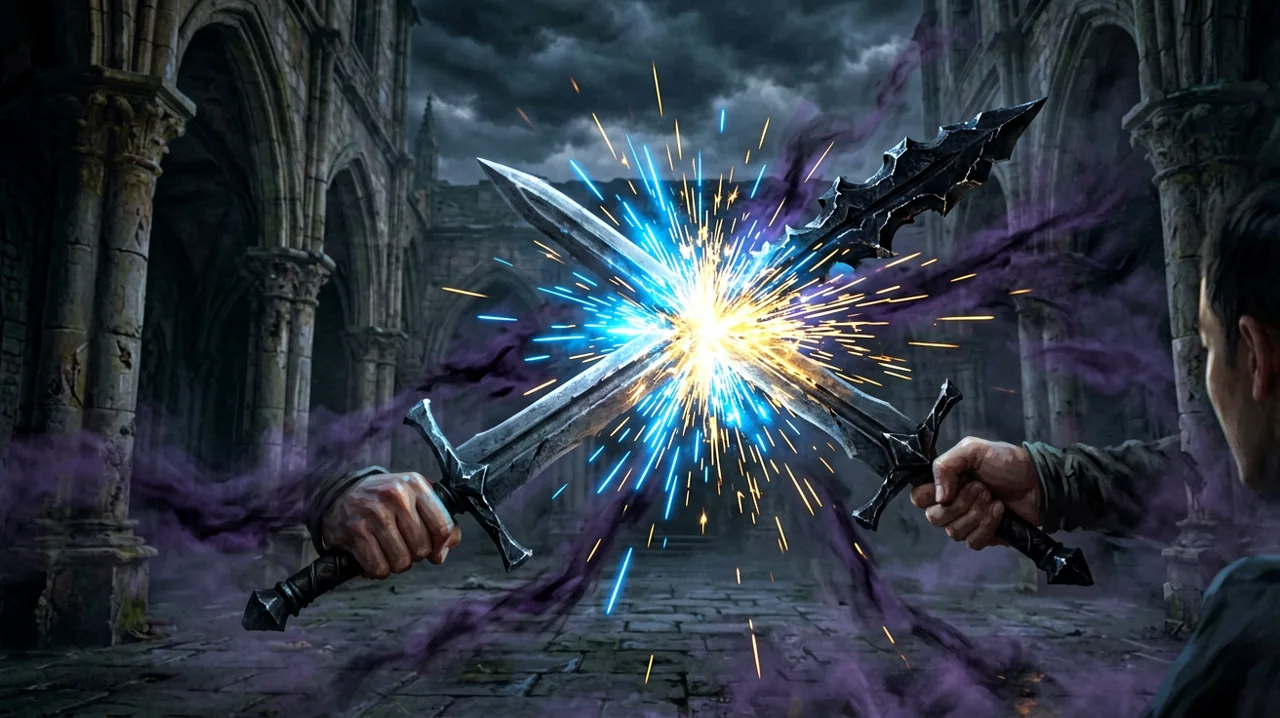
Rebel Wolves is drawing direct lines between the legendary swordplay of Geralt of Rivia and their upcoming dark fantasy RPG. The studio has brought on Maciej Kwiatkowski, the stunt coordinator and motion capture performer who originally crafted the sword-fighting style for The Witcher 3: Wild Hunt, to design the combat choreography for The Blood of Dawnwalker.
Kwiatkowski, alongside his stunt group Alpha 7, is handling the physical animations for the protagonist Coen. However, players expecting a carbon copy of Geralt’s combat style might be surprised by the direction Rebel Wolves is taking.
A Shift from Witcher Pirouettes to Grounded Medieval Combat
While Geralt’s combat in CD Projekt Red’s trilogy relied on fluid, dance-like pirouettes heavily inspired by Japanese sword-fighting disciplines, The Blood of Dawnwalker is taking a more historically grounded route. Kwiatkowski has indicated that the combat choreography for Coen is modeled directly on authentic 14th-century European martial arts.
This mechanical shift aligns with the game’s focus on heavy, high-stakes melee encounters. Players will feel the weight of their steel, relying on precise directional parries and blocks rather than floaty dodges. We have already seen hints of these directional block mechanics in recent gameplay clips, but knowing that a veteran Witcher combat choreographer is behind the animations explains why the swordplay looks so deliberate and impactful.
This transition from stylized fantasy combat to historical realism highlights how Rebel Wolves is defining its own identity, as detailed in our analysis of the game vs-the-witcher-3.
Motion Capture and Heavy Impact
Kwiatkowski’s team is utilizing extensive motion capture to ensure every sword strike, shield block, and recovery frame carries physical weight. The developers are focusing on:
- Authentic weapon momentum where missing a heavy swing leaves Coen temporarily vulnerable.
- Explicit impact reactions from enemies, ensuring that armor deflection and flesh wounds look distinct.
- Contextual executions that match the gritty atmosphere of the Black Plague era.
The focus on realistic weight also extends to the game’s boss fights. Rebel Wolves recently revealed that former UFC champion Jan Błachowicz performed motion capture for the vampire boss Bakir. Błachowicz noted that working under Kwiatkowski’s guidance allowed them to create a boss encounter that feels less like a bullet sponge and more like a tactical, high-stakes duel. You can learn more about how these combat designs play out in practice in our combat systems preview.
Weaving Steel and Hexes
The real test for Kwiatkowski’s choreography lies in how these grounded sword techniques integrate with Coen’s supernatural abilities. In the daytime, Coen must rely on defensive posture and medieval guard stances. However, when night falls, the swordplay blends with dark vampire powers, introducing teleportation maneuvers like Shadowstep and direct claw strikes.
Balancing the weight of authentic 14th-century swordplay with the agility of a vampire will be crucial to the combat loop. If Rebel Wolves can execute this hybrid style successfully, it could offer a refreshing alternative to both floaty action RPGs and punishingly slow soulslikes when the game launches on September 3, 2026.