News
Will The Blood of Dawnwalker Feature a Gwent-Style Card Game?
With ex-Witcher 3 developers at Rebel Wolves, fans speculate if their debut dark fantasy RPG will feature a Gwent-style collectible card game.
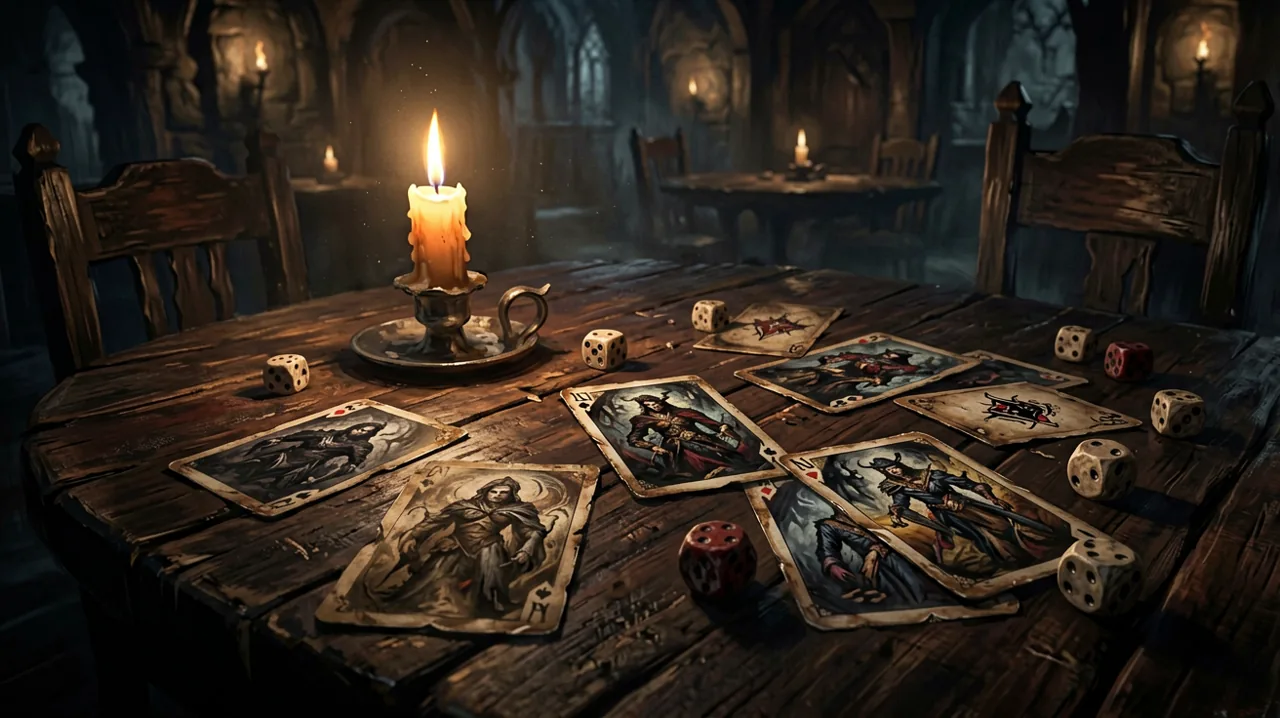
With the September 3, 2026 launch of The Blood of Dawnwalker approaching, fans are dissecting every preview to understand how the debut game from Rebel Wolves will play. Given the studio’s pedigree—comprising several veteran developers who shaped The Witcher 3: Wild Hunt—comparisons are inevitable. The latest community discussion focuses on a beloved aspect of CD Projekt Red’s legacy: mini-games.
Specifically, players are asking whether this upcoming dark fantasy RPG will feature its own version of Gwent, the highly addictive collectible card game that became a phenomenon in its own right.
The Gwent Legacy vs. Rebel Wolves’ New Vision
A community thread on the official subreddit raised the question of whether a similar deep, collectible side activity is planned for The Blood of Dawnwalker. Given that Konrad Tomaszkiewicz, the game director of The Witcher 3, is leading Rebel Wolves, it is a logical question.
Currently, the studio has not officially announced any card game or similar side activity. While the team remains tight-lipped about minor mini-games, their high-level design philosophy suggests a Gwent clone is highly unlikely.
The key lies in how both games treat the player’s time. In The Witcher 3, Geralt of Rivia could ignore the imminent threat of the Wild Hunt to play cards with merchants across the Northern Realms. In contrast, The Blood of Dawnwalker utilizes a strict 30-day time limit that governs the player’s campaign. Time is a finite resource in the gothic region of Vale Sangora, and wasting days will have narrative consequences.
How Time Limits Affect Mini-Games
If Rebel Wolves does include side activities, they are expected to function differently from classic RPG distractions. In a game where every day counts, spending half a day playing cards would need to offer tangible mechanical rewards or risk penalizing the player’s main quest progress.
Tomaszkiewicz has previously hinted that they want to avoid losing momentum in the story. This suggests any side activity in their narrative sandbox will be closely integrated into the core survival and vampire mechanics rather than serving as an isolated card game.
While players hoping for a massive deck-building game might be disappointed, the exclusion of a time-sink mini-game aligns with the developer’s goal of making choices feel heavy and immediate. For now, those looking to collect cards will have to wait for official confirmation, but community expectations should remain tempered by the realities of the game’s survival mechanics.