News
The Blood of Dawnwalker: Cursed Abilities, Complex Antagonists, and the 30-Day Countdown Resolved
Recent developer interviews clarify the 30-day timer panic, reveal the explosive Cursed Abilities skill tree, and detail Rebel Wolves' philosophy on multidimensional vampire bosses.
The recent confirmation that The Blood of Dawnwalker has officially gone gold brings a wave of definitive information regarding some of the game’s most fiercely debated mechanics. With the September 3 release date now securely locked in stone, developer Rebel Wolves has opened up in a series of previews with IGN about how the RPG functions under the hood. The studio is directly addressing community anxieties while outlining the visceral combat systems, the narrative philosophies driving the experience, and the technical landscape that allowed them to finish development well ahead of schedule.
The Truth About the 30-Day Countdown
For weeks, the dark fantasy community has fiercely debated the implications of the game’s structural countdown. When early details emerged about a temporal restriction hanging over the main campaign, players worried about being artificially rushed through the grim region of Vale Sangora. The latest previews finally put those lingering fears to rest. According to the developer, “The game doesn’t end when you run out of time.”
This single statement drastically shifts our understanding of the game’s progression system. Instead of acting as a hard fail state that forces a reload or abruptly terminates the campaign, the 30-day countdown operates as a massive narrative catalyst. Expected mechanics suggest that reaching the end of this calendar month triggers a fundamental shift in the world state. If the player fails to achieve their primary objectives within the allotted time, the story reportedly adapts, forcing them to navigate a significantly more hostile and permanently altered environment.
We can anticipate that allied factions might fall, key NPCs could be killed or corrupted, and entire questlines might resolve themselves tragically in the player’s absence. This design choice prevents the time limit from feeling like an artificial leash, transforming it instead into a vehicle for organic consequence. Players who want to explore every corner of the map can still do so, but they must accept the heavy narrative cost of their delay. This methodology effectively resolves the tension between maintaining an urgent main plot and supporting a sprawling narrative sandbox. The world moves forward regardless of the player’s pace, ensuring that time management is just another layer of strategic decision-making rather than a punitive restriction.
Cursed Abilities and the Satisfaction of Destruction
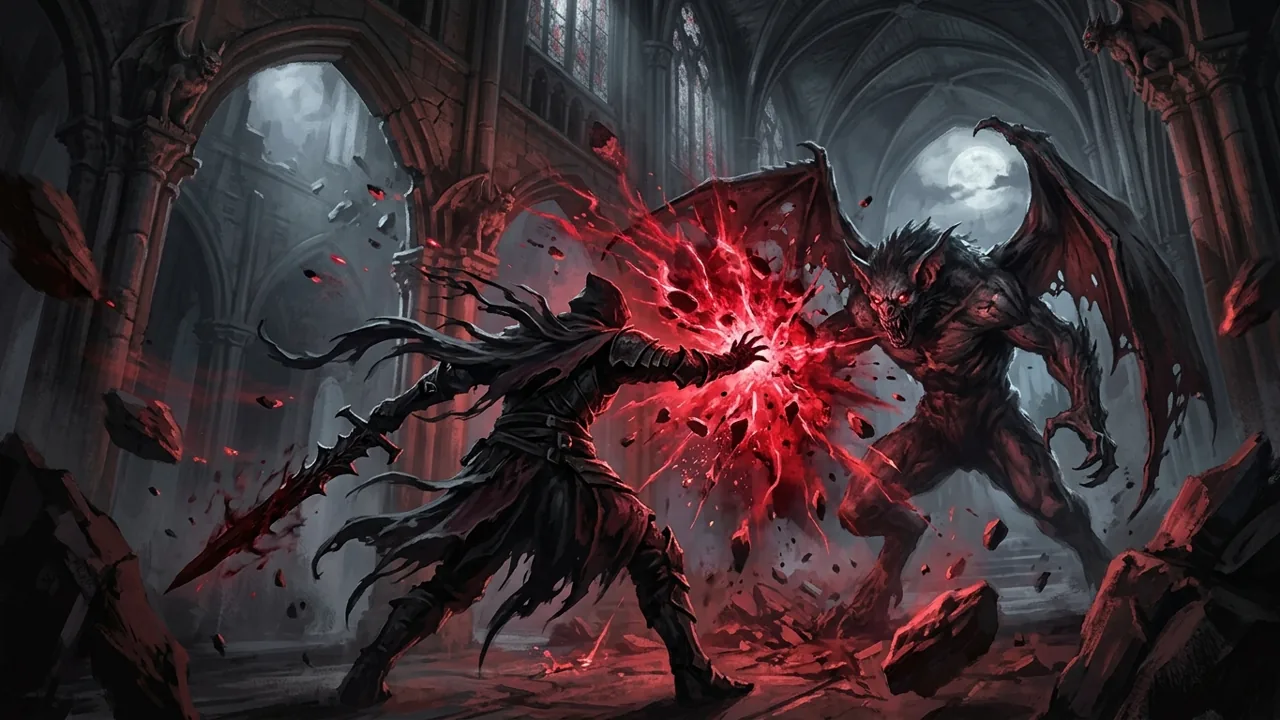
Beyond the overarching calendar, Rebel Wolves has also shed light on the darker aspects of the combat engine. While we already knew about the tactical applications of conventional magic, the new previews highlight a distinctly brutal branch of the character progression: Cursed Abilities. Discussing the visual and mechanical feedback of these skills, one developer noted, “There’s something so satisfying about making people explode.”
This specific branch of the skill tree appears to focus entirely on raw, unrestrained destruction. Unlike standard hex magic, which is expected to rely heavily on enemy debuffs, slow crowd control, and tactical manipulation, Cursed Abilities are reportedly tied directly to the primal, violent nature of the vampire curse itself. These abilities likely draw upon completely different resource pools—potentially consuming the player’s own health or accumulated blood reserves to unleash devastating area-of-effect attacks.
The tactile feedback of these skills is clearly a major priority for the engineering team. The visual and mechanical satisfaction of causing enemies to literally detonate adds a gruesome, visceral layer to the combat loop that sets it apart from cleaner action RPGs. Mechanically, players might cast a curse that boils the blood of a target, causing them to explode after a short delay and inflict massive collateral damage to surrounding foes. This encourages a highly aggressive, high-risk playstyle where players chain detonations to quickly clear crowded encounters.
However, power of this magnitude rarely comes without a steep cost. It is widely speculated that over-investing in Cursed Abilities could rapidly increase the player’s susceptibility to the vampire curse, tying directly into the builds and skill trees synergy. Relying too heavily on these explosive powers might alter the protagonist’s physical appearance, limit their daytime capabilities, or permanently close off specific narrative paths with human factions. The balance between utilizing this destructive power and maintaining one’s humanity appears to be a core pillar of the overarching role-playing experience.
Antagonists That Refuse to Be One-Dimensional
This philosophy of depth, duality, and consequence extends directly to the game’s central enemies. The developers have made it absolutely clear that they are actively avoiding simplistic writing tropes when designing the opposition. “I’m allergic to antagonists who are bad for the sake of being bad,” a developer explained, noting that the vampire lords are constructed to go far beyond just serving as end-of-stage obstacles for the player to overcome.
In many contemporary action RPGs, villains exist solely to provide a mechanical combat challenge at the end of a long dungeon. In The Blood of Dawnwalker, these characters are deeply integrated into the complex political and historical fabric of the setting. The four vampire lords and their various enforcers are expected to have logical, highly motivated reasons for their atrocities. Some might be trying to ensure the strict survival of their kin in a world that aggressively hunts them, while others may be driven by ancient historical grievances or twisted, yet internally consistent, philosophies regarding the natural order of predators and prey.
This multidimensional approach means players will likely spend significant time investigating these targets before ever drawing a weapon. Gathering localized intelligence, speaking with terrified informants, and uncovering the personal history of a target will presumably be just as important as the physical confrontation itself. By humanizing the monsters—or at least making their monstrous logic somewhat understandable—the game forces players to make difficult moral calculations. When you finally track down a prominent figure like Ambrus, the encounter should carry heavy narrative weight, significantly complicating the decision of whether to execute them, attempt to align with their faction, or find a third, unseen path forward.
Next-Gen Hardware Delays and Development Milestones
From a technical and production standpoint, The Blood of Dawnwalker is currently operating from a position of profound strength. Director Konrad Tomaszkiewicz’s recent comments regarding the delay of next-generation console hardware shed light on a common, yet rarely discussed, development hurdle. When console manufacturers introduce new hardware mid-development, studios are frequently pressured to implement speculative features or hit moving target specifications. This can severely fracture the development focus, leading to unstable builds, feature creep, and unoptimized performance across the board.
By remaining firmly rooted in the current, well-understood hardware generation, Rebel Wolves can devote all of their engineering resources strictly to optimization. This singular focus is likely why the studio views the hardware delays as highly beneficial. They do not have to split their attention to accommodate hypothetical next-gen processing architectures, allowing them to optimize heavily for existing platforms and ensuring the game runs smoothly for the vast majority of the player base.
This focus on stability and performance is further evidenced by the game’s production timeline. Rebel Wolves confirmed the title has gone gold with a full seven weeks of breathing room before launch. In modern AAA development, finishing the master 1.0 build nearly two months early is an exceptionally rare luxury. This extended runway gives the team ample time to address minor lingering bugs, refine background performance, and prepare an incredibly robust Day 1 patch. After analyzing the launch woes that have notoriously plagued other massive open-world titles, this highly disciplined schedule indicates a studio that is prioritizing a polished, stable player experience over a rushed, chaotic release.
With intellectually complex antagonists, a nuanced approach to world-altering time limits, and combat mechanics that fully embrace the gory reality of playing as a cursed predator, The Blood of Dawnwalker is setting itself up as a fiercely reactive RPG. The recent previews confirm that the game is leaning heavily into systemic design and lasting narrative consequences, ensuring that players will face agonizing choices both on the battlefield and in the dialogue screens.