News
The Cost of a Good Ending in The Blood of Dawnwalker: Sacrifices, St. Tyna's Monastery, and Moral Ambiguity
Achieving a good ending in The Blood of Dawnwalker requires heavy sacrifices. We analyze recent IGN previews, St. Tyna's Monastery lore, and time management.
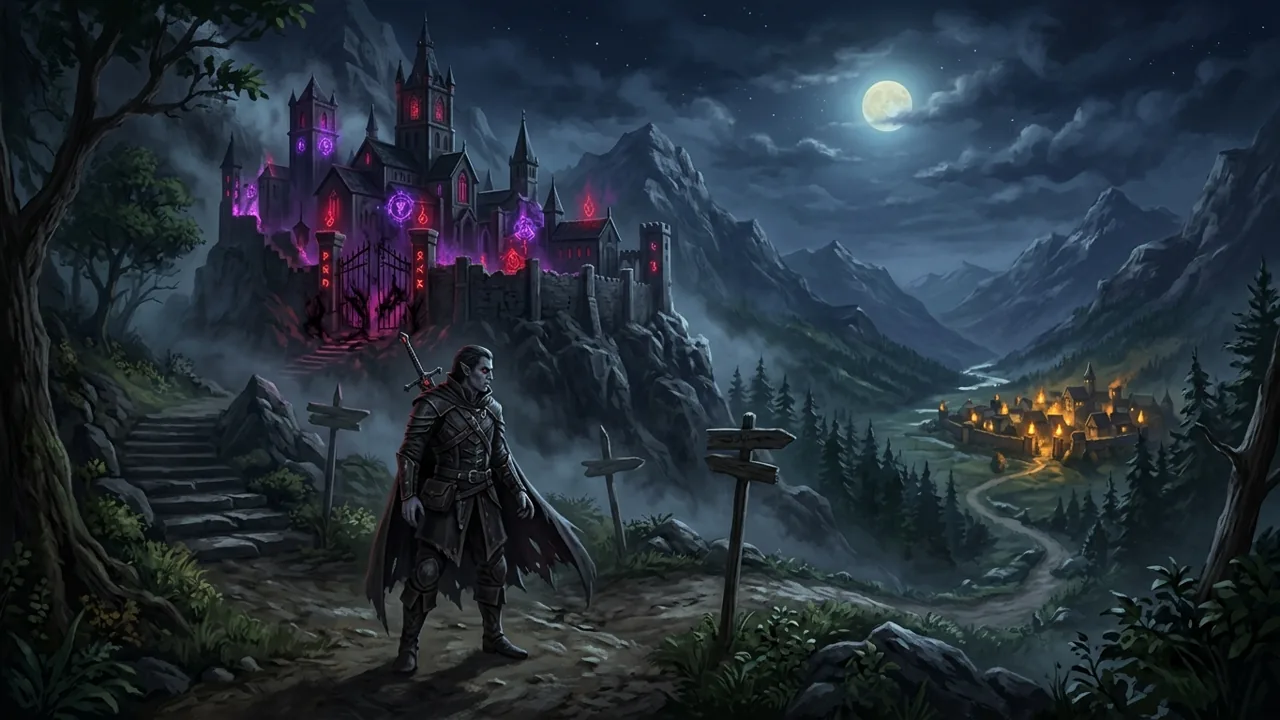
Recent reveals from major gaming outlets, including an in-depth feature by IGN, have shed new light on what players can expect from the endgame of The Blood of Dawnwalker. Releasing on September 3, 2026, Rebel Wolves’ highly anticipated dark fantasy RPG is challenging the traditional binary of “good” and “bad” endings. Instead of offering a straightforward path to salvation, the journey is fraught with moral ambiguity, demanding significant sacrifices from the player.
Coupled with new lore regarding the eerie St. Tyna’s Monastery and fresh developer insights into how the much-discussed time limit interacts with combat and romance, it is clear that achieving a desirable outcome in Vale Sangora will be anything but easy. Furthermore, recent comments from the game’s director suggest that a shift in the broader gaming industry’s hardware timeline has actually given the studio the breathing room it needs to polish these complex systems. Here is a closer look at the true cost of a “good ending,” the latest lore drops, and what they mean for your upcoming playthrough.
The True Cost of a “Good Ending”
In modern storytelling, the allure of a strictly “good ending” often serves as a player’s primary motivation. It promises a neat resolution and the comforting sense that every hardship endured along the campaign was justified. However, according to recent previews and IGN’s detailed breakdown, The Blood of Dawnwalker treats endings not merely as grand finales, but as tense negotiations between power, mercy, and consequence.
The protagonist’s ascent toward a purportedly hopeful conclusion frequently requires confronting the deepest, unspoken truths of Vale Sangora. The game reportedly forces you to acknowledge the sacrifices that have become normalized within this grim universe—the lives that have been leveraged for the “greater good,” and the unavoidable collateral damage that accrues with every act of salvation.
To achieve the best possible outcome, players will likely have to make decisions that feel inherently wrong in the short term. Saving a key faction might require abandoning another to slaughter, and empowering yourself with potent hex magic might corrupt the very lands you are trying to protect. This moral ambiguity is a hallmark of the developers’ previous work on The Witcher 3, but here, it is amplified by the game’s strict narrative sandbox constraints. You cannot simply grind quests until everyone is happy; your choices ripple outward, permanently shaping the fabric of the world. For more on how your decisions impact the finale, check out our guide on The Blood of Dawnwalker’s multiple epilogues.
St. Tyna’s Monastery and Nighttime Terrors
The weight of these choices is best illustrated by the newly revealed lore surrounding St. Tyna’s Monastery. According to community-reported lore drops shared by creators like Kazuliski, setting up camp in the shadow of this religious landmark is a terrible idea for anyone seeking a peaceful night. The boyar’s soldiers stationed nearby have been complaining of strange, unsettling noises echoing from the monastery’s grounds, especially after dusk.
This seemingly small detail holds massive implications for exploration and the day-and-night cycle. During the day, the monastery might appear as a bastion of humanity, guarded heavily by the local boyar’s forces. But when night falls, it transforms into a hub of paranormal activity. As a Dawnwalker—a being caught between the human world and the vampiric curse—players will have to decide how to handle this threat. Do you spend a precious night investigating the catacombs beneath St. Tyna’s, risking your life and your limited in-game time? Or do you ignore the soldiers’ plight, potentially allowing whatever darkness festers inside to consume the region?
If the “good ending” requires resolving major regional conflicts, ignoring the monastery could lead to disastrous consequences for the surrounding settlements. On the other hand, investigating it might force you into a brutal confrontation that drains your resources. This location is shaping up to be one of the critical proving grounds where your combat prowess and moral compass will be tested simultaneously. For a deeper dive into the map’s distinct regions, read our Vale Sangora world guide.
Balancing Time, Combat, and Romance
The complexity of the game’s endings is further complicated by the 30-day time limit, a mechanic recently discussed in an OpenCritic-featured interview that touched upon time management, combat, and romance. Time is your most valuable currency in The Blood of Dawnwalker. Every journey taken, every battle fought, and every relationship nurtured consumes it.
If you want to achieve a favorable outcome, you cannot simply focus on combat optimization and rushing the main questline. The interview suggests that romance and companion storylines are deeply intertwined with the broader narrative. Forming strong bonds with your vampire officers or human allies might be the key to unlocking the resources or political sway needed to save Vale Sangora. However, wooing a companion takes time—time that could be spent hunting down a vampire lord or securing a strategic stronghold like St. Tyna’s Monastery.
This creates a fascinating ludonarrative tension. Will you choose to spend an evening conversing with a potential romance option, or will you use that night to clear out a nest of ghouls? The “cost” of the good ending might literally be the relationships you have to sacrifice along the way. If you dedicate all your nights to building romances, you might fail to stop a larger catastrophe. Players will have to carefully plan their abilities (see our builds and skill trees guide) to ensure combat encounters are resolved swiftly, maximizing the time left for diplomacy and investigation. For more tips on managing your schedule, consult our breakdown of the 30-day time limit.
Why Delayed Next-Gen Hardware is a Blessing
While the in-game clock is constantly ticking, the real-world development clock has seemingly become more forgiving. In a recent MSN interview, the director of The Blood of Dawnwalker stated that the delayed arrival of next-generation hardware (such as the heavily rumored PlayStation 6 or the next Xbox) is actually highly beneficial for Rebel Wolves.
Instead of splitting the studio’s focus between current-generation optimization and next-generation launch titles, the team can fully commit to maxing out the capabilities of the PS5, Xbox Series X/S, and PC. This unified focus allows for greater polish on the complex, interlocking systems that define the game—from the dynamic day-and-night cycle to the intricate web of consequences that lead to the game’s various epilogues.
It also ensures that dense, atmospheric environments like the haunted St. Tyna’s Monastery are rendered with meticulous detail without compromising performance. Given the studio founders’ history with the rocky launches of other ambitious RPGs, having the breathing room to master the current hardware ecosystem is a massive advantage. It gives players confidence that the intricate narrative sandbox will function as intended on day one, without game-breaking bugs derailing their carefully planned playthroughs. Learn more about their approach in our article on how launch woes shaped Rebel Wolves’ development.
The Final Verdict
As we inch closer to the September release, it is becoming abundantly clear that The Blood of Dawnwalker is not a game about saving everyone. It is a game about deciding who is worth saving, and what you are willing to destroy in the process. The “good ending” is an illusion wrapped in compromise, demanded by a world that thrives on sacrifice. Whether you are battling horrors beneath St. Tyna’s Monastery or navigating the delicate balance of time, combat, and romance, every action carries heavy narrative weight. Prepare yourself for a journey where the brightest victories are cast in the darkest shadows.