News
The Blood of Dawnwalker Tatzelwurm Encounter: Alpine Folklore and Expected Combat Mechanics
A recent content creator tease confirms the Tatzelwurm is coming to The Blood of Dawnwalker. We analyze this alpine beast's folklore and combat mechanics.
A New Threat Emerges in Vale Sangora
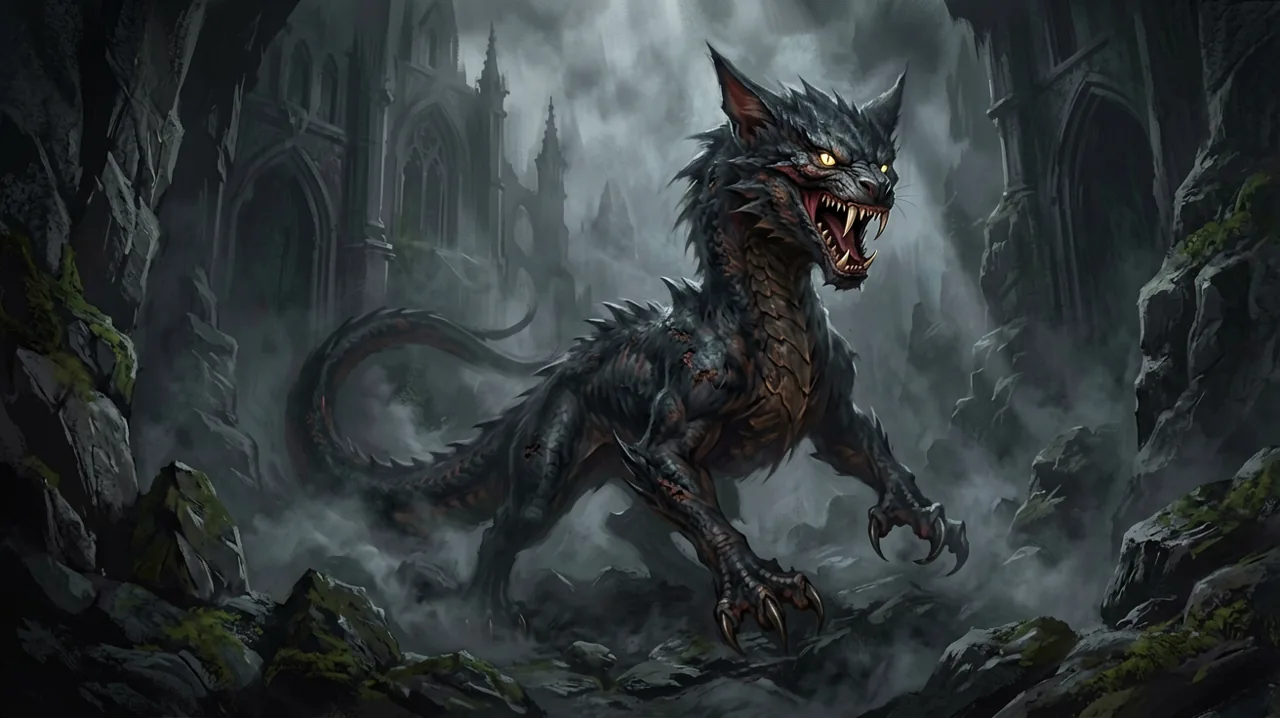
As the September 3rd launch rapidly approaches, the community has been eagerly dissecting every frame of footage and every cryptic tease from Rebel Wolves. While the developers have officially revealed a handful of creatures, a recent update from well-known content creator Kazuliski has thrown a new, fascinating monster into the spotlight: the Tatzelwurm. Spotted in a recent social media post aptly titled “Face to face with a Tatzelwurm,” this reveal confirms that the studio is digging deep into European alpine mythology for its dark fantasy bestiary.
For a game that has promised a rich, lore-heavy world, the inclusion of such a specific and relatively obscure mythological beast speaks volumes about the creative direction of the project. It indicates that the team is not just relying on the standard tropes of vampires, werewolves, and generic zombies, but is actively populating Vale Sangora with regional oddities that will require highly specific strategies to defeat. It also signals to hardcore RPG fans that exploration will be rewarded with genuinely surprising enemy encounters, rather than repetitive reskins of early-game foes.
What is a Tatzelwurm? Unpacking the Alpine Folklore
To understand what players will face, we have to look at the real-world folklore that inspired the creature. Originating in the folklore of the Alps—spanning across the mountainous regions of Bavaria, Austria, and Switzerland—the Tatzelwurm (literally translating to “worm with claws”) is a bizarre and terrifying chimera. Historical accounts, local superstitions, and centuries-old sketches describe it as a creature possessing the body of a thick, stubby serpent or lizard, but with the head of a feline. Most depictions agree that it has two front legs armed with sharp claws, completely lacking any hind limbs.
In local legends, the Tatzelwurm—sometimes referred to by regional names like Stollenwurm or Springwurm—is not a towering dragon that burns down entire villages, but rather a vicious ambush predator that hides in rocky crevices. It is notoriously aggressive, capable of leaping great distances to strike unsuspecting travelers or livestock, and is often said to possess highly toxic venom or even poisonous breath that can kill a person instantly. Nineteenth-century alpine farmers genuinely feared the creature, often blaming it for missing cattle and unexplained deaths in the high mountains.
Given the pedigree of the development team at Rebel Wolves—many of whom are veterans of CD Projekt Red and worked on the monster-hunting opus that was The Witcher 3—it is safe to assume they are treating this folklore with the utmost respect. If you look at how they approach world-building and narrative, the Tatzelwurm will likely not be a generic trash mob. Instead, it is expected to be a calculated, deadly encounter, complete with its own ecological niche and behavioral patterns that players will need to study through in-game lore books or environmental storytelling before engaging.
Locating the Beast: Where Will It Hide in Vale Sangora?
The world of Vale Sangora is heavily stylized, blending a grim, modern-adjacent atmosphere with deep-rooted magical corruption. We already know that the map features diverse topography, from decaying urban streets to vast, treacherous natural environments. So, where does an alpine snake-cat fit into this geography?
Based on its mythological roots, players should probably keep their guard up when exploring the mountainous borders of the map or when traversing the rocky, fog-choked gorges that bridge different regions. Furthermore, we know that the game features extensive subterranean exploration. As previously discussed in our breakdown of Vale Sangora’s underground, the burrowing and cavern-dwelling enemies pose a significant threat. The Tatzelwurm could very well be an apex predator in these dark, confined spaces, using the uneven terrain, tight corridors, and stalactites to obscure its movements before initiating a lethal ambush from above.
Expected Combat Mechanics: Poison, Agility, and Hex Magic
Encountering a Tatzelwurm will reportedly test players on several fundamental mechanics, primarily focusing on evasion, status effect management, and situational awareness. Because the creature lacks hind legs, its movement pattern is expected to be erratic and unsettling—slithering slowly one moment, then violently coiling its muscular body and launching itself forward the next. This kind of unpredictable agility means that relying purely on static blocking or heavy, slow weapon swings will likely result in a quick death.
Instead, players will need to lean heavily on the game’s combat and hex magic systems. If the game stays true to the folklore regarding the beast’s toxic breath, poison resistance and environmental control will be paramount. We can theorize that certain Hexes will be practically mandatory here. For instance, players might need to cast warding hexes to neutralize toxic clouds in the arena, or use kinetic hexes to stagger the creature mid-leap, grounding it long enough to inflict physical damage. Depending on your choices in the builds and skill trees, a nimble dual-wielding setup might fare much better against this foe than a slow, heavy-hitting brute force approach.
The encounter will also heavily depend on the game’s central dichotomy: the day and night cycle. Fighting a Tatzelwurm during the day, while restricted to your weaker, mortal human form, would require meticulous preparation. You would likely need to set physical traps, brew antidotes, and rely on ranged weaponry to avoid its razor-sharp claws. However, encountering the same beast at night changes the equation entirely. As a vampire, your enhanced reflexes, rapid healing, and supernatural strength—detailed in our look at the vampire powers and wolf form—would allow you to match the creature’s agility. You could potentially dodge its venomous strikes with vampiric dashes, turning a tactical survival horror encounter into a high-speed, aggressive duel.
Expanding an Already Macabre Bestiary
The confirmation of the Tatzelwurm adds another layer of weirdness to an already eccentric lineup of enemies. The Blood of Dawnwalker is clearly aiming for a very specific, uncompromising flavor of dark fantasy. We already have confirmation of macabre tooth fairies, pixies, and gargoyles. By weaving together these lesser-known regional myths rather than relying purely on global fantasy staples, Rebel Wolves is constructing an ecosystem that feels distinctly European, unfamiliar, and intensely dangerous.
Players won’t just be fighting the standard archetypes of undead skeletons and armored demons; they will be facing a menagerie of folklore nightmares that require actual research and tactical shifting to overcome. This approach to enemy design forces players to engage with the lore rather than just mindlessly mashing attack buttons, rewarding those who pay attention to their surroundings, read bestiary entries, and prepare accordingly.
Standing Out in a Packed September Schedule
The timing of these granular lore reveals is not accidental, nor is it happening in a vacuum. As we head into late summer, the gaming community is acutely aware of the massive backlog of titles dropping in September 2026. Browsing through various community hubs and social media platforms, the anxiety over time management and budget allocation is palpable. In recent Reddit discussions, players have lamented the sheer density of the release calendar, pointing out that The Blood of Dawnwalker is launching in the exact same window as the highly anticipated Wolverine game from Insomniac and the heavily rumored Mortal Shell 2.
One player on the Mortal Shell subreddit perfectly summarized the difficulty of balancing these massive releases, stating, “the Blood of Dawnwalker comes out on September 3rd so I won’t have time again. And there’s something nice about playing a game when it releases rather than a long time afterwards.” This sentiment is echoed across multiple forums, highlighting the intense, cutthroat competition Rebel Wolves faces at launch. It also brings the AA vs AAA pricing debate back into focus—when players are asked to spend $70 multiple times in one month, every single game needs to justify its cost.
In a month crowded with blockbuster superhero action and established soulslike sequels, a brand new IP needs a distinct identity to capture and hold the audience’s attention. Granular, fascinating world-building details—like a meticulously designed, historically rooted Tatzelwurm encounter—are exactly the kind of unique selling points that can convince hardcore RPG fans to prioritize Vale Sangora over other virtual worlds. If the final game delivers on the promise of these rich, folklore-driven combat encounters and complex enemy ecosystems, it might just secure its place at the top of the September 2026 gaming calendar, proving that meticulous artistic vision can still win out over sheer marketing scale.