News
The Blood of Dawnwalker Street Date Broken: Early Leaks Reveal the Brutal 480 Action Point Economy
Physical copies of The Blood of Dawnwalker have reached players early. Discover the leaked 480 Action Point system and how it dictates your skills and story choices.
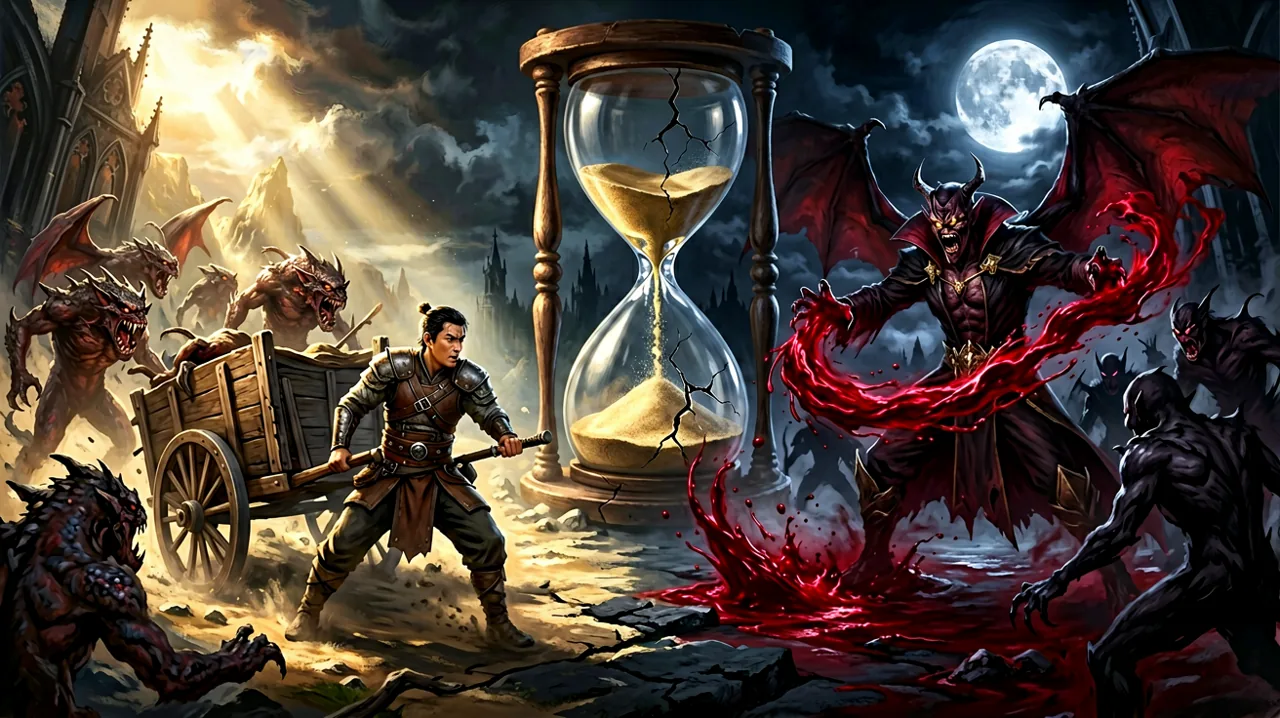
The anticipation for The Blood of Dawnwalker is reaching its absolute peak. With the September 3 release date just around the corner, excitement has boiled over, but it has also brought the inevitable reality of modern blockbuster game launches: broken street dates. Physical copies of the highly anticipated dark fantasy RPG have begun arriving in players’ hands a full week early. This premature distribution has resulted in a flood of early impressions and, more importantly, highly detailed mechanical leaks hitting various community forums. Among the most discussed revelations is the precise mathematical nature of the game’s heavily debated 30-day time limit.
While Rebel Wolves has previously confirmed the existence of a ticking clock that counts down to a definitive conclusion, the exact implementation remained shrouded in mystery. Now, community-reported details suggest that this system is governed by a strict “Action Point” (AP) economy. This leaked framework sheds light on how the game forces players to make agonizing choices between narrative progression and character power, setting the stage for what might be one of the most stressful and rewarding roleplaying experiences of the year.
The Street Date Break and Spoiler Warnings
Before dissecting the leaked mechanics, it is worth noting the official timeline. The global review embargo for The Blood of Dawnwalker is expected to lift on August 31 at 11 AM EST. Content creators and press outlets reportedly received their review codes roughly two weeks ago, indicating a high level of confidence from publisher Bandai Namco and the developers at Rebel Wolves.
However, because retail copies have bypassed the official launch window, the internet is currently navigating a minefield of potential spoilers. Players hoping to go in completely blind should exercise extreme caution over the next few days. Early players are already discussing late-game story developments, the identities of certain vampire factions, and the climatic showdown with the main antagonist, Brens, scheduled for the Day 30 coronation event. If you want to experience the narrative twists organically, it is highly recommended to mute relevant keywords on social media platforms immediately.
Deconstructing the 480 Action Point Economy
The most significant information to emerge from these early retail copies concerns the granular mechanics of the time limit. According to extensive community reports on Reddit, the 30-day clock is not a real-time countdown akin to Dead Rising. You do not have to stress about a literal timer ticking down in the corner of your screen while you manage your inventory. Instead, it operates on a rigid, finite currency system.
Players are reportedly given exactly 16 Action Points (AP) per in-game day. Once these 16 points are expended through specific activities, the game forcibly advances to the next day, pushing you one step closer to the inevitable deadline.
To further complicate matters, these 16 points are evenly divided to reflect the protagonist’s dual nature: 8 AP are allocated for the Day cycle, and 8 AP are reserved for the Night cycle. Over the course of the 30-day narrative, this totals precisely 480 Action Points for an entire playthrough. This hard cap is reportedly the foundational pillar of the game’s economy, and it dictates every major decision you will make. You cannot grind for more time, and you cannot stall the clock by resting indefinitely. The coronation will happen on Day 30, ready or not.
What Costs AP, and What Does Not
The immediate fear among RPG fans regarding time limits is usually the restriction on exploration. The idea of being rushed through a beautifully crafted environment is a common source of anxiety. Fortunately, the leaked details offer a massive sigh of relief in this regard: walking, exploring, engaging in random combat encounters, and taking in the sights of the world of Vale Sangora do not consume Action Points. You can spend ten real-world hours wandering the gothic landscapes, fighting random beasts in the wilderness, and soaking in the atmosphere without the in-game clock advancing a single minute.
So, what exactly eats up your precious 480 AP? According to the early players, Action Points are strictly reserved for the decisions that leave a permanent mark on your character or the narrative state of the world. Completing major side quests—specifically those tied to saving your endangered family members—will cost a set amount of AP. Similarly, unlocking significant nodes on your character’s build and skill trees requires AP investments. This implies that the act of “learning” a new combat technique or mastering a tier of Hex magic takes dedicated in-game time to accomplish. You are spending your days training, investigating, and fighting for major narrative outcomes.
The Agonizing Choice: Narrative vs. Build Power
Here is where the design philosophy of Rebel Wolves becomes brilliantly cruel. The community reports emphasize a brutal reality: 480 points are mathematically insufficient to do everything. You cannot save every single family member, complete every major companion arc, and simultaneously max out your character’s combat potential. The game forces an ultimatum upon the player, intertwining your roleplaying morality directly with your mechanical strength, raising questions about how choice-driven Dawnwalker truly is.
If you choose the path of the righteous savior, dedicating the majority of your AP to rescuing your family and helping the citizens in distress, you will arrive at the Day 30 deadline severely under-leveled. The final battle against Brens is expected to be a grueling encounter, and facing him with a sparse, undeveloped toolkit could lead to massive difficulty spikes and potential frustration.
On the other hand, if you play selfishly—ignoring the pleas for help and pouring all 480 AP into your own dark evolution—you will reach the finale as a terrifying, unstoppable force. You will likely decimate the antagonist, but you will do so standing over the graves of the family you abandoned. The developers are forcing players to decide what victory actually looks like, and what they are willing to sacrifice to achieve it.
The Day and Night Divide
The split between Day AP and Night AP also plays a massive role in build diversity and scheduling. As previous marketing material has shown, daylight hours limit your vampiric abilities, forcing reliance on traditional weaponry, diplomacy, and human interactions. Nighttime unleashes your full dark potential and Hex magic.
With 8 AP locked to the day and 8 AP to the night, players cannot simply ignore one half of the game’s mechanics. If you only care about upgrading your nighttime blood magic, what do you do with your 8 Day AP? You are forced to engage with the human side of the world, perhaps undertaking daylight investigations or upgrading standard sword combat skills to survive daytime ambushes. This creates a natural rhythm, ensuring players experience the full spectrum of the protagonist’s cursed duality rather than min-maxing one specific playstyle at the expense of the other.
Community Backlash and the Pacing Comparison
This uncompromising approach to game design has already sparked intense debate across forums. Many traditional RPG players, who instinctively gravitate toward “golden endings” and completionist runs, are expressing genuine anxiety. The inability to experience all content in a single playthrough is a hard pill to swallow for those who prefer to play a massive game only once. They argue that knowing a quest will expire, or that saving an innocent will permanently lock them out of a crucial combat upgrade, creates a layer of stress that might hinder their enjoyment.
Conversely, supporters of this system are drawing favorable comparisons to the pacing issues found in other massive open-world titles. In games like Cyberpunk 2077, players are given a narrative sense of extreme urgency—a literal ticking time bomb in their head—yet they can spend months of in-game time doing street races and minor gigs with zero consequences.
The Blood of Dawnwalker seems determined to avoid this ludonarrative dissonance entirely. By attaching a tangible mechanical cost to the narrative urgency, the developers are ensuring that the stakes remain exceptionally high from the opening tutorial to the final credits. If the world is ending and a coronation is looming, you shouldn’t have the luxury of time to do everything. Your choices matter precisely because they require heavy sacrifices.
Preparing Your Strategy for Launch
As we approach the official release, players should start mentally preparing for a very different kind of roleplaying experience. Do not enter this game with a checklist mentality. Accept that failure, sacrifice, and missed opportunities are baked into the core loop. Your first playthrough will be entirely unique to you, shaped by the hard choices you made when the Action Points started running low.
Decide early on what kind of character you want to be. Will you be the tragic hero who sacrifices their own combat prowess to save others, risking countless game-over screens against Brens? Or will you be the pragmatic survivor who embraces the beast to ensure victory at any cost, leaving a trail of broken promises in your wake?
With reviews dropping imminently and the official launch just days away, the conversation surrounding The Blood of Dawnwalker is only going to intensify. The 480 AP economy is a massive gamble by the development team, one that could redefine how narrative urgency is handled in the action-RPG genre, or potentially alienate players looking for a more traditional, completionist-friendly sandbox. We will soon find out if this bold mechanic pays off when the rest of the world steps into the cursed lands on September 3.