News
The Blood of Dawnwalker Armor Guide: Pieter's Mercenary Set and Vrakhir Gear
Discover how to obtain Pieter's Mercenary and Isbrand's Vrakhir armor sets, master Planeshift traversal, and complete the Echoes of Silenced Bells quest.
The world of The Blood of Dawnwalker is exceptionally unforgiving. As players step into the boots of Coen, they are thrust into a Carpathian valley currently suffocating under a plague heavily reminiscent of the historical Black Death. Recent community discussions and lore podcasts have highlighted the complex political backdrop of this setting. Vampires have seized control of the region, ostensibly liberating the human population from both the devastating disease and a historically abusive mortal government. However, this liberation comes with severe ideological caveats, leaving Coen to navigate a dangerous moral and physical landscape.
Surviving this environment requires rigorous preparation. The game’s dual-nature system means that your approach to combat must drastically shift depending on the time of day. Having the correct gear for the right moment is essential, especially when you are constantly racing against the overarching 30-day time limit. Over the past few days, dedicated players and early outlet walkthroughs have pinpointed two highly sought-after armor sets that perfectly complement Coen’s daylight and nocturnal combat styles: Pieter’s Mercenary Set and Isbrand’s Vrakhir Set.
Pieter’s Mercenary Set for Daylight Dominance
During the day, Coen’s vampiric powers are heavily suppressed by the sunlight, forcing players to rely on traditional swordsmanship, stamina management, and physical evasion. For this vulnerable phase of the daily cycle, Pieter’s Mercenary Set is reportedly the optimal choice for survival.
Visually, this set leans entirely into utilitarian design. It eschews the gothic elegance of the vampire courts for heavy, tarnished steel plating layered over thick, reinforced leather. It looks exactly like the armor of a veteran soldier who survived the valley’s previous abusive regime. The design reflects the gritty reality of human warfare in Vale Sangora, providing a grounded, militaristic aesthetic that makes Coen look like a traditional monster hunter.
According to early walkthroughs from outlets like VULKK, equipping the full Pieter’s Mercenary Set is expected to provide massive buffs to physical damage resistance and overall stamina regeneration. Community theorycrafters note that the armor reportedly features a set bonus that significantly reduces the stamina cost of heavy sword attacks and precise parries. This makes it an absolute necessity for daytime builds focused on breaking enemy posture and surviving prolonged melee engagements without the safety net of blood magic.
While the exact map coordinates are still being heavily documented by the community, early consensus indicates that the pieces of Pieter’s set are scattered across abandoned military encampments and ruined human fortifications throughout the valley’s southern wetlands. Exploring these areas during the day is highly recommended, as the human bandit remnants guarding them are far easier to dispatch than the supernatural horrors that emerge at dusk.
Isbrand’s Vrakhir Set for Nocturnal Hex Magic
When the sun sets, Coen’s vampire blood boils to the surface, and the optimal gameplay loop pivots toward aggressive hex magic and rapid, brutal strikes. To maximize this lethal potential, players are actively hunting down Isbrand’s Vrakhir Set.
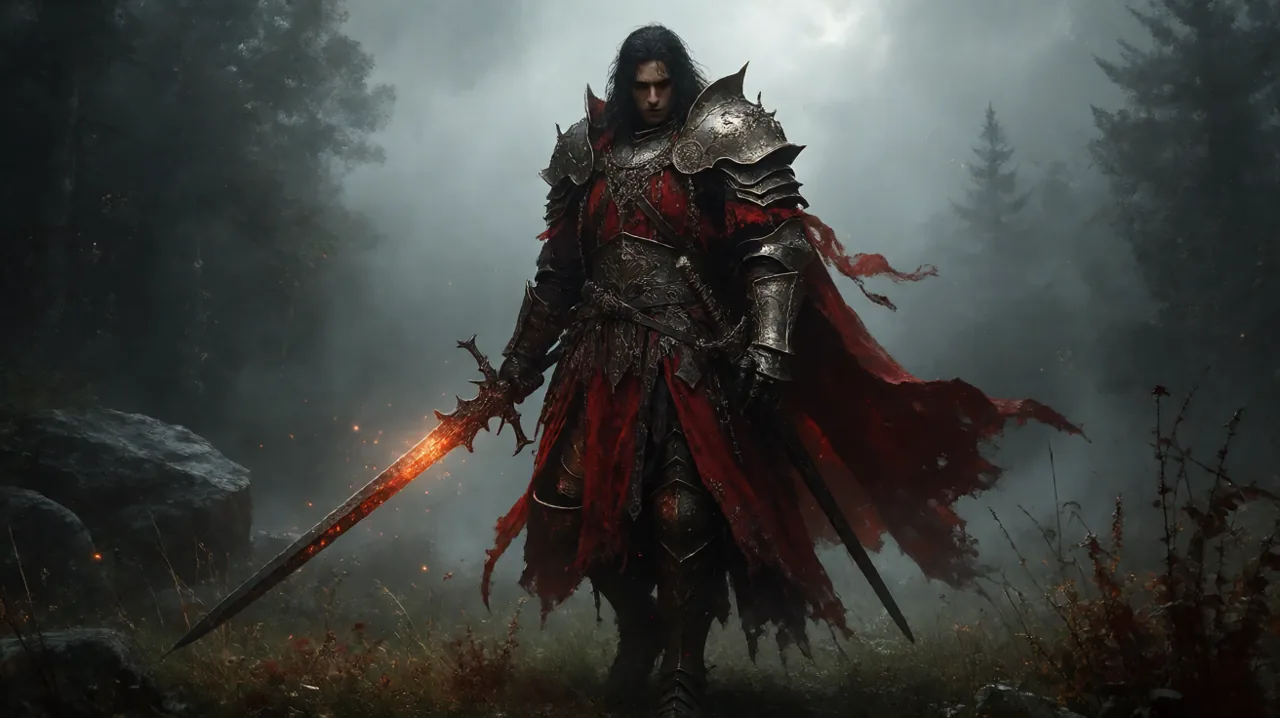
Tied directly to the elite Vrakhiri lords, this armor embodies macabre opulence. Reports describe it as featuring intricate obsidian plating interwoven with crimson fabrics that seem to visibly react to Coen’s hex energy. The silhouette is sharp and imposing, complete with flared collars and claw-like gauntlet extensions that visually complement Coen’s beast form. It is the attire of an apex predator comfortable in the dark.
Mechanically, this set is reportedly tuned entirely for nocturnal dominance. Players utilizing the Vrakhir set note that it accelerates Blood Surge accumulation exponentially compared to starter gear. Furthermore, the full set bonus is community-reported to grant a passive health-leeching effect on consecutive hex magic strikes. For players who prefer a high-risk, high-reward playstyle, this armor allows you to sustain your health pool purely through relentless magical aggression, drastically minimizing the need for consumable healing items.
Acquiring the Vrakhir set reportedly requires venturing deep into the dangerous underground Sanzhani burrows. These subterranean crypts are heavily guarded by high-level supernatural entities. Furthermore, certain sections containing the armor pieces are reportedly only accessible during specific time windows, such as the golden hour or exactly at midnight, requiring careful time management and planning.
The Echoes of Silenced Bells Quest Walkthrough
Beyond acquiring powerful gear, specific side quests are already standing out for their narrative depth and high-value rewards. The “Echoes of Silenced Bells” quest is currently being praised across community forums as one of the best-written optional missions, tying heavily into the valley’s religious turmoil. As noted in recent lore discussions, the occupying vampires are actively forcing a new faith upon the local clergy, and this quest puts Coen directly in the middle of that ideological conflict.
The quest reportedly initiates when Coen explores the northern highlands and detects a faint, unnatural bell toll echoing through the trees. Players must use Coen’s heightened vampiric senses to track the origin of the sound. Community guides suggest clearing the immediate area of roaming gargoyles first, as tracking the auditory distortions requires you to remain completely stationary at specific vantage points.
The core objective involves locating three desecrated bell towers hidden within a dense, hex-corrupted forest. These locations are reportedly guarded by infected clergy members who wield powerful silencing magic. Engaging these enemies requires careful combat positioning, as getting hit by a silencing spell temporarily strips Coen of his defensive abilities, leaving him completely exposed.
Upon reaching the final bell, players reportedly face a significant narrative choice. You can choose to restore the bells to their former holy resonance, directly defying the vampires’ new mandated faith, or you can destroy them entirely, aligning with the Vrakhiri agenda. This choice reportedly alters your standing with various factions across the valley and dictates the specific type of legendary hex manual you receive as a reward upon completion.
Navigating Vale Sangora with Planeshift
Hunting for these armor sets and completing remote quests requires mastering the game’s traversal systems. Currently, the “Planeshift” mechanic is receiving massive praise, with outlets like GameRant comparing it favorably to the satisfying movement systems found in games like Control.
Planeshift reportedly allows Coen to instantaneously warp between shadows, bypassing vertical obstacles and bridging massive gaps effortlessly. Unlike standard platforming mechanics, Planeshift relies on targeting specific environmental anchors. During the night, these shadowy anchors are vastly more abundant, turning the dense rooftops of Vale Sangora into a fluid, high-speed playground. Community veterans highly recommend investing early skill points into expanding your Planeshift range, as it serves as both the fastest way to travel the map and a crucial evasion tool during intense ambush encounters.
PC Optimization Trick for Smoother Traversal
While Planeshift feels incredible to execute, the rapid environmental streaming it requires has proven to be quite demanding on PC hardware. Even users equipped with high-end RTX 5090 cards have reported occasional stuttering during rapid movement. However, the PC modding and tweaking community has quickly found a viable workaround.
Players have discovered that you can force a 3x or 4x Frame Generation multiplier using the NVIDIA Profile Inspector, despite the game’s native menu not officially supporting these specific options. By enabling the DLL Override and setting the Fixed Frame Gen Multiplier to 3x or 4x, users have reportedly achieved visually smooth 120fps experiences from base framerates as low as 40fps. While this unofficial tweak can cause minor visual artifacting during extremely fast camera pans, it is currently the most recommended method for stabilizing performance while exploring the valley at high speeds. For more official fixes and baseline settings, refer to our PC system requirements and launch guide.
A Humorous Note on Romance Mechanics
As a final piece of community trivia, players mapping out the game’s various relationship paths have noticed a rather amusing quirk regarding the cinematic scenes. While many modern action RPGs feature fully modeled nudity for various characters during romantic encounters, The Blood of Dawnwalker reportedly takes a notably one-sided approach.
Regardless of the partner’s state of undress, Coen stubbornly remains in his standard-issue, unequipped underwear throughout every single romance scene. It is a minor, somewhat jarring visual detail that has already spawned numerous memes across social media platforms over the last 24 hours, proving that even in a grimdark, plague-ridden valley, there is always room for a bit of accidental comedy.
Thriving in The Blood of Dawnwalker requires extreme adaptability. The stark contrast between daytime survival and nocturnal dominance means players must be fluent in multiple playstyles. By securing specialized gear like Pieter’s and Isbrand’s sets early on, and mastering movement tech like Planeshift, you significantly reduce the friction of the valley’s harsh learning curve. As the community continues to dissect the myriad permutations of the storyline and test the limits of the combat engine, we expect even more optimal routes to surface.