News
The Blood of Dawnwalker: Prologue Secret Ending Guide & Community Combat Mods
Discover how to unlock the secret Brencis prologue ending in The Blood of Dawnwalker, explore upcoming community combat mods, and read the latest romance critiques.
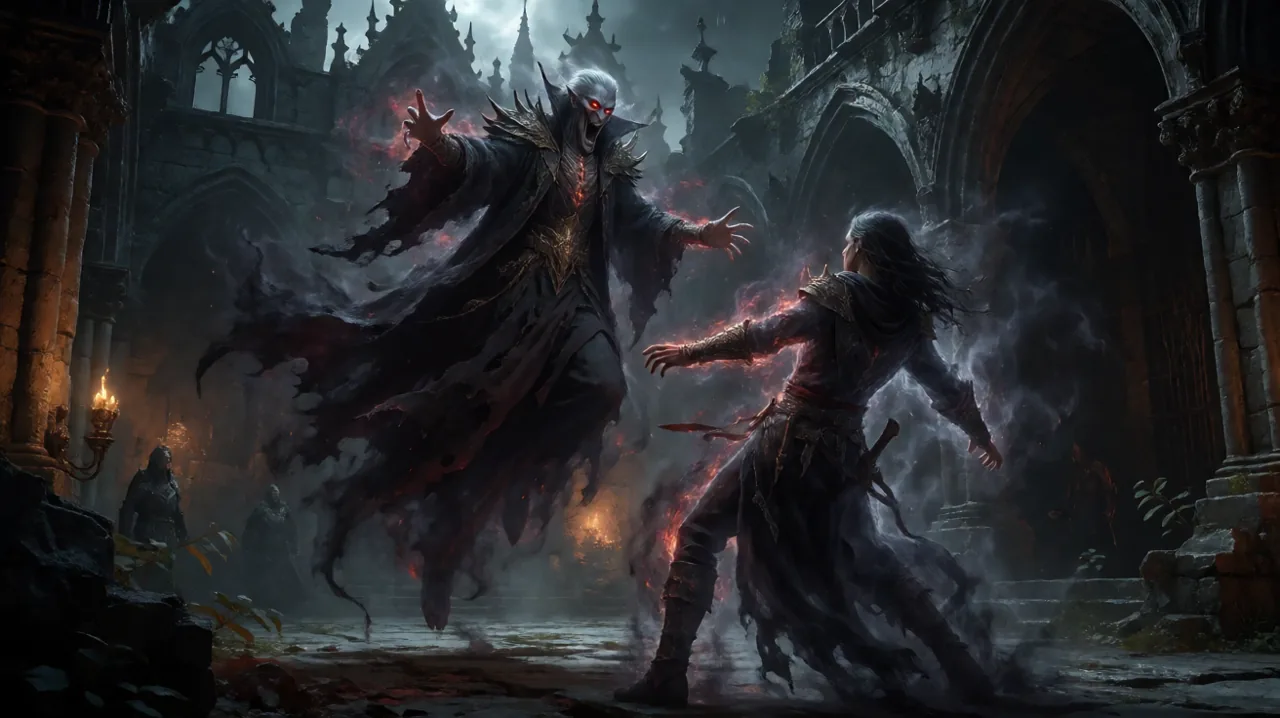
The world of Vale Sangora is vast, brutal, and filled with interconnected systems that players are only just beginning to untangle. Nearly three weeks after its massive global launch, the community surrounding The Blood of Dawnwalker has shifted from initial awe to deep mechanical dissection. Players are tearing through the narrative sandbox, discovering hidden mechanics, requesting extensive combat mods, and heavily debating the impact of the game’s time limit on role-playing depth.
Recently, the player base has made several massive breakthroughs. A brand-new secret ending involving Brencis has been uncovered during the game’s opening hours, offering a wildly different conclusion for those skilled enough to survive what is supposed to be an unwinnable encounter. Concurrently, PC players are already drafting sophisticated mod requests to overhaul the game’s directional blocking system, while RPG purists are actively dissecting the viability of the romance system under the pressure of a ticking clock.
Here is a complete breakdown of the latest community discoveries, including a step-by-step look at the Brencis secret ending, an analysis of the proposed combat control mods, and surprising benchmark reports on portable PC hardware.
How to Unlock the Brencis Prologue Secret Ending
The prologue of The Blood of Dawnwalker is meticulously designed to establish Coen’s baseline humanity and introduce the overwhelming, terrifying threat of the vampire curse. Most players treat the initial encounter with Brencis as a standard, heavily scripted narrative beat. You are expected to survive for a few brief moments before being forced to retreat, eventually pushing forward through the Laslea Glen quests to begin the main campaign properly.
However, dedicated players have discovered that this encounter is not a hard-coded cinematic failure state. If you possess the mechanical skill to perfectly read his attack patterns—or if you are utilizing a highly optimized, over-leveled build in New Game Plus—it is entirely possible to completely deplete Brencis’s health bar during this initial confrontation.
Killing Brencis in the prologue completely fractures the intended narrative structure of the game. Instead of transitioning into the standard open-world sandbox, the game halts and presents the player with a highly specific, hidden dialogue prompt: “Invite him into your mind.”
Choosing this option triggers a secret, alternate ending. The screen violently distorts, and players are treated to a surreal, visually stunning cinematic where Coen’s consciousness forcibly merges with Brencis’s essence. This psychic amalgamation results in an immediate end to the playthrough, effectively cutting the campaign short before the overarching timer even has a chance to begin.
This early conclusion rewards a rare hidden trophy and provides massive lore implications for players who have already experienced the standard endgame. It fundamentally recontextualizes the psychic connection between the protagonist and the game’s broader supernatural forces. If you are attempting to unlock this ending on a fresh save file, you must be prepared for a grueling, punishing fight. Brencis hits with devastating supernatural force, and you will not have access to your full suite of powers or advanced skill trees. Success relies entirely on flawless dodges, frame-perfect parries, and absolute mastery of the directional blocking system.
Directional Combat Controls and the Push for PC Mods
Speaking of directional blocks, the combat system in The Blood of Dawnwalker is currently the subject of intense community modification efforts. Rebel Wolves purposefully designed the swordplay to mimic a rhythmic, directional flow, requiring players to actively match the angle of enemy attack trajectories.
Currently, the default control scheme for blocking requires players to hold down the L1 (or LB) shoulder button and simultaneously flick the Left Analog Stick to select a specific defensive posture: Left, Right, or Upper. While this system works beautifully in isolated, cinematic one-on-one duels, players are reporting widespread frustration when utilizing it against multiple targets or during fast-paced skirmishes. The core issue lies in the reliance on the movement stick for defense. This configuration forces Coen into a stationary, reactive state, breaking the fluidity of positioning and evasion.
In response, the PC modding community is actively collaborating on an “Enhanced Combat System” overhaul layout. The most popular proposed framework seeks to completely bypass the analog stick for directional blocking. According to heavily supported community requests on forums and modding boards, players are pushing for a setup where:
- Tapping L1 triggers the Left Posture block.
- Tapping R1 triggers the Right Posture block.
- Pressing L1 + R1 simultaneously activates the Upper Posture.
This custom mapping frees up the Left Analog Stick entirely for pure movement, allowing players to strafe, reposition dynamically, and manage distance while maintaining a robust defense. Additionally, this layout suggests moving the game’s powerful “Especial” attacks to a combination of L1 + R1 + Square/Triangle, while mapping the crucial weapon-to-claw transformation swap to a quick tap of the Triangle button.
For keyboard/mouse users and controller players frustrated by the vanilla mechanics, these upcoming mods represent a massive quality-of-life leap. By mapping the postures directly to the shoulder buttons, combat and hex magic encounters will undoubtedly feel much more responsive, unlocking aggressive, mobility-focused playstyles that the current default layout unintentionally discourages.
The Romance Problem: Time Limits and NPC Depth
While the mechanical side of the game is actively being refined by the community, the narrative and social elements are facing fresh, highly critical scrutiny. The Blood of Dawnwalker features a strict 30-day time limit, an overarching pressure system that forces players to carefully manage every single in-game hour. Every side objective, territory investigation, and dialogue interaction burns precious time on the apocalyptic clock.
This mechanic has created a noticeable point of friction when it comes to the game’s relationship and social systems. Recent community discussions have highlighted severe disappointment with the available romance options. Players have noted that the romance pool is incredibly limited—with reports pointing to only two primary female options—and that the arcs themselves feel remarkably shallow compared to the game’s broader narrative ambition.
According to widespread community feedback, pursuing these romantic paths requires a significant investment of in-game time, only to culminate in brief, one-night stand interactions that provide no lasting narrative payoff, companion combat benefits, or endgame alterations. After the romance scene concludes, players report that the NPCs largely revert to their standard, generic dialogue loops.
Given the ever-present ticking clock, players are left feeling that the time spent wooing these characters is fundamentally wasted. When a dialogue chain costs valuable hours that could have been spent grinding toward the level 50 cap or securing legendary armor sets, the lack of depth in the social system becomes a glaring issue. Furthermore, players have criticized the general depth of the world’s population, noting that city guards often cycle through a meager 5 to 7 voice lines. Critics also point out that Coen’s dialogue responses frequently default to a bland, middle-of-the-road personality regardless of the player’s attempts to mold him into a more radical or aggressive anti-hero.
Pushing Hardware Limits: High Performance on Handhelds
Despite the criticisms aimed at certain gameplay loops and social mechanics, The Blood of Dawnwalker continues to genuinely surprise players with its impressive technical scalability. Before launch, there were heavy community concerns regarding the game’s PC system requirements and how smoothly its complex Unreal Engine 5 rendering would translate to mid-range hardware.
However, recent field reports from the community indicate that the game is remarkably well-optimized for modern portable hardware ecosystems. One dedicated user recently detailed their experience playing the game exclusively on an ASUS ROG Flow Z13 tablet equipped with a Ryzen AI APU and 64GB of RAM (with a massive 16GB allocated directly to VRAM).
Shockingly, the device is reportedly capable of running the game at High graphical settings, maintaining a steady 60 frames per second without relying on image upscalers like FSR (FidelityFX Super Resolution) or frame generation technologies. The ability to run a heavy, physics-dense, lighting-intensive AAA open-world game on a 13-inch portable device at native High settings is a massive technical win for Rebel Wolves’ engineering and optimization teams.
This level of raw performance suggests that players using popular handheld devices like the Steam Deck OLED or the ROG Ally should be able to achieve highly stable 40-to-60 FPS performance modes with the appropriate graphical tweaks. It transforms the daunting exploration of Vale Sangora into a highly viable, visually stunning on-the-go experience.
The landscape of The Blood of Dawnwalker is clearly still shifting. Whether you are actively attempting to shatter the narrative sequence by killing Brencis in the opening hours, waiting patiently for combat mods to perfect your parry timings, or simply enjoying the game’s stunning environmental art on a portable PC, the community continues to push the absolute boundaries of Rebel Wolves’ ambitious dark fantasy title.