News
Why The Blood of Dawnwalker’s 'Manumit' Ending Leaves Such a Bitter Aftertaste
We break down the controversy surrounding the Manumit ending in The Blood of Dawnwalker, analyzing Coen's choice and what it means for the expected sequel.
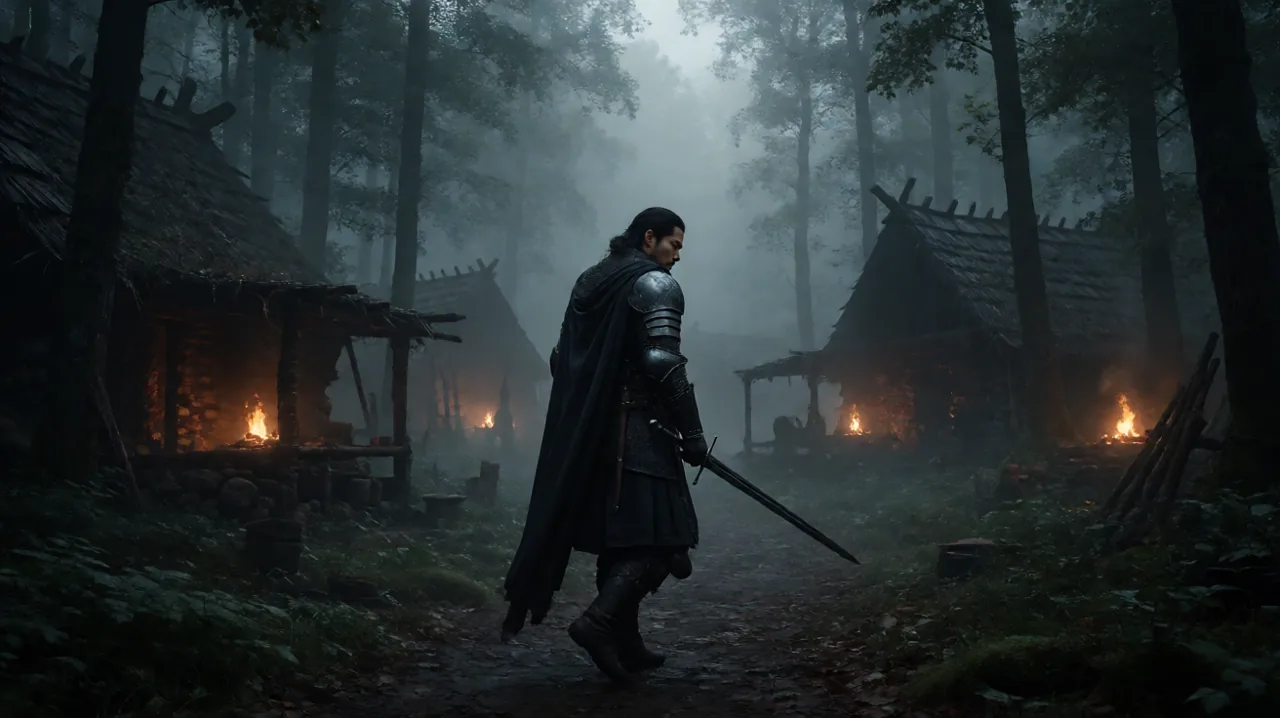
We are now more than three weeks past the highly anticipated launch of The Blood of Dawnwalker, and a significant portion of the player base has finally navigated the grueling time limit to reach the game’s credits. While the dark fantasy RPG has earned well-deserved praise for its intricate world-building, gorgeous physical editions, and punishing combat mechanics, the narrative is proving to be incredibly polarizing. Specifically, the endgame choices are tearing the community apart.
Rebel Wolves made it clear early on that the game would feature a deeply branching narrative, but one specific conclusion—the “Manumit” ending—has sparked a massive wave of debate across forums and social media. For many players, this particular epilogue doesn’t just feel like a tragic outcome; it feels like a fundamental betrayal of the protagonist’s entire arc.
To understand why the Manumit ending is causing such a visceral reaction, we need to take a hard look at the man at the center of the story: Coen. We also need to examine how the writing is seemingly sacrificing player agency in the present to build a bridge to their heavily anticipated sequel.
The Flawed Nature of Coen
Before we can properly unpack the ending, we have to acknowledge the community’s wildly differing opinions on Coen himself. Unlike the stoic, confident monster hunters we might be used to in this genre, Coen is a deeply broken, heavily burdened protagonist. Throughout the campaign, he is portrayed as a man plagued by his past, constantly seeking forgiveness from those around him, and often overly forgiving of the transgressions committed against him.
Some players find this refreshing, viewing him as a tragically flawed figure crushed under the weight of the Vale’s oppressive society. Others, however, have been far less charitable. A vocal segment of the player base has criticized Coen as lacking conviction—a protagonist who allows himself to be pushed around by the stronger personalities in his orbit.
The game surrounds Coen with an incredibly strong cast of female characters. Figures like Sara, Anca, and Lacra are fiercely independent, highly capable, and possess a deep understanding of the world’s dark politics. In many interactions, these characters dictate the flow of the narrative, with Coen acting more as a blunt instrument of their machinations rather than the master of his own fate. This dynamic isn’t inherently a bad thing—it adds texture to the story, setting, and characters—but it makes Coen’s personal motivations all the more critical.
If Coen is somewhat passive in the grand political struggles of Vale Sangora, he is supposed to be fiercely active regarding one specific goal: saving his family.
The Cultural Pressure of the Vale
The world of Vale Sangora is a dense tapestry of cultural and ethnic tension. The lore heavily references distinct groups—Vlachs, Slavs, Saxons, and persecuted minority populations—all trying to survive under the tyrannical rule of the vampire lords. Coen’s family background reflects this melting pot. His family names lean toward Vlach or Dutch origins, while his sister, Yanna, bears a distinctly Slavic name.
This grounded, almost historical approach to fantasy makes the stakes feel incredibly real. The vampires aren’t just monsters in a cave; they are an occupying force exploiting ethnic divisions. Throughout the grueling 30-day time limit, every choice the player makes is ostensibly driven by Coen’s desperate need to navigate this political minefield and secure safety for Yanna and his father figure, Lunka.
Coen’s deepest psychological complex is presented clearly to the player: he feels immense, paralyzing guilt for breaking his family in the past, and he will do anything to fix it. This is the emotional anchor of the entire 40-plus hour journey.
The ‘Manumit’ Ending: A Subversion of the Hero’s Journey
This brings us to the “Manumit” ending. In historical terms, manumission is the act of an owner freeing their slaves. In the context of The Blood of Dawnwalker, achieving this ending reportedly involves breaking the chains of supernatural servitude and securing a definitive, independent freedom for Coen.
On paper, this sounds like the “good” ending. The hero slays the metaphorical dragon, breaks his curse, and earns his liberty. In classical storytelling—the Hero’s Journey—this is the moment of the “Return to Normalcy.” The hero takes his hard-won freedom and returns home to heal.
But that is not what happens here.
If you navigate the complex web of multiple epilogues and trigger the Manumit path, Coen secures his freedom and then simply walks away. He leaves Vale Sangora behind. He doesn’t take Yanna. He doesn’t save Lunka. He doesn’t even say goodbye.
Worse still, the epilogue narration explicitly states that he never returns to check on them.
The reaction to this has been incredibly sour. Players who spent dozens of hours meticulously managing their faction reputations, grinding through burrows, and making agonizing moral compromises to protect Coen’s family feel utterly blindsided. It is not presented as a bittersweet sacrifice where Coen must stay away to keep them safe. It is presented as a clean break—an abandonment.
Ludonarrative Dissonance at Its Worst?
The frustration stems from a massive clash between gameplay effort and narrative payoff. The Blood of Dawnwalker pitches itself as a deeply reactive narrative sandbox. We have discussed at length how choice-driven Dawnwalker actually is, praising the game for its intricate consequences and branching paths.
However, the Manumit ending strips the player of agency at the finish line. You can play Coen as a fiercely loyal brother for 95% of the game, only for the ending cinematic to arbitrarily decide he no longer cares. It directly contradicts his core characterization. Why would a man whose entire personality is built around the guilt of failing his family suddenly decide to never see them again the moment he is free to do so?
This isn’t a case of a story being “too dark” for audiences. Fans of dark fantasy expect tragedy, character deaths, and pyrrhic victories. What they don’t expect is psychological inconsistency. The Manumit ending feels less like a natural conclusion to Coen’s arc and more like a heavy-handed mandate from the writers’ room.
Setting the Stage for the Sequel
So, why would the writers force such a jarring conclusion? The answer almost certainly lies in the franchise’s overarching roadmap.
Rebel Wolves has not been shy about their long-term plans. We already know that sequels spanning centuries are part of the core design document. Furthermore, following the massive commercial success of the launch, a direct sequel is already actively in development.
When you look at the Manumit ending through the lens of franchise management, it suddenly makes perfect sense. If Rebel Wolves wants to jump the timeline forward by two or three hundred years for the next game, they have a problem: Coen’s mortal family.
By having Coen abruptly sever all ties with Yanna, Lunka, and the Vale, the writers create a clean slate. An untethered, immortal Coen can be dropped into the 17th or 18th century without carrying the narrative baggage of his 14th-century relatives. The Manumit ending does exactly what its name implies: it frees the writers from the constraints of the current supporting cast.
It is a highly pragmatic narrative maneuver, but it comes at a steep cost. By prioritizing the setup for the sequel, the game sacrifices the emotional resonance of the story we are playing right now.
Final Thoughts: A Calculated Risk
There is no denying that The Blood of Dawnwalker is a bold, uncompromising RPG. It refuses to hold the player’s hand, both in its demanding combat and its bleak storytelling. However, the Manumit ending highlights the danger of treating a protagonist purely as a vehicle for franchise expansion.
For those who view Coen as a weary, broken man who simply had nothing left to give, the ending might resonate as a stark, realistic portrayal of trauma and avoidance. Walking away is sometimes the only way a broken person knows how to survive.
But for the majority of the community who invested heavily in the quest to reunite his fractured family, the conclusion is a bitter pill to swallow. It serves as a reminder that in the grim world of Vale Sangora, sometimes the cruelest cuts don’t come from a vampire’s claws, but from the stroke of a writer’s pen.
What do you think of Coen’s ultimate choice in the Manumit route? Did the ending ruin your playthrough, or do you appreciate the grim realism of his departure? Let us know your thoughts as we continue to uncover every secret this massive RPG has to offer.