News
The Blood of Dawnwalker Goes Gold: What the IGN First Previews Actually Tell Us
Rebel Wolves confirms The Blood of Dawnwalker has gone gold seven weeks before its September 3 launch. Here's what the IGN First hands-on and Vampire Court deep-dive reveal about systems, antagonists, and playstyle.
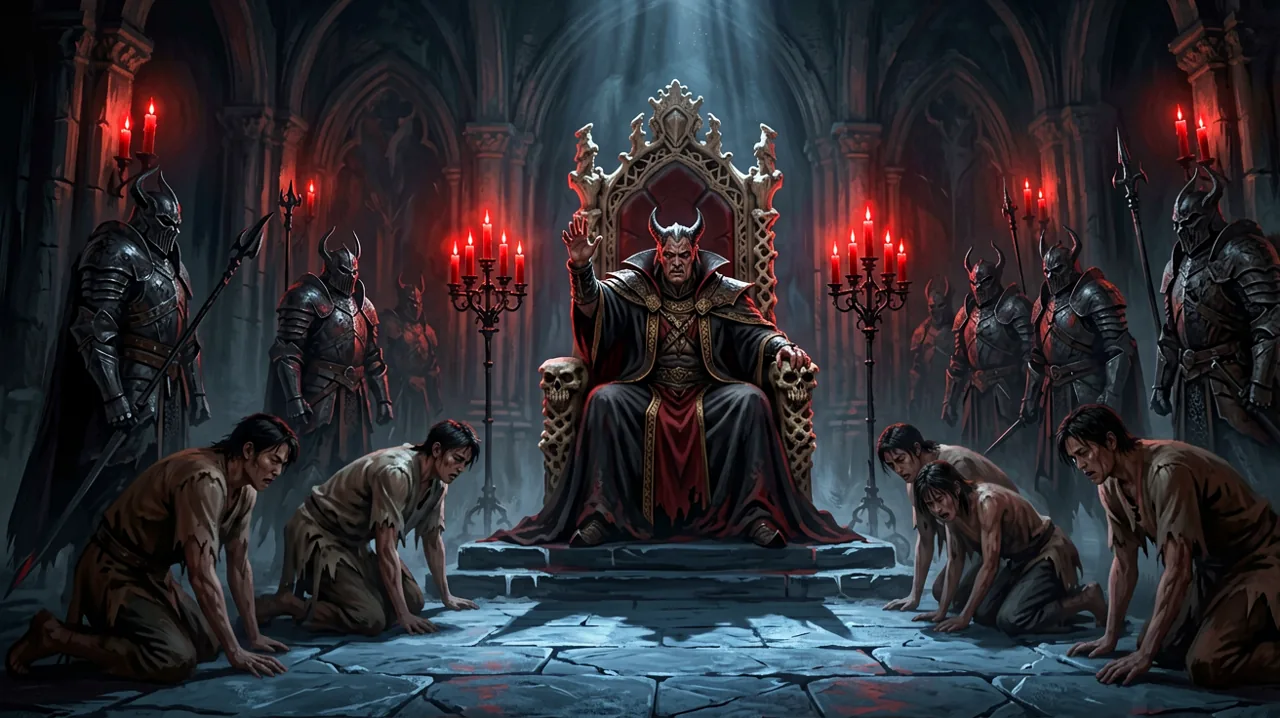
Seven weeks out from its September 3 launch, Rebel Wolves confirmed on July 15 that The Blood of Dawnwalker has gone gold. The brief Steam announcement — “Vale Sangora awaits 🩸 September 3rd, 2026” — says everything that needed to be said: the disc is pressed, the builds are locked, and a delay is no longer on the table. That’s meaningful news for a debut title from a studio that, however impressive its pedigree, has never shipped a game before.
But the gold announcement wasn’t the only thing worth paying attention to yesterday. IGN’s ongoing First coverage dropped two substantial pieces — a 4-hour hands-on preview and a dedicated Vampire Court system explainer — and an antagonist design interview surfaced from IGN Southeast Asia that reframes how Rebel Wolves thinks about the game’s villains. Taken together, they fill in some of the gaps that earlier previews left open. Here’s what actually matters.
Gold Means What It Always Means — And a Bit More Than That
Going gold is routine news for most studios. For Rebel Wolves, it carries extra weight. The Warsaw-based team — founded by several former CD Projekt Red developers, most notably The Witcher 3 game director Konrad Tomaszkiewicz — has spoken publicly about how the troubled launches of Witcher 3 and Cyberpunk 2077 shaped their philosophy around scope and polish. Finishing development seven weeks before release, rather than scrambling to crunch through launch week, signals the studio walked the walk.
Pre-orders remain open on Steam and are live on PS5 and Xbox Series X|S. No pricing changes or edition surprises have been announced alongside the gold news. For everything on editions and pricing, see our release date and platforms guide.
The IGN First Hands-On: Three Playstyles in Four Hours
The headline on IGN’s hands-on preview — “Let Me Be a Vampire, Detective, and Witch Lover in the Space of 4 Hours” — sounds provocative, but it’s actually a tidy summary of how flexibly the game reportedly handles player intent. The preview suggests that within a single extended play session, the same open-world area of Vale Sangora supported stealth-vampire predation, social investigation of a mystery, and a companion relationship arc with a character described as a local witch. None of these were separate modes or locked quest chains; they overlapped organically based on choices the previewer made.
This matters for how you should think about your first playthrough. The game isn’t asking you to commit to “be a monster” or “be a hero” from a character-creation screen. Instead, these identities emerge from how you spend your limited in-game days. Rebel Wolves has been consistent on this point — the 30-day time limit forces prioritization — and the IGN preview appears to confirm that the system holds up under extended play, not just in scripted demo conditions.
The “detective” angle is also new texture. Earlier previews focused on combat and traversal; the suggestion that Coen can conduct social investigations during daytime hours — talking, observing, piecing together information through human-scale interactions rather than supernatural force — adds a dimension that hadn’t been foregrounded before. This isn’t confirmed as a formal mechanic (no “detective vision” is mentioned), but the preview implies NPC dialogue trees and environmental storytelling carry serious weight during the human phase.
The romance element, meanwhile, has been acknowledged in previous coverage, but this is the first preview that puts it in direct experiential terms: it reportedly develops meaningfully within the hands-on window, which suggests Rebel Wolves isn’t gating companion relationships behind late-game investment the way many RPGs do. For more on the companion system, our romance guide will be updated as more information becomes available.
The Vampire Court System: How Infamy Actually Works in Practice
The IGN Vampire Court explainer is the most mechanically substantive piece of the IGN First wave. The short version: Lord Brencis and his vampire officers don’t just sit in a castle waiting for Coen to show up. The Vampire Court — Brencis’s ruling hierarchy over Vale Sangora — responds dynamically to the player’s actions. Disrupting a vampire’s operation, killing a minor officer, or freeing a village from tribute reportedly triggers a reputation escalation that IGN describes through the lens of the game’s Infamy system.
What’s worth noting here is the directionality. This isn’t a standard morality meter where “good deeds” lower a threat bar. The Vampire Court tracks specifically what you’ve done to them: which plans you’ve dismantled, which officers you’ve antagonized, which territories you’ve destabilized. High infamy reportedly doesn’t lock you out of content — Rebel Wolves has stated that the game won’t stop you from progressing — but it does change how the Court responds, likely affecting which vampire officers intervene in the open world and how aggressively.
This connects directly to the four vampire lords covered in earlier coverage. The IGN explainer specifically names Lord Brencis as the primary antagonist whose “bloodsucking operation” the player works to dismantle, but the Court hierarchy below him appears to function as a living obstacle system rather than a simple boss roster. Think less “defeat the four lords in sequence” and more “the court reshuffles around your moves.” That’s a meaningful distinction for anyone planning a specific approach to the story.
For context on Brencis and the vampire officers, see our Brencis and Vampire Officers guide.
”I’m Allergic to Antagonists Who Are Bad for the Sake of Being Bad”
The IGN Southeast Asia interview with Rebel Wolves developers adds philosophical framing to the mechanical picture above. The quote in the headline isn’t just PR patter — it reflects a specific design choice visible in how the Court system is apparently built.
Rather than constructing Brencis and his officers as obstacles to overcome, Rebel Wolves reportedly designed them with comprehensible motivations. The interview doesn’t spell out what those motivations are — that would be spoiler territory — but the framing suggests that interactions with Vampire Court members won’t always resolve as simple combat encounters. Whether that means negotiation options, moral dilemmas, or something else isn’t confirmed, but the tone of the interview implies the officers are characters with their own agendas, not just difficulty checkpoints in human shape.
This lines up with what the studio said earlier about their approach to the Vrakhiri vampire faction — that they wanted vampire lore that felt internally consistent rather than arbitrarily evil. The Vampire Court system appears to be the mechanical expression of that philosophy: a hierarchy that behaves according to its own logic, which the player has to understand in order to effectively disrupt it.
Day and Night: Two Games Sharing One World
Community discussion on r/Blood_of_Dawnwalker has been synthesizing the preview information into a practical breakdown of how the dual-form system divides gameplay. The summary making rounds is accurate to what official sources have confirmed:
Daytime (Human):
- Sword-based combat combined with hex magic
- Full NPC interaction and dialogue access
- Quest completion through social and investigative means
- Health recovery via food and rest
Nighttime (Vampire):
- Claw-based combat and supernatural abilities
- Shadowstep for rapid repositioning and traversal
- Wall and ceiling movement, opening vertical exploration options
- Feeding on humans or animals for sustenance
- Access to locations and secrets that are physically or socially unavailable during the day
The key insight from community analysis — and one worth internalizing before launch — is that this isn’t just an aesthetic toggle. The day/night split creates genuinely different opportunity sets. Certain NPCs may only appear at night. Certain locked areas may only be reachable via vampire traversal. Certain quests may only be resolvable through human dialogue. This means the 30-day time limit isn’t just a countdown — every cycle is a resource allocation decision between two distinct capability sets.
This is also why the IGN preview’s “detective” framing registers as significant: investigation appears to be primarily a daytime, human-form activity. Committing your daylight hours to a social mystery means not using them for something else. That tradeoff structure is what Rebel Wolves means when they describe the game as a narrative sandbox.
What to Watch Before September 3
With gold confirmed and IGN First still in progress, the next few weeks are likely to bring continued preview coverage — possibly including more specific system deep-dives, combat footage under embargo lift, or a second hands-on wave closer to launch. Based on what’s been disclosed so far, the areas still least covered by previews are:
- Hex magic specifics: What spells exist in human form, how they interact with sword combat, and whether there’s a build system governing access to them. Our combat and hex magic guide has the current picture.
- The Vampire Court escalation ceiling: How severe does infamy get, and are there Court-wide consequences (like the Vrakhiri sending a hunter after you) or is the response always localized to the officer you’ve wronged?
- Night-exclusive questlines: The IGN preview confirms night opens different areas; whether those areas host separate quest chains or just environmental secrets hasn’t been detailed.
- Companion mechanics in full: The witch romance appeared in a four-hour preview, but the full scope of companion arcs — how many, how deep, what choices affect them — remains to be documented properly.
September 3 is close enough now that we’re done speculating about delays. The question is how well the final product holds together when the full 30-day structure is available to play in one sitting rather than a curated preview slice.
Sources
Sources
- Steam – The Blood of Dawnwalker Goes Gold
- IGN – Preview: Vampire, Detective, and Witch Lover in 4 Hours
- IGN – Vampire Court Explained
- IGN Southeast Asia – Antagonist Design Interview
- Wccftech – Dawnwalker Goes Gold, September 3 Launch Confirmed
- Push Square – Dawnwalker Goes Gold 7 Weeks Before PS5 Release
- r/Blood_of_Dawnwalker – Day and Night Are Almost Two Different Games