News
The Blood of Dawnwalker: Macabre Tooth Fairies, Time-Bending Magic, and Animation Feedback
Discover how horrific tooth fairies power time-bending mechanics in The Blood of Dawnwalker, and how community feedback is shaping weapon animations before launch.
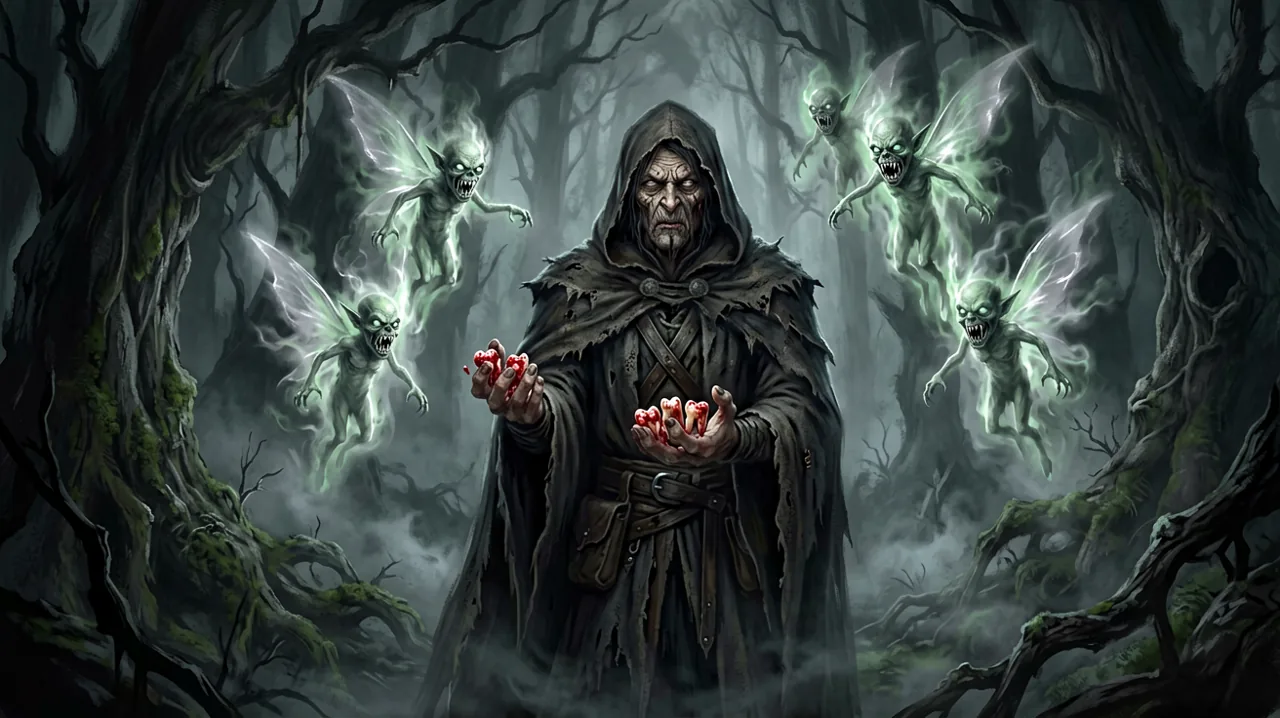
As the September 3 release date steadily approaches, Rebel Wolves is gradually pulling back the curtain on the stranger, more eccentric systems driving The Blood of Dawnwalker. While previous showcases predominantly highlighted the dual-state combat of playing a human by day and a vampire by night, a fresh wave of industry reports has exposed a delightfully macabre gameplay system. According to recent coverage from Rock Paper Shotgun, players will encounter horrific variations of traditional folklore creatures—specifically, “Tooth Fairies” or pixies who trade powerful time-bending abilities for the violently extracted teeth of your enemies.
Simultaneously, the hardcore player community is scrutinizing every frame of recent gameplay footage, pointing out specific animation quirks that threaten the game’s highly touted dark fantasy immersion. Chief among these community complaints is the exact positioning of protagonist Coen’s sword, which currently suffers from noticeable clipping issues during basic traversal. Furthermore, recent industry podcast discussions have reconfirmed the studio’s commitment to a Mass Effect-style overarching narrative spanning multiple games, where every major decision permanently alters the world state. Here is a thorough breakdown of these newly revealed mechanics, the ongoing animation debates, and what they ultimately mean for your grueling journey through Vale Sangora.
The Macabre Folklore: Meet the Real Tooth Fairies
The Blood of Dawnwalker has consistently leaned into a mature, gritty interpretation of European folklore. We previously examined the varied creatures wandering the cursed wilds in our overview of the confirmed bestiary, but the exact mechanical role of pixies remained somewhat ambiguous. Now, thanks to insights stemming from Rock Paper Shotgun’s latest coverage, we know these entities serve a highly specific, gruesome function in the game’s broader combat economy.
These are reportedly not the benevolent sprites of childhood bedtime stories. Described as “really horrible Tooth Fairies,” these pixies act as cryptic, hidden merchants tucked away in the darker, more treacherous corners of the Vale Sangora world map. Instead of asking for gold, silver, or traditional RPG currencies, they deal exclusively in human—or perhaps monster—teeth. Bringing them this grisly currency grants the player the supernatural ability to “bend” time.
This mechanic is a brilliant fusion of narrative flavor and gameplay utility. It grounds the intricate hex magic and supernatural abilities in a tangible, physical cost. You are not simply waiting for an arbitrary mana bar to regenerate behind a piece of UI; you are actively harvesting body parts from fallen adversaries to appease strange, demanding woodland spirits. This design choice strongly echoes the low-fantasy roots of the development team, many of whom previously worked on The Witcher 3, where dealing with monsters often required unsavory methods, deep preparation, and moral compromises.
Time-Bending Mechanics: How It Might Function in Combat
The conceptual introduction of bending time in an action-heavy RPG opens up a multitude of strategic combat possibilities. While Rebel Wolves has not yet confirmed the exact mechanical execution of this time manipulation system, the action RPG genre offers a few obvious precedents. Bending time could manifest as a brief window of significantly slowed time—similar to classic bullet time mechanics or extreme focus modes—allowing Coen to safely manage large, overwhelming crowds of enemies, perfectly time his high-risk parries, or line up devastating magical combinations without interruption.
Given that The Blood of Dawnwalker features a notoriously challenging and unforgiving combat system, having an “on-demand” time slow could act as a crucial panic button for particularly brutal encounters. If time manipulation is tied exclusively to the teeth-trading economy, it heavily implies that bending time is a consumable, limited buff rather than an infinitely reusable cooldown skill. Players might have to actively visit these Tooth Fairies at specific environmental nodes or shrines to trade their collected teeth for time-bending charges. Alternatively, perhaps the pixies grant a passive buff token that automatically activates a time-slow effect when the player executes a perfect dodge against a lethal attack.
Another compelling theory circulating among the community is how this directly ties into the game’s heavily promoted day-night cycle and Coen’s evolving vampire powers. Are these time-bending abilities accessible during the day when Coen is restricted to his human state, acting as a much-needed equalizer against overpowering supernatural foes? Or is this a strictly nocturnal power, further emphasizing the overwhelming, god-like strength of his vampire form? If players are restricted in how often they can bend time based on their currency reserves, efficiently managing your inventory of teeth will inevitably become a core pillar of your early build and skill tree planning.
Harvesting Teeth: A New Layer of Combat Economy
The strict requirement of enemy teeth naturally raises practical questions about the game’s looting system. How exactly does Coen acquire these teeth during the chaos of battle? In standard, fast-paced RPGs, loot is simply vacuumed up automatically after an enemy falls to the ground. However, a game emphasizing raw, visceral, and tactical combat might directly tie the acquisition of teeth to specific gameplay actions.
It is highly expected that teeth might function as a guaranteed drop only when executing specific finishing moves, or perhaps when actively targeting the head with heavy, blunt strikes during combat. This systemic approach would intelligently incentivize players to vary their attack patterns rather than blindly mashing light attack buttons until a health bar depletes. If you urgently need to visit the Tooth Fairies to replenish your time-bending abilities before a major boss fight, you might actively alter your combat style on the fly to ensure you extract the necessary currency from lesser mobs. This potential loop—killing enemies in highly specific ways to harvest their teeth, trading those teeth for powerful time manipulation, and using that time manipulation to defeat significantly tougher foes—sounds like a fiercely engaging and wholly unique core gameplay loop.
Weapon Placement and the Clipping Dilemma: The Community Speaks
While the broader combat mechanics are drawing widespread praise and curiosity, the game’s highly dedicated community is currently providing incredibly granular feedback on the current state of character animations. Over on the official Dawnwalker subreddit, an observant and vocal fan directly addressed the Rebel Wolves development team regarding a glaring visual issue: the default placement of Coen’s sword.
Currently, official gameplay footage consistently shows Coen’s scabbard mounted extremely low on his lower back, resting almost directly on his buttocks. According to widespread community feedback, this positioning looks highly unnatural and creates severe, immersion-breaking clipping errors. When Coen enters a crouching or stealth animation, the bottom of the sheath visibly clips straight through the solid ground. Even during basic, upright running animations, the hilt of the sword frequently clips completely through Coen’s swinging arm.
In a premium RPG aiming for deep immersion and gritty cinematic realism, these types of prominent visual bugs are highly distracting. The specific way a character carries their weapons communicates a tremendous amount about their martial training and the physical reality of the game world. Games that get this right—where scabbards are properly fastened firmly to the hip or elegantly angled high on the upper back—feel significantly more polished and grounded.
Passionate fans are actively petitioning the developers to either permanently adjust the default mounting position to the hip or upper back, or better yet, provide an in-game toggle option for players to fully customize where their weapons are sheathed. We already know that the studio has been actively seeking top-tier animation talent to aggressively refine the game before its September launch. Addressing these specific clipping issues should ideally be a high priority, as absolutely nothing shatters the illusion of a beautifully crafted, atmospheric dark fantasy world faster than a legendary steel sword awkwardly phasing through solid rock and bone.
Narrative Stakes: Mass Effect-Style Save Transfers Reconfirmed
Beyond the intricacies of combat economies and visual animations, the long-term scope and ambition of The Blood of Dawnwalker has once again been thrust into the media spotlight. In a recent episode of the popular Sacred Symbols podcast, the hosts discussed the studio’s massive ambition to build a sprawling, interconnected franchise with deep narrative continuity. The discussion reiterated that Rebel Wolves is steadfastly promising a Mass Effect-style save migration system for this nascent series.
We have previously reported on how the game will feature dramatically different multiple epilogues and force players into complex, morally gray decisions with no clear right answers. Reconfirming that these heavy choices will seamlessly carry over into subsequent sequels radically elevates the emotional stakes of your initial playthrough. When you decide the ultimate fate of a powerful vampire lord, commit to a specific romance path, or permanently alter the political landscape of Vale Sangora, you are not just shaping the ending of this single game; you are actively defining the exact starting state of the next one.
This level of long-term narrative ambition is exceedingly rare in modern gaming, largely due to the sheer logistical nightmare of accurately tracking hundreds of minute variables across different engine iterations and future console generations. However, if Rebel Wolves can successfully and flawlessly implement this save transfer mechanic, it will firmly cement The Blood of Dawnwalker as a true narrative sandbox where player choices genuinely matter for years to come.
Looking Ahead to Launch
As the calendar rapidly inches closer to the official launch, the stark contrast between grand, multi-game narrative ambitions and highly specific, bizarre gameplay quirks paints a genuinely fascinating picture of the final product. Forcing players to trade bloody teeth to terrifying woodland fairies for the sheer power to temporarily bend time shows a development team completely unafraid to get exceptionally weird and grim with their mechanical design.
At the same time, the community’s remarkably keen eye on animation clipping and scabbard placement proves that modern audiences expect an incredibly high baseline level of visual polish from AAA and high-end AA studios. With Rebel Wolves actively listening to hardcore fan feedback and promising a branching story that will span multiple full-length games, The Blood of Dawnwalker is rapidly shaping up to be an unforgettable, mechanically dense, and delightfully gruesome dark fantasy experience.