News
The Blood of Dawnwalker: Vale Sangora's Wetlands and Rebel Wolves' Sci-Fi Sequel Ambitions
Rebel Wolves teases lethal wetlands in Vale Sangora and discusses the potential for a sci-fi setting in future The Blood of Dawnwalker sequels.
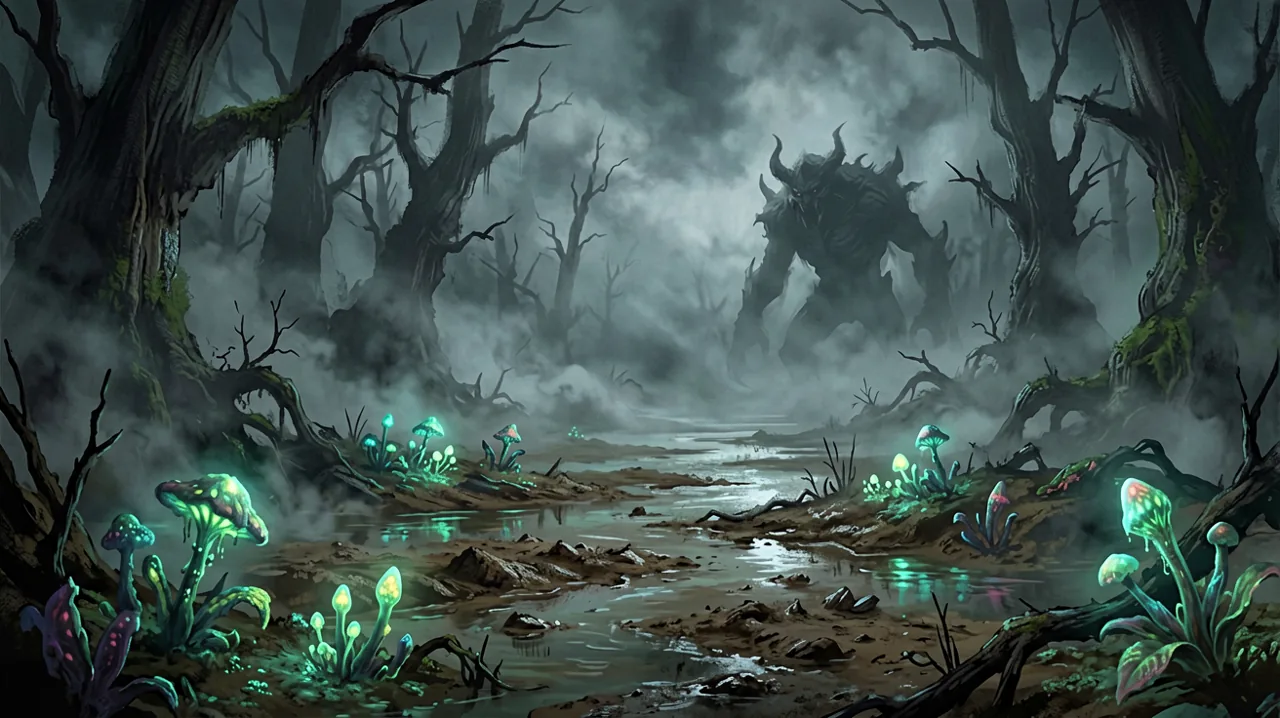
As the highly anticipated September 3, 2026 launch approaches, the narrative scope of The Blood of Dawnwalker continues to expand in fascinating directions. While players are preparing to immerse themselves in the dark, low-fantasy regions of Vale Sangora, the development team at Rebel Wolves is already casting their gaze toward the distant future. Recent updates from official channels and media outlets have highlighted two distinct but equally compelling aspects of the franchise: the immediate, muddy dangers of Vale Sangora’s wetland biomes, and the startling revelation that future sequels might transition into a full-fledged science fiction setting.
This dual focus—fleshing out the intricate, terrestrial threats of the present game while keeping the door wide open for radical genre shifts in the future—demonstrates the massive scale of the studio’s ambition. Here is a breakdown of the newly teased wetlands environment and an analysis of what a sci-fi iteration of the Dawnwalker universe could look like.
Venturing Into the Wetlands of Vale Sangora
The Blood of Dawnwalker is expected to offer a diverse and interconnected world map that rewards careful exploration. Recently, promotional text highlighted by the community (via Kazuliski on Reddit) offered a closer look at one of the specific biomes players will navigate: the wetlands.
Described in a darkly humorous tone, the wetlands are presented as a place where travelers can “play in the mud, gather miraculous herbs for every rash and indigestion, and make friends with local fauna.” However, the text immediately undercuts this welcoming imagery with a stern disclaimer: “not all local fauna may want to make friends with you.”
Mud, Movement, and Environmental Hazards
In a grounded, immersive RPG, terrain matters significantly. The explicit mention of “playing in the mud” suggests that the physical environment of the wetlands will directly impact exploration and potentially combat mechanics. If the developers are aiming for high realism and consequence-driven gameplay, traversing deep mud could heavily slow down player movement speed, making it harder to dodge incoming attacks or execute swift melee strikes.
This environmental friction forces players to rethink their approach to combat and hex magic. Instead of relying on rapid evasion and agility, players might need to utilize ranged abilities, crowd-control hexes, or defensive buffs when caught in the mire. The terrain itself becomes an adversary, requiring tactical positioning to avoid getting bogged down while engaging agile enemies who call the swamp their home.
Herbalism, Status Effects, and Survival Mechanics
The promotional text’s reference to gathering “miraculous herbs for every rash and indigestion” hints at a robust iteration of the game’s crafting and survival systems. While “indigestion” might be a playful exaggeration from the marketing team, it strongly implies that consuming certain raw materials, impure blood, or tainted water might carry negative status effects.
These afflictions would reportedly need to be cured via alchemy or herbalism. Gathering unique flora in the wetlands will likely be a crucial gameplay loop for players looking to optimize their builds and skill trees. The wetlands, despite their treacherous nature, are positioned as a high-risk, high-reward zone for dedicated alchemists and gatherers seeking the most potent ingredients in the region.
The Hostile Fauna of the Wetlands
The cheeky disclaimer regarding the local fauna reinforces that the wetlands are fundamentally hostile and unforgiving. While we already know the game will feature supernatural threats and warring human factions, this update centers on the natural (or perhaps corrupted natural) wildlife of Vale Sangora.
Players should expect to face territorial beasts perfectly adapted to the murky environment. Creatures that can ambush from the deep water, blend seamlessly into the thick rolling fog, or maneuver effortlessly through the mud will likely pose a significant threat to an unprepared traveler. This aligns with earlier hints about the region’s dangerous biodiversity, expanding the known roster of enemies and reminding players that nature itself is a formidable foe in this dark fantasy setting.
Rebel Wolves’ Sci-Fi Ambitions for the Franchise
While the wetlands ground us firmly in the mud of a low-fantasy setting, a recent interview with Gamereactor UK has sent the community’s imagination into the stratosphere. When discussing the long-term future of the IP, a representative from Rebel Wolves addressed the possibility of future games featuring a science fiction setting, stating unequivocally, “Nothing is out of the question at this point.”
This seemingly brief quote is remarkably loaded when you consider the studio’s pedigree and the thematic potential of the Dawnwalker universe.
From Low-Fantasy to High-Tech
Rebel Wolves is a studio composed of veteran developers who previously worked on monumental titles like The Witcher 3 and Cyberpunk 2077. They are intimately familiar with crafting both medieval-inspired dark fantasy worlds and neon-soaked, dystopian sci-fi futures. Transitioning a fantasy intellectual property into a futuristic setting is an incredibly rare and ambitious move in the gaming industry. However, if any development team has the institutional experience, narrative chops, and technical prowess to execute such a massive thematic pivot, it is this team.
A science fiction setting for a vampire RPG opens up entirely new avenues for storytelling, world-building, and gameplay mechanics. How does a creature of the night operate in a sprawling megacity bathed in perpetual artificial daylight? How do ancient hexes and primitive blood magic interact with cybernetics, advanced weaponry, and digital networks? The juxtaposition of ancient, primal vampirism against a sterile, hyper-advanced society creates a compelling narrative friction that few games have successfully explored.
The Advantage of Immortal Protagonists
One of the unique structural advantages of a vampire narrative is the inherent immortality of the main characters. Unlike mortal heroes bound to a specific era, an immortal protagonist can live through the centuries. This allows the franchise to organically leap forward in time without necessarily abandoning its core cast.
We have previously discussed how the developer plans for the series to span multiple eras (see our analysis on Rebel Wolves’ plans for sequels spanning centuries), but the explicit mention of a sci-fi setting pushes this concept further than many anticipated. An immortal vampire who fought in the muddy wetlands of Vale Sangora could, centuries later, be navigating the neon-lit alleys of a futuristic metropolis, carrying the emotional baggage and consequences of choices made in the first game.
How Far Away is a Sci-Fi Sequel?
It is crucial to ground these expectations before hype runs wild. The quote simply confirms that a sci-fi setting is “not out of the question,” rather than an active confirmation of the immediate sequel’s setting. The first game has not yet launched, and any potential sequel is years, if not a decade, away.
However, this revelation provides vital context for how players should approach the lore of The Blood of Dawnwalker. The world of Vale Sangora is not a static fantasy realm; it is a world on a timeline moving relentlessly forward. The factions, cultures, and ancient secrets we uncover in this first installment may very well be the foundational history of a future, highly advanced civilization.
What This Means for Your Upcoming Playthrough
For players preparing for the September 2026 launch, these two pieces of information serve as a reminder of the depth and breadth of the Dawnwalker experience.
When you find yourself trudging through the dangerous, fauna-infested wetlands of Vale Sangora, searching for rare herbs to cure a debuff, remember that you are experiencing the primal origins of a universe that may eventually reach the stars. The contrast between the visceral, grounded struggle for survival in the mud and the boundless potential of a sci-fi future highlights the exceptional ambition driving Rebel Wolves.
As we continue to receive more snippets of information leading up to release, our Vale Sangora world guide will be constantly updated. Whether you are focused on optimizing your combat approach for the hostile wildlife or theorizing about the long-term chronological narrative, The Blood of Dawnwalker is shaping up to be a defining RPG experience that transcends traditional genre boundaries.