News
The Blood of Dawnwalker 4K 60FPS Requirements Point to RTX 5090 as Release Looms
With just three weeks until launch, reports indicate running The Blood of Dawnwalker at 4K 60FPS requires an RTX 5090. We analyze the PC specs and Witcher 3 hype.
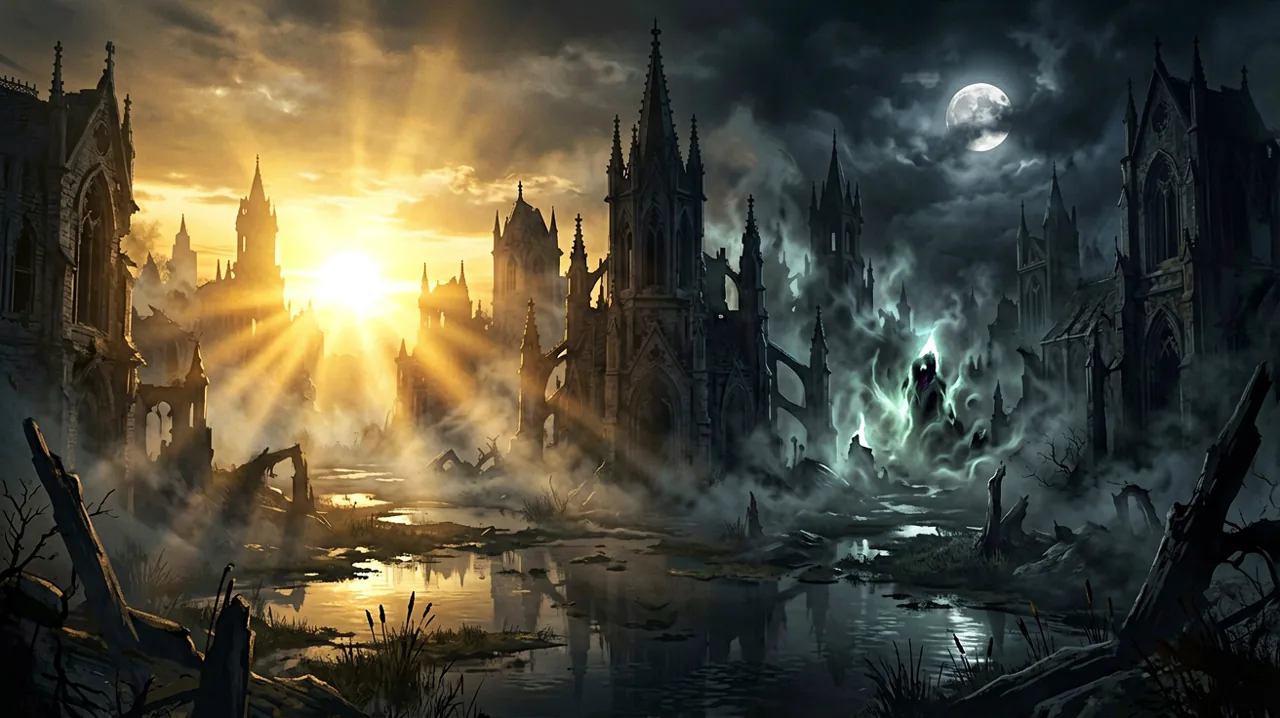
The countdown has officially entered its final, agonizing stretch. With just three weeks remaining until the confirmed September 3 launch date, the gaming community is bracing for what many major outlets are already calling the most significant dark fantasy RPG of the decade. The anticipation is palpable, but alongside the narrative excitement comes a sobering reality check for PC enthusiasts. Pushing Rebel Wolves’ debut title to its absolute graphical limits might require hardware that most players can only dream of.
Recent reports surfacing from the hardware testing community paint a picture of a game that is as technically demanding as it is narratively ambitious. While the studio has ensured the game remains accessible to older hardware at minimum settings, the ceiling for visual fidelity appears to be exceptionally high.
The RTX 5090 Revelation: Factoring the Cost of 4K
According to a recent report from hardware outlet GameGPU, running The Blood of Dawnwalker at a native 4K resolution while maintaining a locked 60 frames per second will reportedly require nothing less than an Nvidia RTX 5090. This information remains community-reported and has not yet been officially confirmed by Rebel Wolves via a formalized “Ultra” spec sheet, but it aligns with the whispers we have been hearing about the game’s incredibly dense visual engine.
This news creates a fascinating technical dichotomy. Earlier this summer, the community breathed a collective sigh of relief when it was revealed that the minimum PC requirements dropped to a humble GTX 1060. How can a game run on a mid-range GPU from a decade ago, yet bring the absolute bleeding edge of 2026 hardware to its knees at 4K?
The answer lies in the scalability of modern game engines and the specific visual technologies Rebel Wolves is employing. The jump from 1080p on low settings to 4K on ultra is no longer just a matter of pixel count. It involves enabling entirely different rendering paradigms: fully path-traced global illumination, uncapped volumetric fog resolution, maximum level-of-detail (LOD) distance, and uncompressed texture streaming. The RTX 5090 requirement suggests that at its highest settings, the game stops using standard rasterization tricks and attempts to simulate light and shadow with physical accuracy.
Why is Vale Sangora So Demanding?
To understand the immense hardware toll, we have to look at what exactly is being rendered on the screen. The world of Vale Sangora is not a static sandbox. It is a highly dynamic environment built around the core concept of duality—a theme that dictates both the gameplay and the rendering pipeline.
First, consider the environmental density. The game features sprawling, swampy wetlands completely choked with interactive foliage, followed seamlessly by descents into the massive, labyrinthine underground lairs of the Sanzhani. Rendering dense geometry is taxing enough, but applying complex lighting models to subterranean burrow combat requires significant GPU horsepower to ensure shadows react accurately to sudden flashes of Hex magic.
More importantly, the game’s signature time-of-day mechanics likely play a huge role in the VRAM and processing demands. The Golden Hour mechanics aren’t just a simple color filter; they dictate enemy spawns, NPC behavior, and the physical properties of the environment. The transition from day to night means the engine must juggle two entirely different atmospheric states. Furthermore, the player character’s ability to shift between human and vampire forms means the game has to keep two sets of high-fidelity animations, particle effects, and combat physics loaded in memory at all times. As the developers previously discussed, the cost of duality is paid not just in narrative consequences, but in system resources.
The Witcher 3’s Biggest Competition
The conversation around hardware requirements feels incredibly nostalgic, echoing the launch window of another monumental RPG. As a recent Polygon editorial highlighted, The Blood of Dawnwalker is stepping up as The Witcher 3’s biggest competition—and it will be here in just three weeks. This comparison is inescapable, largely because Konrad Tomazkiewicz, the Game Director for The Witcher 3, is the CEO and Game Director at Rebel Wolves.
When The Witcher 3 launched over a decade ago, it notoriously melted high-end PCs. Features like Nvidia HairWorks and the dense foliage of Velen set a new benchmark for what open-world games could look like, provided you had the hardware to run it. Rebel Wolves appears to be executing the exact same playbook for 2026. They are delivering a narrative sandbox that pushes current technology to the absolute brink, ensuring the game will look spectacular for years to come as average consumer hardware eventually catches up to its Ultra settings.
The Polygon piece also notes that the competition isn’t purely technical. It’s about tone, maturity, and choice. The gaming community on platforms like Reddit has been starving for a true spiritual successor to Geralt’s journey. While games like Crimson Desert are frequently brought up in these discussions, The Blood of Dawnwalker holds the actual pedigree. However, it distinguishes itself by trading standard medieval fantasy for a macabre, low-fantasy world where vampire officers operate within complex political factions.
Preparing Your Rig (and Expectations)
If the reports regarding the RTX 5090 are accurate, what does this mean for the vast majority of players who will be playing on RTX 30-series or 40-series cards?
Compromise will be necessary, but it shouldn’t be detrimental to the experience. For players on high-end but not absolute top-tier hardware (like an RTX 4080), native 4K might be out of reach without relying heavily on AI upscaling technologies like DLSS 4 or FSR 4. Dropping the internal render resolution to 1440p and utilizing frame generation will likely be the sweet spot for achieving a smooth 60 FPS while retaining the vast majority of the game’s visual splendor.
It is also worth noting how the game is meant to be played. The Steam page specifically recommends a controller for PC players. This suggests that the combat system—which relies heavily on rhythmic dodging, hex casting, and managing the infamy system—is optimized for a gamepad layout. If you are playing with a controller on a large display, minor reductions in shadow resolution or volumetric fog density to maintain a stable framerate will be practically unnoticeable from a couch distance.
The Three-Week Countdown
As we cross off the final days on the calendar, the picture of The Blood of Dawnwalker becomes crystal clear. We are looking at a game that refuses to compromise on its vision, both in its branching, consequence-heavy storytelling and its punishingly beautiful graphical execution.
We expect Rebel Wolves to release the final, official PC system requirements chart very soon, which will finally put these RTX 5090 rumors to the test and clarify exactly what it takes to run the game at 1440p and 4K. Until then, players have exactly three weeks to ensure their drivers are updated, their storage drives are cleared, and they are prepared to step into the blood-soaked, demanding world of Vale Sangora.