News
Balancing Humanity and the Beast: Analyzing Dawnwalker's Dual Nature Progression and New Skill Tree Screens
Recent screenshots and trailer footage highlight the intricate Dual Nature system, showcasing how time mechanics and progression force difficult choices.
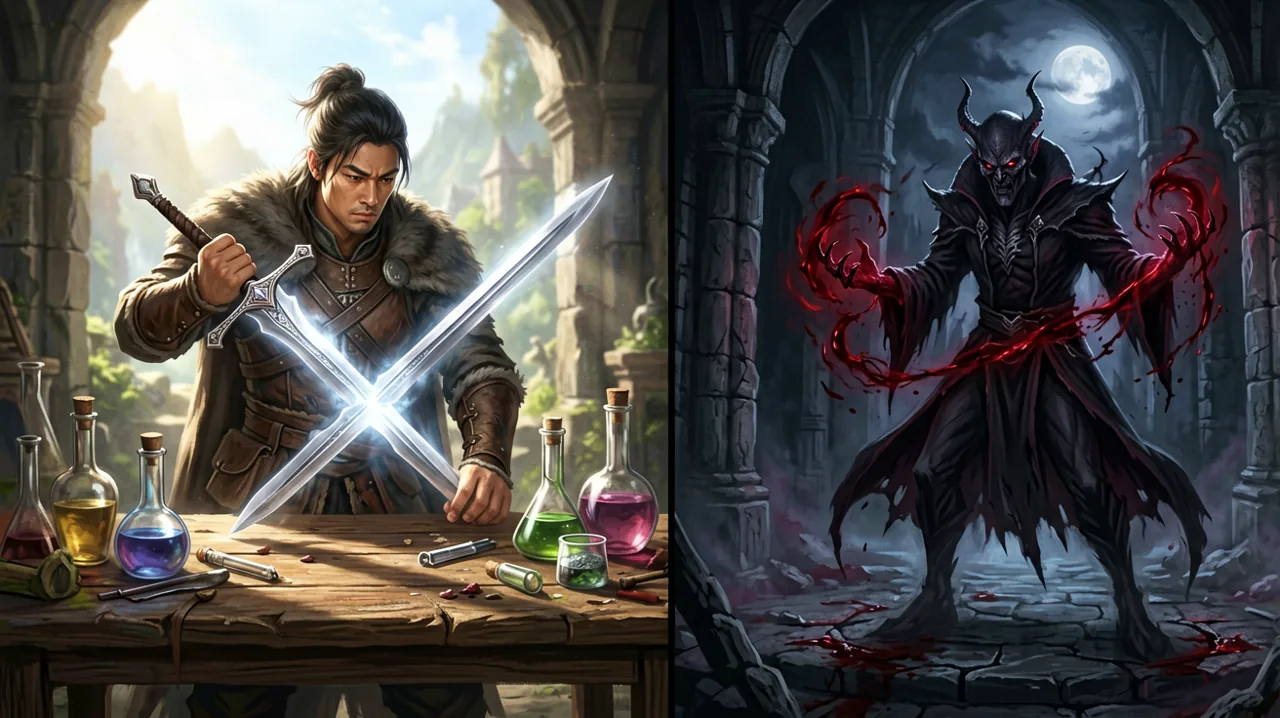
As the September 3 release date approaches for Rebel Wolves’ highly anticipated debut title, the marketing cadence has noticeably accelerated. A newly unveiled trailer has shifted the spotlight away from broader story strokes and directly onto the mechanical friction at the heart of the game: the Dual Nature system, the oppressive time mechanics, and the visceral combat. Accompanied by a fresh batch of Skill Tree Menu screenshots published by IGN Southeast Asia, we finally have a clearer picture of how character progression will handle the internal conflict between the protagonist’s fading humanity and their growing vampiric curse.
The Dual Nature System: More Than Just a Day and Night Cycle
The concept of a character grappling with an inner beast is a well-worn dark fantasy trope, but the recent trailer footage indicates that Rebel Wolves is treating this dichotomy as a core gameplay pillar rather than just narrative flavor. The Dual Nature system reportedly splits the gameplay experience into two distinct stylistic and mechanical halves, governed entirely by the in-game clock.
During daylight hours, the protagonist is expected to rely heavily on traditional human combat techniques. The trailer showcases methodical swordplay, emphasizing parries, precise footwork, and calculated strikes. This human form is not just a weakened state; it is a tactical necessity. Daylight allows the player to interact with the human settlements of Vale Sangora without triggering immediate hostility, engage in localized investigations, and utilize standard weaponry.
However, as the sun sets, the beast emerges. The night cycle shifts the combat rhythm entirely. The footage highlights an aggressive, predatory fighting style characterized by rapid dashes, brutal claw executions, and the integration of blood-based hex magic. The Dual Nature system demands that players master both approaches. You cannot simply sleep through the day to play exclusively as a vampire, nor can you avoid the night entirely due to the overarching time limit. The game forces you to adapt to the constraints and advantages of both forms.
Decoding the Skill Tree Menu Screenshots
The slideshow of Skill Tree Menu screenshots provides crucial insight into how players will customize this dual experience. While previous discussions on builds and skill trees offered broad speculation, these new images confirm a sharply divided progression system that visualizes the protagonist’s internal struggle.
The menus reportedly display distinct branches that seem to represent the fight for the character’s soul. On one side, we see human-centric martial disciplines. These nodes appear to focus on enhancing stamina regeneration, increasing the parry window for standard weapons, and unlocking advanced sword techniques. Investing in this branch likely makes the daytime sequences more manageable and allows the player to hold their own against elite human guards or daytime monsters without resorting to suspicious, attention-drawing abilities.
Conversely, the vampiric skill branches look far more esoteric and dangerous. The screenshots tease nodes dedicated to physical mutation, health-leeching attacks, and devastating area-of-effect capabilities. Interestingly, some of the higher-tier vampire skills appear to have detrimental effects on the human form, suggesting a permanent trade-off. For instance, committing heavily to blood magic might permanently lower your daylight stamina or make human NPCs inherently distrustful of you, even during the day, permanently altering how you navigate social spaces.
Synergizing the Disciplines
While the skill trees are visually separated, the most rewarding gameplay loop might involve finding synergies between the two states. The trailer footage highlights combat scenarios where the transition between forms isn’t just a passive response to the time of day, but an active, tactical decision—assuming the player has unlocked the necessary skills to manipulate the transformation.
For example, a player might initiate an encounter during the late afternoon using human stealth and standard parry mechanics. As the sun dips below the horizon and the beast form forcibly takes over, having pre-invested points into immediate transformation buffs could turn a moment of vulnerability into a devastating tactical advantage. Similarly, mastering human alchemy could allow players to concoct potions that temporarily enhance their vampiric hex magic, bridging the gap between the two distinct skill sets.
This potential for cross-pollination adds another layer of complexity. It requires players to think a few steps ahead, not just reacting to the immediate threat, but planning their build around the inevitable shift in power dynamics that occurs every dawn and dusk.
The Ticking Clock and Progression Choices
The newly unveiled trailer also heavily emphasized the time system, confirming that the clock is always ticking. As established in our recent trailer breakdown, the pressure of this time limit directly impacts how you interact with the skill trees.
Because time is a finite resource, players will likely not have the luxury of grinding out every single skill node before facing the final confrontation. The inability to fully max out both the human and vampire branches means that every skill point spent is a definitive statement about your build. Will you try to maintain a fragile balance, creating a jack-of-all-trades who is competent in the sun and moderately lethal in the dark? Or will you min-max your progression, accepting severe daylight vulnerabilities in exchange for becoming an unstoppable apex predator at midnight?
The time system forces intentionality. If you spend your limited nights hunting specific high-tier targets for the necessary experience to unlock a powerful vampire ability, you are sacrificing time that could have been spent completing daytime investigations to upgrade your human gear.
Community Expectations: The Ultimate Choice
The mechanical division shown in the skill trees aligns perfectly with ongoing community discussions regarding the narrative sandbox. Over on the official subreddits, players are already vocalizing their desires for how this duality should conclude.
A prominent community suggestion emphasizes the need for significant, divergent choices regarding the protagonist’s ultimate fate. Players want the option to stubbornly retain their human side, perhaps seeking a cure or a way to suppress the curse permanently, even if it means facing the late-game challenges without the most powerful abilities.
On the other end of the spectrum, there is a strong demand for a fully committed “vampire” path. The community is theorizing about the possibility of not just accepting the curse, but mastering it to the point of usurping the established hierarchy. The idea of taking over the powers and positions of the Four Vampire Lords is a highly requested endgame state. If the game truly embraces its dark fantasy roots, allowing the player to transition from a reluctant victim to the absolute ruler of the night would be a compelling reward for those who invest heavily in the vampiric skill branches.
The Enigma of Svartrau
As fans analyze every frame of the new footage and screenshots, other cryptic details are surfacing. Recent community activity has flagged the term “Svartrau” in relation to the game’s lore. While not officially detailed by Rebel Wolves yet, the etymology of the word—rooted in Germanic and Norse terms for “black” or “dark”—has sparked numerous theories.
Given the game’s setting, Svartrau is expected to be a significant entity within the world. It could be the name of an ancient, rival vampire bloodline, a specific, highly dangerous region of the map that is only accessible at night, or perhaps a unique classification of corrupted beasts. Whether Svartrau is a target to hunt or a faction to align with remains to be seen, but its sudden appearance in community discussions indicates that the narrative goes much deeper than standard vampire tropes.
Hardware Considerations for Handheld Players
The intricate systems showcased in the recent media drops—specifically the rapid shifting between forms and the detailed particle effects of the hex magic—are also prompting technical questions. The PC gaming community, particularly those using handheld devices, are already assessing how the game will perform.
Discussions are currently active regarding whether devices like the 2024 ROG Ally X, modified with Linux-based Steam OS, will be able to handle the game smoothly. While the official PC system requirements have provided a baseline, the complex simulation of the Dual Nature system, the time mechanics, and the dense environments of Vale Sangora will undoubtedly test the limits of portable hardware. Players looking to experience the seamless transition between daylight investigations and nocturnal combat on the go will need to monitor further technical analyses as launch approaches.
Looking Ahead
With the launch window closing in, the intersection of the Dual Nature system and the newly revealed Skill Tree menus paints a picture of an RPG that refuses to let players sit comfortably in the middle ground. Rebel Wolves is clearly building an experience where mechanical progression is intrinsically tied to narrative consequence. The choice between humanity and the beast is not just a dialogue option; it is a structural foundation that will dictate how you fight, how you survive, and ultimately, who you become when the 30-day limit expires.