News
Why Coen is 'Quite Easy to Kill' During the Day in The Blood of Dawnwalker
Rebel Wolves' game director explains why Coen is intentionally vulnerable in sunlight, preventing overpowered builds and enforcing dark fantasy survival.
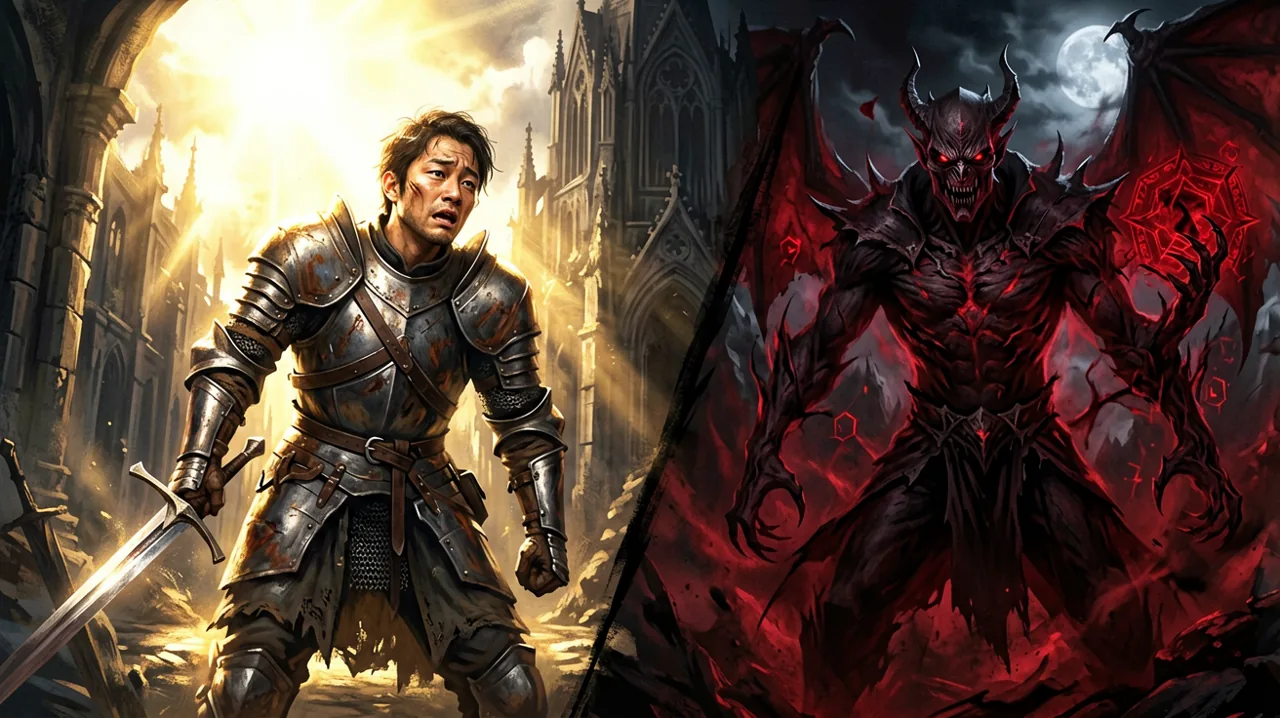
As we march toward the September 3, 2026 release of The Blood of Dawnwalker, Rebel Wolves has finally clarified one of the most heavily debated aspects of their dark fantasy RPG: just how powerful Coen actually is. In most modern action RPGs, the progression curve is a straight line upward. You start as a struggling nobody and end up as a demigod swatting aside heavily armored bosses with ease. But according to new comments from the development team, The Blood of Dawnwalker is taking a drastically different approach to character progression, anchored entirely by its day and night cycle.
Speaking recently to GamingBolt, the game director revealed a blunt reality check for players expecting to steamroll the game by act three: you will be “quite easy to kill” during the daytime. The reasoning is refreshingly simple. Rebel Wolves actively wanted to avoid designing an overpowered protagonist, forcing players to respect the hostile world regardless of their current level or gear loadout. It is a bold structural choice that essentially halves your combat effectiveness based on the position of the sun, bringing massive implications for how we will explore, fight, and survive.
The Mechanics of Daylight Vulnerability
To understand why daylight operates as such a severe handicap, we have to look at Coen’s hybrid physiology. Being caught in direct sunlight does not instantly turn you into a pile of ash like a traditional folklore vampire, but it aggressively suppresses the cursed blood running through your veins. Based on community analysis and recent previews, this suppression acts as a massive, unavoidable debuff to your baseline stats.
When the sun is up, Coen’s supernatural health regeneration reportedly slows to a crawl, and his stamina consumption for basic dodges and strikes increases. More importantly, access to the more devastating vampire powers is heavily restricted. The fluid, predatory mobility that defines nighttime skirmishes is stripped away. You cannot simply blood-dash behind an enemy shield wall or rely on life-leeching attacks to sustain yourself in the middle of a prolonged and messy fight.
Instead, daytime combat forces you to engage directly with the core physical swordplay. You have to rely on well-timed parries, strict stamina management, and traditional human alchemy. If you get surrounded by mercenaries or daytime-active beasts, you will quickly realize how frail Coen’s human half truly is. The aggressive, magic-weaving playstyle that dominates the night must be replaced by a cautious, highly defensive approach when the sun rises. Furthermore, if you attempt to use hex magic under the midday sun, the efficiency and area of effect are reportedly so diminished that the blood cost is rarely worth the tactical payoff.
Avoiding the “Overpowered” Trap
The decision to intentionally nerf the player for half of the in-game clock is a direct response to a common flaw in the action RPG genre. Many long-form open-world games struggle to maintain combat tension in their final hours. Once your synergistic build comes online, encounters become trivial, and the sense of danger evaporates completely. By tying Coen’s peak capabilities exclusively to the night, Rebel Wolves ensures that the environment itself remains a persistent threat from the prologue to the credits.
“We didn’t want an overpowered protagonist,” the director noted, emphasizing that the studio wants players to constantly feel the friction of survival. Even if you hit the level 50 cap and equip the highest-tier armor available, a group of standard enemies can still overwhelm you at noon if you mismanage your stamina or mistime a crucial parry.
This design philosophy forces a constant rhythm of adaptation. You are never permanently safe, and you are never permanently supreme. The daylight hours serve as a humbling, systemic reminder of Coen’s mortality. It prevents the gameplay loop from becoming a mindless hack-and-slash, demanding that you actively read the environment, check the time of day, and decide whether an optional combat encounter is actually worth the risk when you are operating at your absolute weakest.
”Becoming What You Hate”: The Psychological Cost
There is a brilliant narrative layer to this mechanical vulnerability, one that was perfectly highlighted in a recent preview by The Guardian. The publication described the core emotional journey of The Blood of Dawnwalker as an effort to “save your family while becoming what you hate.” The extreme difficulty of daylight exploration serves as a mechanical temptation that pushes players organically toward the darkness.
When you are constantly bruised, battered, and struggling to survive during the day, the raw power available at night becomes incredibly seductive. You start to crave the sunset. You actively seek out the shadows, underground crypts, and dark corners of the Vale Sangora map where the sun cannot reach you and your horrific powers return to full strength.
This creates a masterful ludonarrative harmony. The player feels the exact same temptation as Coen. The vampire curse is not just a background plot device; it is a systemic relief from the brutal reality of being human. If you find daytime encounters too punishing, you might find yourself leaning heavier into dark dialogue choices, favoring vampiric factions, or isolating yourself from the human world simply because the night feels safer and more empowering. It is a subtle way of corrupting the player without forcing their hand through scripted cutscenes. You embrace the beast because the game makes being human incredibly inconvenient.
Strategic Planning and Build Management
Knowing that you will be fighting with one hand tied behind your back during the day fundamentally changes how you should approach character progression and daily planning. You cannot just sleep through the daylight hours to bypass the difficulty, because the overarching narrative imposes a strict 30-day time limit. Every single hour matters, meaning you have to be productive even when the sun is blazing.
Smart players will need to schedule their activities around Coen’s daily power fluctuations. Daylight hours are best reserved for social stealth, trading in human settlements, gathering resources in safe zones, or exploring the Sanzhani underground ruins where the lack of sunlight naturally restores some of your vampiric edge. When night falls, that is the time to tackle the heavily fortified enemy camps, boss encounters, and high-risk monster hunts.
This dual nature also complicates how you handle builds and skill trees. Do you invest heavily in the human swordsmanship branches to patch up your daytime vulnerabilities and ensure you can survive a mercenary ambush at noon? Or do you accept that the day is strictly meant for hiding, and dump all your points into making your nighttime vampire form an unstoppable nightmare? Finding the right equilibrium between these two extremes will likely be the primary challenge for players tackling the game’s highest difficulty settings.
Technical Updates: PC Specs Drastically Reduced
In related news that should alleviate some anxiety for the PC community ahead of launch, Rebel Wolves has officially finalized the system requirements, and they are significantly lower than earlier projections. Remember the rumors from a few weeks ago pointing to an RTX 5090 just to run the game at 4K? You can officially put those fears to rest.
Recent reports from PC Gamer and GameSpot confirm that the final recommended specs have dropped by nearly half compared to early developer builds. The studio has achieved this optimization by building the performance targets explicitly around upscaling technologies. The recommended 4K 60fps targets now assume the use of DLSS, FSR, or XeSS set to the “Balanced” preset.
Even more surprising is the game’s incredibly low RAM requirement, which defies the current trend of massive memory hogs in the AAA space. This aggressive optimization pass ensures that a much wider audience will be able to experience Coen’s brutal journey smoothly. If you were holding off on a pre-order because you were worried about your rig melting, it appears Rebel Wolves has spent the last few months tightening up the code just as effectively as they’ve tightened up the combat balance.