News
Rebel Wolves Reverses Course: 60 FPS Performance Mode Confirmed for The Blood of Dawnwalker Launch
Following intense community backlash, a Day One patch will bring a 60 FPS Performance Mode to PS5 and Xbox Series X. We analyze what this means for combat fluidity.
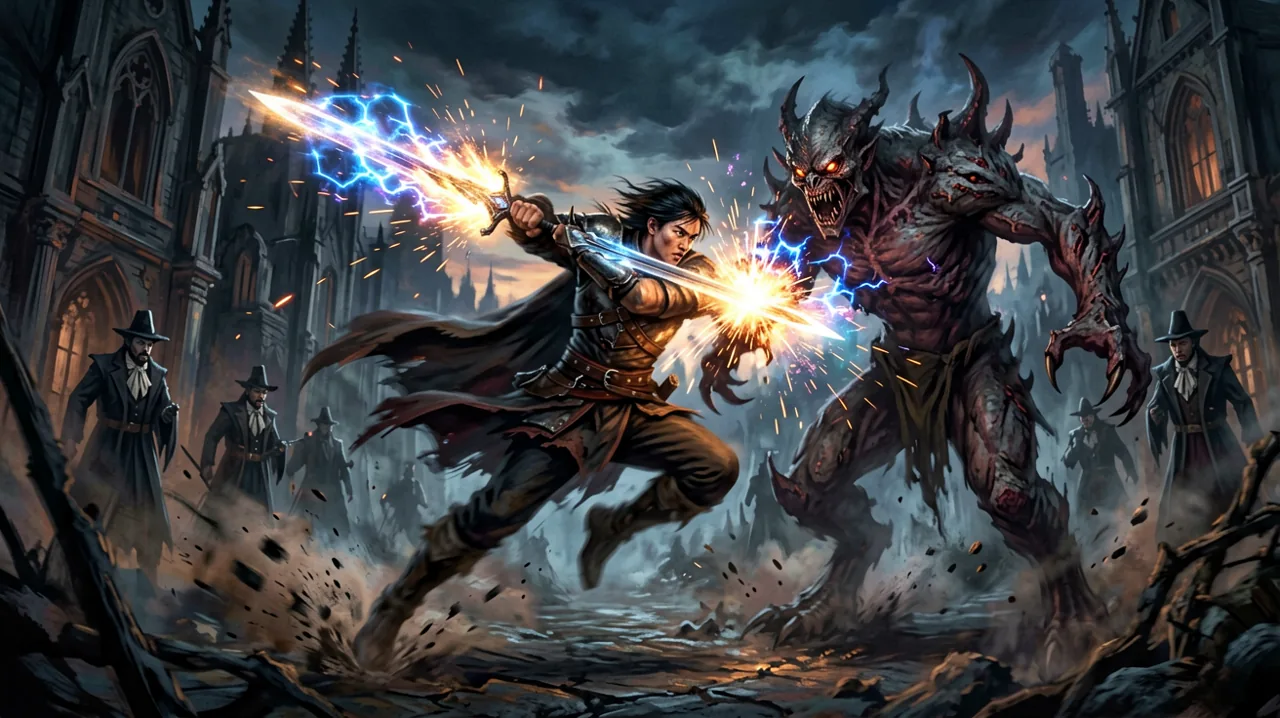
Just days after the community erupted over the revelation that The Blood of Dawnwalker would launch without a high framerate option on consoles, developer Rebel Wolves has dramatically shifted its strategy. As we previously reported, the initial narrative suggested that the demanding environments of 14th-century Europe would lock PS5 and Xbox Series X players into a 30 FPS experience. However, following severe backlash from the fanbase, the studio has officially confirmed that a 60 FPS Performance Mode will arrive via a Day One patch.
This abrupt reversal was cemented with the release of a new “Official Console Performance Mode Gameplay” trailer, which surfaced across social media and official channels over the past 24 hours. The footage directly compares the newly minted Performance Mode with the visually denser Quality Mode. According to statements provided to outlets like TweakTown, the 60 FPS mode was actually already in internal testing. Rebel Wolves reportedly intended to hold it back until they were absolutely certain it could maintain strict stability, but the overwhelming volume of player feedback forced their hand to include it at launch.
The Official Performance Mode Trailer
The updated console footage serves as a major reassurance for players who prioritize responsiveness over sheer pixel count. The trailer specifically highlights combat encounters on the PS5, PS5 Pro, and Xbox Series X. When watching the side-by-side comparisons, the difference in motion clarity is immediately apparent.
During daytime sequences, Coen’s human form moves with a distinct snappiness. The camera pans across the plague-ridden streets of Vale Sangora without the heavy motion blur that typically masks 30 FPS deficits. Even more striking is the nighttime footage, where Coen embraces the Dawnwalker curse. The erratic, savage lunges of the vampire form look vastly more controllable at 60 frames per second. While Rebel Wolves has not yet confirmed the exact resolution targets for this Performance Mode, the gameplay video suggests a reliance on aggressive dynamic resolution scaling or temporal upscaling to keep the framerate high while rendering the complex Unreal Engine 5 environments.
Why Fluidity is Non-Negotiable for Coen’s Journey
For many modern action RPGs, 30 FPS is considered a playable, albeit outdated, standard. However, the specific mechanical design of The Blood of Dawnwalker makes a 60 FPS option practically mandatory for higher difficulties.
As detailed in our breakdown of the combat systems, Rebel Wolves is implementing a highly technical directional combat system. This isn’t a traditional hack-and-slash experience where you can simply mash the attack button and hope for the best. The developers have previously compared the rhythm of their swordplay to playing a rhythm game, emphasizing strict timing for parries, dodges, and exploiting enemy openings.
When you are facing down a group of heavily armored Vrakhiri mercenaries or a supernatural beast, your parry window is calculated in milliseconds. At 30 frames per second, the visual feedback of an enemy winding up an attack is inherently delayed. You are seeing the animation later than the engine is calculating it, forcing players to rely on anticipation rather than reaction. A 60 FPS Performance Mode cuts that visual latency in half. It allows for reactionary play, meaning when you see a cultist raise a blade, you can tap the parry button and confidently expect Coen’s sword to meet the incoming strike perfectly in time.
Directional Combat and the Need for Precision
The addition of directional strikes further complicates the 30 FPS argument. If players need to quickly flick the thumbstick to alter the angle of their cut to bypass an enemy’s shield, input lag becomes the greatest enemy. We know the combat heavily relies on this spatial awareness, requiring you to constantly adjust your positioning and swing direction.
This necessity for speed doubles when the sun goes down. The dual nature of the game means that nighttime combat shifts from methodical medieval fencing to sheer supernatural brutality. When utilizing vampire powers, Coen closes distances rapidly, unleashing claw strikes and blood-magic abilities. The visual noise on screen increases dramatically with particle effects, blood splatters, and dynamic lighting from hex magic. Attempting to track multiple erratic enemies—like the rumored kobolds or pixies—in a low-framerate environment can quickly lead to motion sickness and frustration. The 60 FPS patch ensures that the nighttime hunts feel empowering rather than disorienting.
The Visual Cost of 60 FPS in Vale Sangora
Of course, achieving a doubled framerate on current-generation consoles without compromising the core vision of the game requires significant technical sacrifices. The primary reason Rebel Wolves was hesitant to include the mode at launch was likely tied to the visual density of their world.
Vale Sangora is not a barren landscape. It is a meticulously crafted representation of 14th-century Europe ravaged by the Black Death. The Quality Mode, which targets 30 FPS, reportedly utilizes high-end Unreal Engine 5 features like Lumen for global illumination and highly detailed Nanite geometry. To hit 60 FPS, the Performance Mode will inevitably scale back these features.
Players can expect a reduction in internal rendering resolution, likely dropping to 1080p or 1440p before being upscaled to a 4K output. Furthermore, the draw distance for environmental details—such as the gothic spires in the background or the dense foliage of the wetlands—will likely be reduced. Shadow quality often takes a hit in these modes, meaning the eerie, stretching shadows of the setting sun during the game’s crucial “Golden Hour” might appear less sharp or exhibit minor flickering.
Additionally, crowd density in the remaining human settlements might be lowered. The CPU burden of calculating the AI for numerous plague survivors and town guards is immense. By reducing the number of active NPCs on screen, the developers can free up valuable processing power to maintain that smooth 60 FPS target during intense combat scenarios.
The Developer’s Dilemma
The situation surrounding this Day One patch highlights a growing tension in modern game development. Rebel Wolves, founded by veterans who worked on The Witcher 3 and Cyberpunk 2077, are acutely aware of the reputational damage that a technically flawed launch can cause. Their initial hesitation to promise 60 FPS was likely born out of a desire for absolute stability—they preferred to deliver a rock-solid 30 FPS experience rather than a fluctuating, unstable 60 FPS mode.
However, the modern console audience is far less forgiving of 30 FPS caps than they were during the PS4 era. The backlash they faced over the weekend is a testament to changing consumer expectations. By deciding to push the Performance Mode into the Day One patch, they are appeasing the community, but they are also taking a calculated risk. If the 60 FPS mode suffers from severe framerate drops in heavy combat areas or dense towns, the studio will face a different kind of criticism. The fact that they stated the mode was already in testing suggests they have a solid foundation, but the final optimization will be a race against the clock ahead of the September 3 release date.
Which Mode Should You Choose on September 3?
With the game arriving in just over a week, console players will have a significant choice to make right at the main menu.
If you are a player who intends to focus heavily on the narrative, the atmosphere, and taking in the grim beauty of a plague-torn Europe, the Quality Mode might still be your best option. The visual impact of seeing a beautifully ray-traced sunset right before the terrifying vampire enemies emerge is a core part of the aesthetic experience Rebel Wolves is trying to sell.
However, if you are treating The Blood of Dawnwalker primarily as a challenging action RPG, the newly confirmed Performance Mode is undoubtedly the way to go. The ability to read enemy animations clearly, execute perfectly timed directional parries, and manage the chaotic speed of Coen’s vampire form without input lag will make the combat significantly more enjoyable.
We will be heavily testing both modes when review copies become available to provide a definitive technical breakdown. Until then, the confirmation of a 60 FPS mode is a massive victory for the community and a sign that Rebel Wolves is actively listening to its audience, even when it requires eleventh-hour technical pivots.