News
Breaking Brencis and Deciding Ocha's Fate: Advanced Strategies for The Blood of Dawnwalker
A week after launch, players are decoding Rebel Wolves' dark fantasy RPG. Here is how to dismantle the vampiric government and manage the 30-day timer.
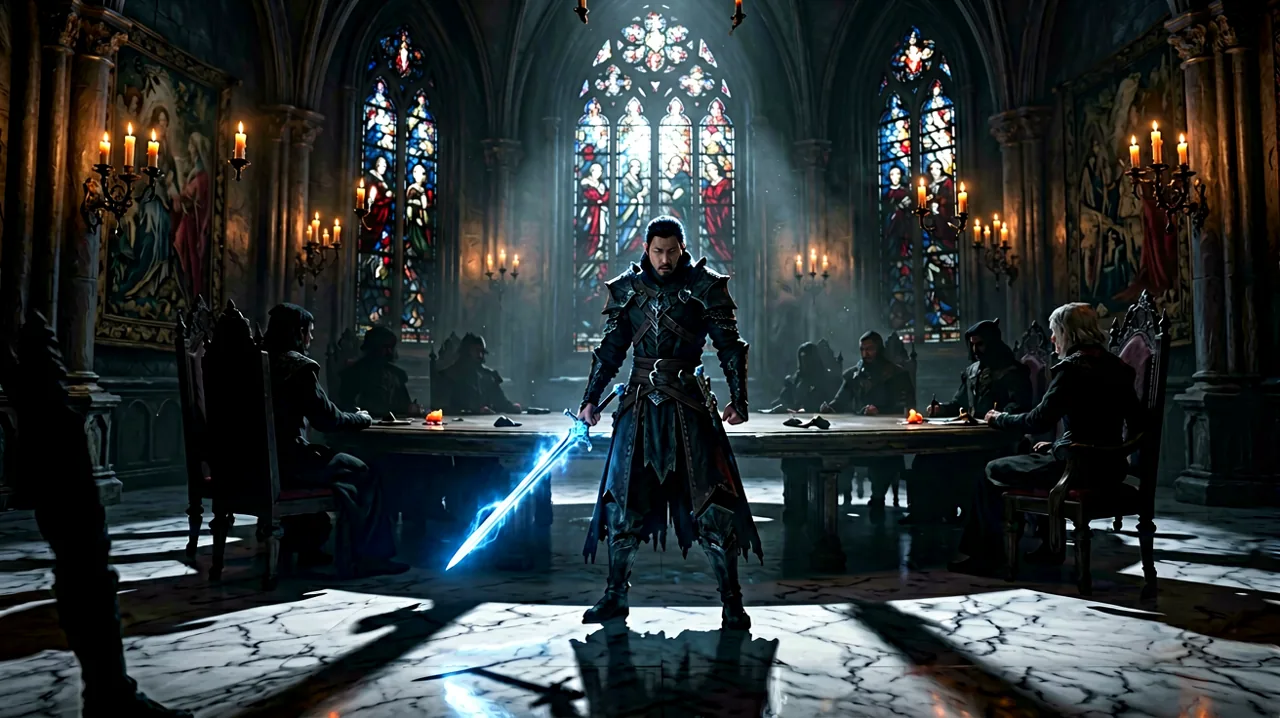
A little over a week has passed since Rebel Wolves launched The Blood of Dawnwalker, and the community is finally transitioning from initial awe to rigorous mechanical deconstruction. The dark fantasy sandbox has proven to be as unforgiving as it is intricate, demanding that players look beyond the surface-level action and engage deeply with its political and temporal systems. As the dust settles on everything we know about the launch window, comparisons to the narrative weight of classic modern RPGs are rampant across community forums. These comparisons are driven by the realization that choices in Vale Sangora are rarely binary. Instead, they are woven into a complex web of consequences that dictate everything from combat difficulty to the availability of entire questlines.
As players cross the 50-hour mark, a clearer picture of the optimal strategies, the most impactful narrative branches, and the true nature of the controversial time limit is emerging. For those looking to optimize their run, understanding the underlying structure of the vampiric government and the nuances of the game’s most challenging quests is absolutely critical.
Dismantling the Vampiric Government: The Court System
At the core of the game’s geopolitical conflict is the Court System, a rigid but highly reactive hierarchy that governs the vampire factions. Early in the narrative, the game presents Brencis as an insurmountable wall of political and magical authority. However, ongoing community analysis has revealed that the Court is designed to be systematically deconstructed rather than passively observed. The system operates as a weaving blood web; pulling on one thread directly affects the stability of the others.
Rather than approaching the Court activities as a linear progression of story beats, players are discovering that engaging in specific disruption quests can strip the government of its power piece by piece. You are not strictly bound to follow the critical path. Completing these political sabotage assignments out of the expected chronological order is entirely possible and serves as a highly effective strategy for the late game.
By actively targeting Brencis’s lieutenants and dismantling his local supply lines, you directly strip him of his overarching advantages. Taking the time to break down this vampiric government structure transforms the climactic confrontation. Instead of facing a fully empowered lord with an army of political backing, you force Brencis into an isolated corner. This mechanical approach makes the eventual fight significantly more manageable and completely alters the narrative context of his defeat.
The Complexity of ‘The Heart Wants What It Wants’
This emphasis on structural freedom extends directly into the side content. Currently, one of the most intensely debated quests in the community is “The Heart Wants What It Wants.” Widely regarded by early guide writers as one of the most structurally complicated missions in the current build, it serves as a massive chokepoint for player decision-making.
The core objective tasks players with tracking down Andrei and infiltrating his hideout, but the game offers minimal direct guidance on how to execute this operation. Players have reported a staggering number of vectors for tackling the stronghold. You can leverage the infamy system to intimidate the perimeter guards, use high-level witchcraft for a completely stealthy approach, or rely on social engineering if you have built enough goodwill with opposing vampire lords.
The method of entry, however, is merely the prologue to the actual dilemma: deciding Ocha’s fate. The resolution of Ocha’s storyline is heavily dependent on the physical evidence gathered prior to entering the hideout and the highly specific dialogue paths chosen during the confrontation with Andrei. This is not a scenario where a high persuasion check magically resolves the tension; it requires synthesizing the lore and making a deeply uncomfortable call that will permanently alter the disposition of several key NPCs across the map.
Tragic Figures and Moral Ambiguity
The narrative strength required to pull off quests of that caliber relies entirely on the writing of the supporting cast. Rebel Wolves has leaned heavily into moral ambiguity, refusing to categorize its characters into standard fantasy archetypes. Ambrus and his immediate associates serve as a prime example of this philosophy. Without venturing into heavy spoilers, the storyline surrounding Ambrus features one of the most tragic arcs in the game. It actively challenges the player’s ethical boundaries, forcing decisions where every potential outcome carries a profound human cost and shapes the broader story.
Similarly, unraveling Lacra’s deeply intertwined background with Brencis provides essential context for the overarching political war. Her history is buried in optional dialogue and hidden environmental clues, but discovering it fundamentally changes how you perceive the Court System. Then there is Crake, a figure whose dubious morality forces players to constantly question the reliability of their quest givers. Engaging with these characters—and navigating their specific romance or rivalry paths—is crucial for players who want to understand the true stakes of the vampiric hierarchy, rather than just swinging a sword at the nearest monster.
Combat Evolutions: Mastering the Duellist Build
Surviving the political machinations of Vale Sangora requires mastering a combat system that initially feels rigid but opens up dramatically through the skill trees. Early complaints regarding stiff animations or overwhelming difficulty have largely subsided as players unlock the deeper nodes of their chosen paths. The consensus from players who have logged over 60 hours is that the parrying system contains a massive amount of hidden depth, rewarding rhythm and precision over raw aggression.
Currently, community testing heavily favors the Duellist approach as the most satisfying and effective way to play. The early hours of a Duellist run are notoriously brutal; the timing windows for deflections are tight, and mistakes are severely punished by standard enemies. However, as you invest in the skill tree, parrying transitions from a defensive necessity into a devastating offensive tool. A fully realized Duellist can control the flow of combat against multiple enemies, turning aggressive strikes into immediate execution opportunities. While leaning heavily into hexes remains a viable crowd-control strategy, mastering the blade provides a level of consistency that spellcasting often lacks during protracted boss encounters.
Trusting the 30-Day Timer
No mechanical discussion of The Blood of Dawnwalker is complete without addressing the 30-day time limit. Prior to release, the prospect of a strict in-game deadline to save the protagonist’s family caused immense anxiety, prompting a rush of inquiries about PC mods to freeze the clock. A week later, the veteran community is unified in its advice: do not tamper with the timer.
The time limit is a core pillar of the game’s tension and narrative pacing. Reports from the player base show wild variations in completion times—some players are rolling the credits in a highly focused 21 hours, while completionists are spending 66 hours to scour every corner of the map. Crucially, the 60-hour players report finishing roughly 97 percent of the game’s content with several in-game days still left on the clock.
The timer is not designed to lock you out of the experience; it is designed to make your navigational choices matter. It penalizes endless, reckless dying and forces you to plan your routes across Vale Sangora efficiently. Removing it through external mods actively damages the atmosphere the developers painstakingly crafted.
The External Ecosystem: Co-Op Mods and Market Glitches
While purists are defending the integrity of the single-player timer, the modding community is already tearing the engine apart. In a surprising development reported by OpenCritic, an unofficial Co-Op mod has reportedly entered circulation barely a week after launch. Translating a highly scripted, narrative-focused RPG into a functional multiplayer experience is a monumental task, and early community feedback indicates the mod is predictably unstable. Nevertheless, the fact that a cooperative framework is running at all speaks to the intense technical curiosity surrounding the game’s architecture.
Adding to the week-one chaos, rumors circulated of a severe pricing glitch on Steam, where a limited number of users reportedly acquired the game for a mere $1. While the storefront expectedly corrected the error, it added a bizarre footnote to an already massive launch week.
Between dismantling vampire courts, debating the morality of tragic characters, and navigating an unexpectedly active modding scene, The Blood of Dawnwalker has firmly established itself as a mechanical powerhouse. The game demands patience, strategic planning, and a willingness to live with the consequences of your actions—both in combat and in conversation.