News
The Blood of Dawnwalker's Reported $40 Million Budget and Anti-Bloat Design Explained
Reports indicate Rebel Wolves developed their vampire RPG for just $40 million. We analyze how a contained map and focused combat created a 40-hour masterpiece.
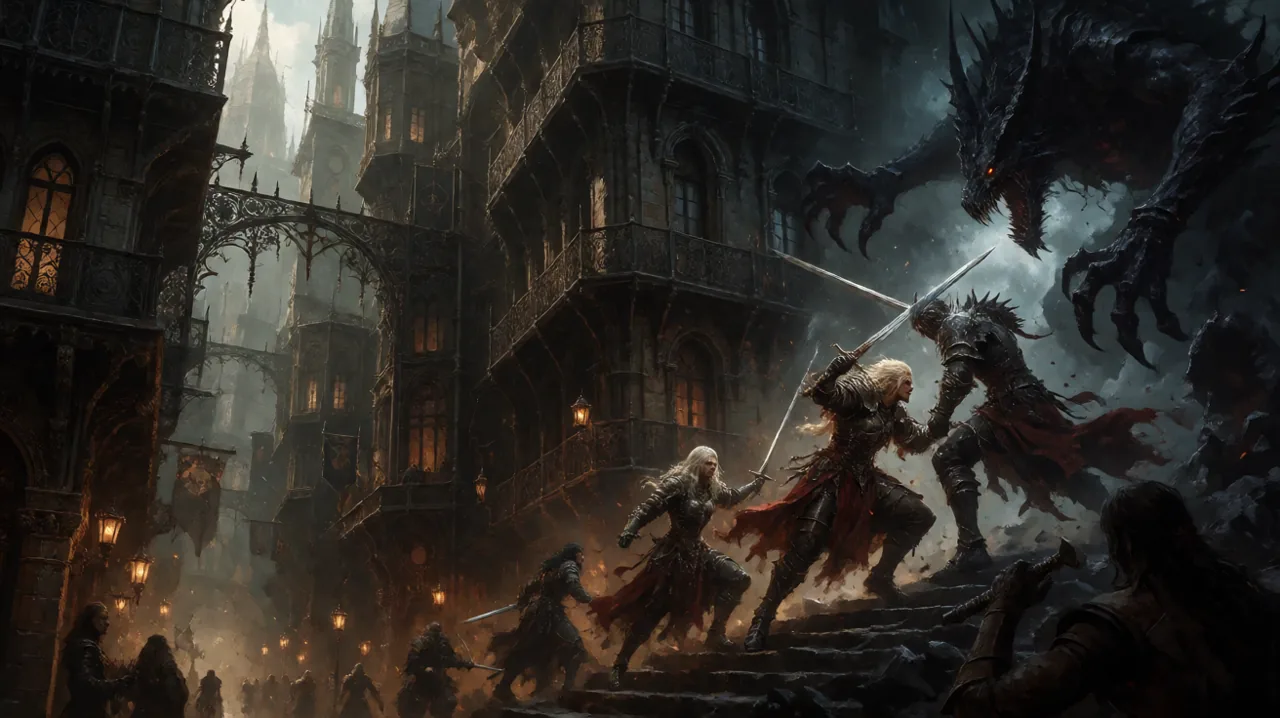
Developer Rebel Wolves has managed to achieve something increasingly rare in modern gaming: releasing a critically acclaimed, massive role-playing title without an astronomical price tag. Following its launch, the studio’s debut dark fantasy RPG sold over one million copies in just three days. However, the most surprising metric surrounding the project is not its rapid sales velocity, but rather the reported cost of its creation.
Recent reports indicate that The Blood of Dawnwalker was developed on a budget of approximately $40 million. When contextualized against contemporary AAA titles that frequently demand budgets exceeding $200 million and development cycles spanning the better part of a decade, this figure represents a staggering level of efficiency. The community reaction and player data suggest that Rebel Wolves achieved this by deliberately rejecting the bloated design philosophies that plague modern open-world games, opting instead to deliver a tightly paced, 40-hour experience that values the player’s time over artificial engagement metrics.
Quality Over Quantity in Vale Sangora
The reported $40 million budget highlights a significant shift in how world-building can be approached. Rather than spending vast resources on generating thousands of square miles of empty wilderness populated by meaningless collectibles, the team focused on creating a dense, highly reactive environment.
Players engaging with the endgame have widely praised this approach. According to community reports from early completionists who have already secured the Platinum trophy, a full completionist run takes roughly 40 hours. This is a deliberate departure from the 150-hour checklists common in the genre. One dedicated player noted that the game feels like a contained, narrative-driven open world rather than a bloated and expansive one. The complete absence of an arbitrary “collectable hunt” means that every quest, including intricate side stories like the Our Rotten Roots investigation, feels bespoke and relevant to Coen’s journey.
This philosophy extends beyond digital design and into the physical release of the game. Fans purchasing the physical editions have reported a deep sense of nostalgia, noting the inclusion of a high-quality physical map in the steelbook edition—a package that, surprisingly, has been available at a lower price point than the standard digital version in certain regions. It represents a return to an older era of PC and console RPGs, where the world was mapped out on paper and exploration was driven by curiosity rather than compass markers. If you want to learn more about navigating this intricate environment, check out our Vale Sangora world guide.
Where the Budget Went: The Dual System
Instead of pouring money into geographical scale, the reported budget was heavily invested in systemic depth. The core of The Blood of Dawnwalker revolves around Coen’s dual nature: navigating human society and engaging in tactical swordplay by day, while unleashing devastating combat and hex magic as a vampire by night.
Designing two entirely distinct mechanical frameworks for a single protagonist requires immense technical resources. The daylight combat relies heavily on stance management, parrying, and human-centric martial arts, while the nocturnal gameplay shifts the paradigm toward supernatural agility, blood surges, and crowd control. By restricting the physical size of the map, the developers were able to ensure that these dual systems function flawlessly within the environment. Every alleyway and rooftop in the city serves a purpose for both a grounded human mercenary and a leaping vampire predator.
Surviving Duelist Difficulty: Community Strategies
The deep systemic focus is most evident in the game’s combat mechanics, particularly on the grueling Duelist difficulty. Because the game does not rely on level scaling to pad out its runtime, encounters are hand-crafted and highly lethal. For players attempting a Duelist run, the community has already begun compiling essential survival strategies, emphasizing that early-game combat requires patience and rigorous stamina management.
On standard difficulties, the directional combat system provides visual cues to help players anticipate incoming strikes. On Duelist difficulty, these visual aids are completely disabled. Players must read the physical animations of their enemies to determine the correct parry direction. While this is challenging against human opponents wielding standard weaponry, community veterans warn that the directional animations for non-human enemies and monstrous beasts can be incredibly misleading. A swipe from a feral creature might look like a horizontal attack but register as a diagonal strike, leading to devastating damage if parried incorrectly.
To survive the early hours on Duelist difficulty, experienced players strongly recommend the following community-tested strategies:
- Prioritize Dodging Over Parrying: Despite the “Duelist” moniker suggesting a reliance on crossing swords, early-game parrying is simply too risky without visual cues and sufficient stat investment. Relying on dodges allows you to create space and study enemy attack patterns without suffering catastrophic health loss from a missed parry.
- Invest in Stamina Perks: Because dodging will be your primary defensive tool in the opening hours, your stamina bar will deplete rapidly. Any available skill points should immediately be routed into perks that improve overall stamina regeneration and specifically reduce the stamina cost of the dodge action.
- Rush the Ominiblock Skill: The most critical milestone for early-game survival is reaching Level 4. At this point, players can unlock a skill known as “Ominiblock.” This ability fundamentally alters the defensive economy by allowing Coen to block an attack normally, absorbing the stamina damage rather than taking raw vitality damage if the specific parry direction is misjudged. It acts as a vital safety net against erratic non-human attack patterns.
- Maintain Rigid Save Habits: The community advises making a completely separate manual save at the dawn of every new in-game day. Furthermore, players should utilize the quicksave function immediately before engaging a group of enemies and immediately after surviving the encounter. The punishing nature of the combat means a single mistake can erase significant progress.
The Future of the Franchise
The immense commercial success of The Blood of Dawnwalker—achieving one million copies sold almost immediately—coupled with its reported $40 million budget, paints a highly optimistic picture for the studio’s future. The developers have already responded to the community’s enthusiastic reception by confirming the eventual addition of a New Game Plus mode, arguably the single most requested feature since launch. This will allow players to carry their high-level vampire abilities and carefully curated builds back into the prologue, tackling the Duelist difficulty with a fully equipped arsenal.
Looking further ahead, the gaming landscape is already buzzing with rumors about the inevitable sequel. Reports indicate that the sequel is already in active development. Interestingly, comments from the game’s director suggest that the divisive 30-day time limit—a mechanic that forces players to make hard choices about which quests to pursue and which allies to abandon—might not return in the next installment. Whether this implies a shift toward a more traditional pacing structure or an entirely new narrative pressure system remains to be seen.
By rejecting the standard industry formula of bloated budgets and endless map markers, Rebel Wolves has delivered an experience that feels remarkably focused. The 40-hour playtime, the lack of tedious collectibles, and the deep, demanding combat mechanics on display in the Duelist difficulty all point to a design philosophy that respects the player. It stands as a compelling argument that the future of the RPG genre doesn’t necessarily lie in building bigger worlds, but in building smarter, more reactive ones.