News
The Blood of Dawnwalker Corruption Guide: Fast Vampire Haste and Late-Game Pacing
Maximize your Corruption early to unlock Vampire Haste, understand Coen's grim fate in the lore, and manage your side quests to avoid the late-game drought.
Rebel Wolves’ ambitious dark fantasy RPG has been out for several weeks, and players are digging deep into the mechanical quirks of Vale Sangora. Whether you are struggling to map out your progression route or trying to make sense of the strict time management mechanics, optimizing your build early makes a massive difference.
One of the most heavily discussed strategies right now revolves around the Corruption system and how it gates essential mobility skills. At the same time, players pushing toward the end of the campaign are reporting significant pacing issues regarding the game’s clock. Here is a breakdown of how to farm Corruption safely, why you need to space out your side content, and a severe menu bug you need to watch out for.
Farming Corruption Through Local Wildlife
The progression of your supernatural abilities is inherently tied to your Corruption level. Raising this stat is required to unlock higher-tier abilities in the builds and skill trees, specifically the highly coveted Vampire Haste. This skill dramatically improves your mobility, allowing you to close gaps during combat instantly and traverse the environment much faster during the night phase.
However, raising Corruption comes with the narrative and mechanical cost of consuming blood. Interestingly, the community has found a rather amusing—and highly effective—loophole in how the game calculates blood consumption. Animals count toward leveling your Corruption.
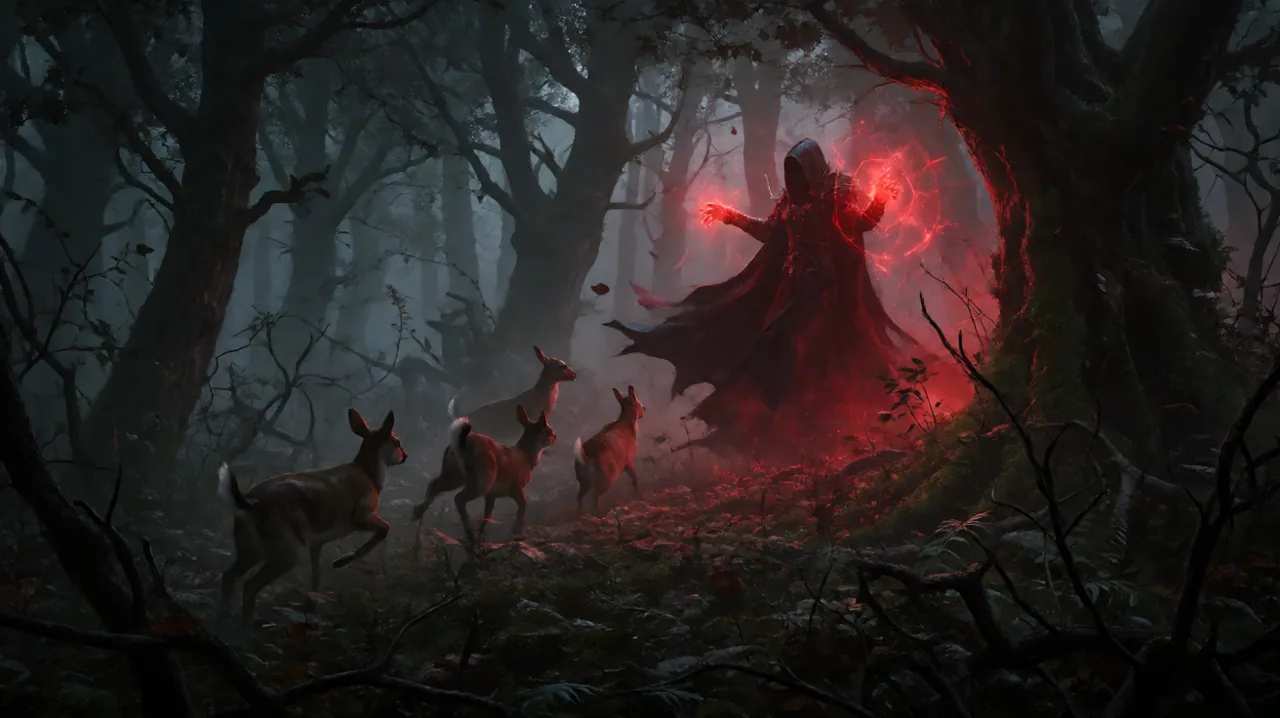
Instead of hunting down dangerous human targets or risking high-stakes encounters with rival factions to feed, you can simply wander through the forests of Vale Sangora and drink the blood of every wild animal you come across. Players have noted the sheer unintentional comedy of Coen, a fearsome creature of the night, aggressively terrorizing the local woodland critter population just to unlock a speed boost.
While it might look ridiculous in practice, focusing on animal blood is arguably the safest and most efficient way to rush Vampire Haste in the early game. You avoid the infamy hits associated with feeding on human NPCs, and you bypass the difficult combat encounters that usually guard significant blood sources. Keep in mind that doing this still raises your overall Corruption, which will eventually trigger the expected consequences associated with losing your humanity, but having that mobility advantage early on makes surviving the open world much easier.
The Narrative Cost: Damnation is Inevitable
Speaking of losing humanity, players who pay close attention to the dialogue and world-building have pointed out a grim reality about Coen’s existence. Because of his unique condition, Coen can walk under the sun as a human during the day, leading some players to believe he might somehow escape the ultimate fate of his kind.
The lore explicitly shoots this down. Throughout the story setting and characters interactions, other vampires frequently remind Coen that his daylight immunity means absolutely nothing in the grand scheme of things. The game firmly establishes that the only fate awaiting any vampire when they die is eternal damnation.
This creates a fascinating layer of narrative tension. Every time you feed—even if it is just on a random deer to get Vampire Haste—you are reminded that you are canonically heading to hell. The dialogue reinforces that Coen is essentially living on borrowed time, completely cut off from any form of spiritual redemption. It frames the decisions you make throughout the story not as a path to salvation, but as a determination of what kind of legacy you want to leave behind before the inevitable happens.
Time Management: The Late-Game Content Drought
One of the most polarizing mechanics in the game is the overarching time limit. You only have a set number of days to accomplish your goals before the world state moves forward. While the 30-day time limit creates excellent tension in the opening hours, players reaching the end of the campaign are reporting a frustrating structural problem.
If you aggressively clear side quests and explore points of interest early on, you might find yourself hitting a severe content wall. Community feedback indicates that players who reach the final 10 days on the clock are running out of meaningful, story-heavy side quests.
Once the narrative-driven content dries up, you are left with filler activities. Specifically, players are forced to grind “Court quests,” which are widely considered to be repetitive, low-effort tasks designed purely to pass the time or grind resources. Monster caves and clearing bandit camps become the only other options available.
This issue is compounded by how the game calculates time. Clearing an open-world activity, such as a soldier or bandit camp, takes a minimum of one specific time segment. Players have pointed out the narrative dissonance of this system: you might stumble upon a tiny camp with exactly three enemies sitting around a fire. In-game, Coen will effortlessly slaughter them in ten seconds, but the clock will still advance by an hour or two.
How to Pace Your Playthrough
To avoid spending your last 10 in-game days doing boring Court quests, you need to adjust your approach to the Vale Sangora world guide:
- Do Not Rush the Narrative Side Quests: Mix up your activities. Do a main story mission, clear a bandit camp, and then do a major side quest. Do not clear the entire map of yellow exclamation marks in the first week.
- Save Monster Caves for the Late Game: Caves and minor exploration nodes are great filler for when you need to burn time right before a scheduled main event. Leave them untouched early on so you have something combat-focused to do later.
- Factor Time Costs Carefully: Remember that taking out three bandits costs the same amount of time as a massive camp. Only engage with these open-world markers when you actually need the loot or experience, rather than treating them as a checklist to be cleared immediately.
Warning: The Menu Lock Bug on PC
Finally, PC players need to be aware of a potentially game-breaking technical issue circulating in the community. Several players have reported sudden Unreal Engine crashes to the desktop. Upon restarting the game, the entire UI menu system becomes locked.
According to reports, you can access your diary, but the map, skills, and inventory screens remain completely frozen and inaccessible. Currently, standard troubleshooting steps like verifying the integrity of game files on Steam or updating BIOS/GPU drivers do not resolve the issue.
While the developers are expected to roll out patches soon, it is highly recommended to keep multiple manual saves. If you experience an Unreal Engine crash, immediately check if your menus are functioning upon reloading. If they are locked, do not let the game auto-save over your previous slots; roll back to an earlier manual save immediately before the crash occurred. Keep an eye on our updates regarding the PC system requirements and performance patches as Rebel Wolves addresses these launch-window bugs.