News
Why The Blood of Dawnwalker Chose Third-Person Over Its Isometric RPG Roots
Director Konrad Tomaszkiewicz explains the shift to third-person combat, while the game's controversial time limit begins inspiring new indie RPGs across the industry.
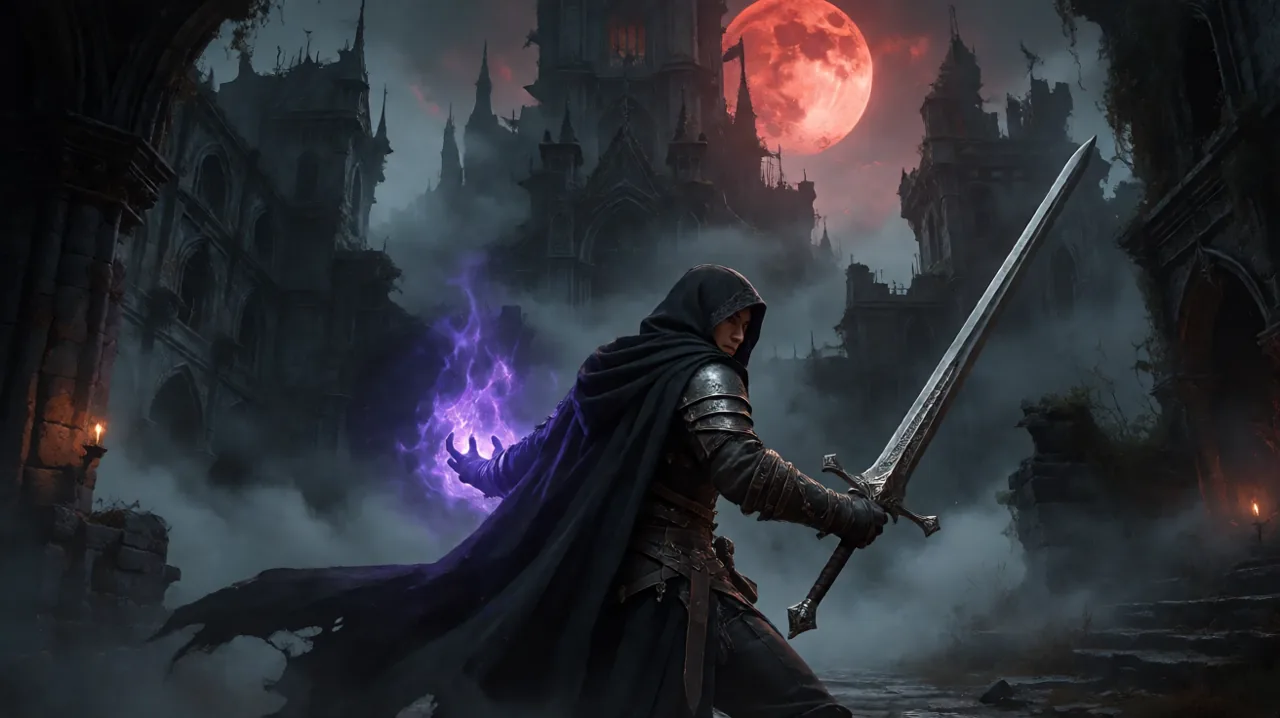
Rebel Wolves stepped into the spotlight with a massive promise for the dark fantasy genre, and over a month post-launch, the industry is still dissecting exactly how their ambitious design choices came together. While players continue to map out the intricate corners of Vale Sangora, recent discussions from both the development team and the broader gaming community are shedding new light on the fundamental structural decisions that defined the project.
From discarded camera perspectives to mechanics that are already spawning spiritual successors in the indie space, the ongoing conversation proves that the studio’s debut title is leaving a significant footprint.
The Isometric Prototype: Why Third-Person Won
In a newly surfaced interview insight, Game Director Konrad Tomaszkiewicz provided a fascinating look behind the curtain regarding the core gameplay loop. It was reportedly revealed that the team entertained early potential concepts that utilized an isometric camera angle. This top-down, tactical perspective is a staple of traditional computer role-playing games and would have placed the title closer in visual identity to heavyweights like the Baldur’s Gate or Divinity series.
However, the team ultimately committed to the fully-realized third-person action perspective we see today. The reasoning behind this shift underscores the development philosophy at Rebel Wolves: immersion through visceral proximity.
An isometric view, while excellent for tactical squad management and viewing a wide battlefield, creates an inherent emotional and physical distance between the player and the protagonist. In a game heavily reliant on the duality of the main character—shifting between a fragile human daytime existence and a beastly nocturnal nature—maintaining a close, over-the-shoulder connection was paramount. The combat and hex magic systems needed to feel immediate. Striking an enemy with a silver blade or weaving a dark spell requires split-second reactions that are heavily amplified by the restricted, ground-level vision of a third-person camera.
Being down in the mud of the streets, restricted by the same line-of-sight as your character, heightens the dread when navigating plague-ridden districts or facing ambush predators. It forces players to rely on spatial audio and quick reflexes rather than a god-like overview of the map. This perspective decision ultimately bridged the gap between a methodical RPG and a high-stakes action thriller, ensuring that every encounter feels personal rather than purely statistical.
Putting the Weight of Choice First
This immediate, ground-level perspective directly feeds into how the game handles its narrative branching. A recent editorial from PlayStation Universe praised the title for explicitly “putting RPG choice first.”
When you are forced to look an NPC in the eye through a third-person dialogue camera, the weight of your decisions feels substantially heavier. You are not clicking a text box from the sky; you are standing in front of a desperate villager or a calculating vampire lord, reading their facial animations and body language. This level of intimacy transforms the narrative sandbox from a mechanical puzzle into an emotional gauntlet.
The studio purposefully stripped away safety nets. There is no omniscient narrator telling you the “correct” path. Instead, the world reacts organically to your aggression, your mercy, and crucially, your time management. By grounding the player physically within the space, the consequences of leaving a questline unresolved or betraying an alliance are felt much more acutely within the immediate environment.
The Majora’s Mask Effect: Inspiring New Indie RPGs
Perhaps the most fascinating development a month into the game’s life cycle is how its most fiercely debated mechanic is already influencing other creators. The time limit system—which forces players to prioritize certain quests over others as the days tick down—has been a major point of contention. While earlier marketing highlighted a 30-day framework, community-reported discussions on platforms like Reddit frequently mention an overarching, stressful 66-day timeframe to accomplish macro objectives before facing dire consequences.
Many players have petitioned for options to disable the timer to allow for relaxed exploration, but the design world is taking the opposite message. According to a recent report from GamesRadar+, a newly successful Kickstarter project titled Bunderkin: The Ocular Eclipse has directly cited Rebel Wolves’ approach as a massive inspiration.
The developers of this upcoming stealth RPG have reportedly taken the controversial time limit discourse and decided to go “full Majora’s Mask.” They observed how the constant pressure in Vale Sangora forces players to live with their imperfect decisions and prioritizations. Instead of allowing players to slowly clear a map of every single objective, the ticking clock creates a unique anxiety that breeds memorable, highly personalized playthroughs.
The fact that an indie studio is explicitly iterating on this high-pressure mechanic shows that Rebel Wolves successfully identified a gap in the modern RPG landscape. For years, the genre has leaned heavily into endless, consequence-free exploration. The introduction of strict temporal constraints is clearly resonating with designers who want to bring stakes and tension back to open-world navigation. It proves that the time limit mechanics are not merely an artificial difficulty slider, but a fundamental narrative tool that is shifting industry expectations.
A Cinematic Pedigree: The Robert Eggers Connection
The success of these grounded, stressful mechanics is heavily supported by the game’s overall aesthetic presentation. As players spend more time in the world, an interesting cultural consensus is forming across community forums.
Rather than comparing the game to standard high-fantasy properties, players are increasingly drawing parallels between the game’s atmosphere and the filmography of director Robert Eggers. Discussions popping up in film and gaming subreddits alike note how the title captures the same oppressive, period-accurate dread seen in movies like The Northman and the upcoming Nosferatu.
This is a testament to the art direction and world-building teams. The portrayal of vampirism here is not romanticized or purely heroic; it is treated as a visceral, horrifying curse intertwined with folklore and plague. The mud-caked boots, the realistic architecture, and the deeply superstitious populace create a low-fantasy environment that feels historically grounded despite the magical elements. This cinematic quality elevates the third-person perspective, making the player feel like they are surviving a meticulously crafted period horror film rather than running through a theme park.
An Optimal Entry Point
For players who have been waiting on the sidelines while these mechanical and narrative debates play out, the current market landscape offers an excellent entry point.
Coinciding with major retail events, community deal hunters have highlighted that the physical PS5 Day 1 Steelbook Edition—which includes the base disc, a collectible steelbook, and a physical world map—has hit a reported lowest price ever of $59.49 across major retailers like Amazon Prime and Best Buy.
As the developer continues to patch and refine the experience, and as the modding and indie scenes begin to absorb and iterate on its boldest ideas, entering Vale Sangora now means joining a conversation that is actively shaping the future of the RPG genre. The choice to keep the camera close, the clock ticking, and the world brutally reactive has paid off, cementing a legacy that goes far beyond a typical late-summer launch.