News
The Blood of Dawnwalker: Secret Quests Confirmed, Mini-Games Ruled Out, and Why Hardware Delays Are Helping
Rebel Wolves confirms hidden quests in Vale Sangora while officially ruling out mini-games. Plus, the director explains how next-gen hardware delays are a blessing.
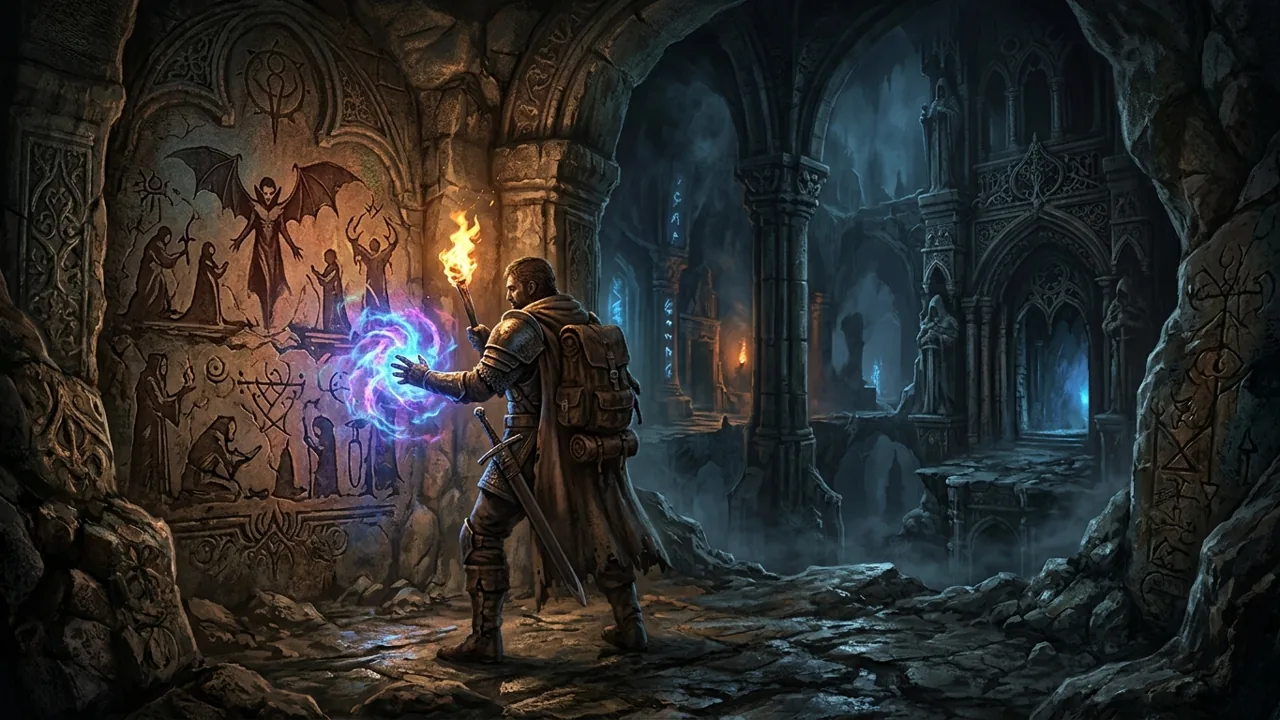
With The Blood of Dawnwalker rapidly approaching its September 3 launch window, Rebel Wolves has been remarkably transparent about what players should—and shouldn’t—expect from their dark fantasy sandbox. Recent reports have brought clarity to the game’s approach to side content, officially confirming the inclusion of “secret quests” while definitively shutting down any lingering hopes for in-game mini-games.
Simultaneously, an eye-opening interview with the game’s director sheds light on the broader state of the gaming industry, explaining why the much-rumored delays surrounding next-generation console hardware are actually providing a massive advantage for the studio’s production pipeline.
Here is a breakdown of what these recent revelations mean for your upcoming journey into Vale Sangora, and how you should prepare your build to uncover everything the game has to hide.
Secret Quests and the Philosophy of Organic Exploration
According to a recent report from MP1st, The Blood of Dawnwalker will feature “secret quests” scattered throughout its world. Unlike traditional modern RPGs where every distressed townsfolk has a glowing exclamation mark hovering above their head, Rebel Wolves is reportedly heavily favoring organic exploration.
What does this mean in practice? It suggests that exploration in the vale-sangora-world-guide is not just a matter of running from icon to icon to vacuum up loot. You are expected to pay close attention to environmental storytelling. Players will likely need to read scattered notes, listen to unprompted NPC chatter in crowded taverns, and investigate visual anomalies in the landscape to trigger these hidden storylines.
Mechanically, this design choice heavily incentivizes players to diversify their investments within the builds-and-skill-trees. For instance, players who heavily upgrade their vampire skill lines might unlock heightened sensory abilities. We expect that certain secret quests will only become visible when using these specific vampire-powers-and-wolf-form traits to track dried blood trails in the dead of night or sense residual magical hexes left behind by the Vrakhiri.
Conversely, maintaining your human guise during the day could be the only way to trigger other hidden objectives. A terrified villager holding onto a crucial piece of lore is highly unlikely to offer you a quest if you approach them after sunset in a monstrous, blood-starved state. This dual-layered approach to quest discovery emphasizes the core duality of the protagonist, turning the day-and-night cycle into a puzzle-solving mechanic rather than just a visual backdrop.
How to Prepare for Hidden Content
If you are trying to maximize your playthrough and see everything before the game’s timeline expires, keeping an eye out for these unmarked objectives will be crucial. They will reportedly offer unique gear, powerful hexes, and critical lore insights that remain entirely absent from the main critical path.
To prepare, you should monitor your local reputation closely. The infamy-system-explained mechanics suggest that your standing with different factions changes drastically based on who you feed on. It is highly probable that certain underground criminal factions or secretive cults will only offer their secret quests if your infamy reaches a specific threshold.
Furthermore, pay close attention to your party members. We anticipate that companions will have unmarked personal quests that only activate if you build sufficient rapport and physically bring them to specific locations tied to their backstory. Keeping characters like Ambrus engaged (as discussed in brencis-and-vampire-officers) will require active listening rather than just following a quest tracker.
Why Mini-Games Were Left on the Cutting Room Floor
In the exact same report, it was firmly stated that players should not expect any mini-games in The Blood of Dawnwalker. For a long time, the community had heavily speculated about this. After the massive success of Gwent in The Witcher 3, it became an industry assumption that any large-scale, dark fantasy RPG would inevitably include some form of tavern distraction—be it a complex card game, dice poker, or a drinking contest. Many fans actively debated this possibility, a topic we previously covered in will-the-blood-of-dawnwalker-feature-a-gwent-style-card-game.
However, the confirmation that mini-games are entirely absent makes complete narrative sense when you look at the game’s core premise. The Blood of Dawnwalker is built around a pervasive, inescapable sense of urgency. You are operating under a strict temporal constraint, as detailed in our 30-day-time-limit-explained breakdown. Taking a leisurely break from a desperate bid for survival to play cards with a local merchant while a vampire curse threatens to consume your soul would create massive tonal inconsistencies.
By actively cutting out mini-games, Rebel Wolves ensures that every system feeds directly back into the core gameplay loop. It addresses the potential for narrative disconnect that we analyzed in how-the-blood-of-dawnwalker-previews-resolve-open-world-ludonarrative. The hours you might have spent mastering a fictional tabletop game are instead meant to be spent mastering the intricate rhythm of the combat-and-hex-magic systems. The absence of these leisurely distractions guarantees that the grim reality of Vale Sangora remains at the forefront of the experience.
The Hardware Delay: A Blessing for Rebel Wolves
Beyond in-game mechanics, a recent interview highlighted by MSN offers a fascinating glimpse into the game’s production reality. The game director explicitly noted that the currently rumored delays surrounding next-generation console hardware (such as the PlayStation 6 or the next major Xbox iteration) are actually highly beneficial for the team at Rebel Wolves.
In modern AAA development, studios releasing titles at the tail end of a console generation often face immense, immediate pressure. They are usually expected to prepare “next-gen patches” or cross-generation ports almost immediately after launch. This mandate forcibly splits engineering resources, requiring developers to look ahead to unproven hardware architectures instead of polishing the game for the platforms players actually own today.
Because next-gen hardware is seemingly further out than initially anticipated, the team has been granted vital breathing room. This extended, undivided focus on the PlayStation 5, Xbox Series X/S, and current PC architectures is likely a major factor in the game’s impressive optimization. We recently saw the direct fruits of this focused labor when the studio announced surprisingly accessible minimum PC specifications, which you can review in the-blood-of-dawnwalker-pc-requirements-drop-to-gtx-1060-in-surprise-o.
Without the looming specter of an industry-wide hardware transition, the engineering team has reportedly been able to spend their final months optimizing asset streaming and refining the dynamic lighting system—a piece of tech that is absolutely crucial to the game’s transformative day/night mechanics.
What This Means for Post-Launch DLC
The lack of immediate next-gen pressure also secures the technical roadmap for the game’s post-launch support. When a game awkwardly straddles two console generations, developing DLC often becomes a logistical nightmare, requiring QA testing across a massive matrix of old and new hardware. By remaining firmly rooted in the current generation, Rebel Wolves can execute their planned content drops without technical fragmentation.
This stability is essential given the studio’s ambitious plans. As detailed in rebel-wolves-reveals-post-launch-dlc-strategy-as-the-blood-of-dawnwalk, the team intends to support the game with substantial narrative expansions. With the core engine heavily optimized for a static set of hardware targets, the developers can pour their creative energy into designing new environments, scripting more complex enemy AI for the Vrakhiri, and potentially adding entirely new branches to the skill tree, rather than worrying about porting the base game to a new console. It is a rare instance of industry scheduling working out perfectly in a developer’s favor.
A Focused, Player-First Experience
When you piece these disparate news items together—the inclusion of organic secret quests, the firm rejection of time-wasting mini-games, and the strategic advantage of a current-gen focus—a very clear picture of The Blood of Dawnwalker emerges. This is a game that knows exactly what it wants to be. It is not trying to be a sprawling life simulator packed with fishing activities and gambling dens. It is a tightly wound, highly focused dark fantasy experience that respects both the player’s intelligence and their time.
The recent confirmation that the game will ship fully on a physical disc and without Denuvo DRM further cements this player-first philosophy. As we inch closer to September, it is incredibly refreshing to see a massive RPG actively strip away the bloat. Players preparing to dive into Vale Sangora should get ready for an experience that demands complete attention. You will need to carefully manage your shifting forms, read the environment for subtle clues, and master a combat system that promises zero filler.