News
Vampire, Detective, or Mercenary? How The Blood of Dawnwalker Crafts Your Unique Identity in the First 4 Hours
Discover how Rebel Wolves balances Coen's mercenary origins with dense roleplaying archetypes, divergent paths, and anti-filler open-world design.
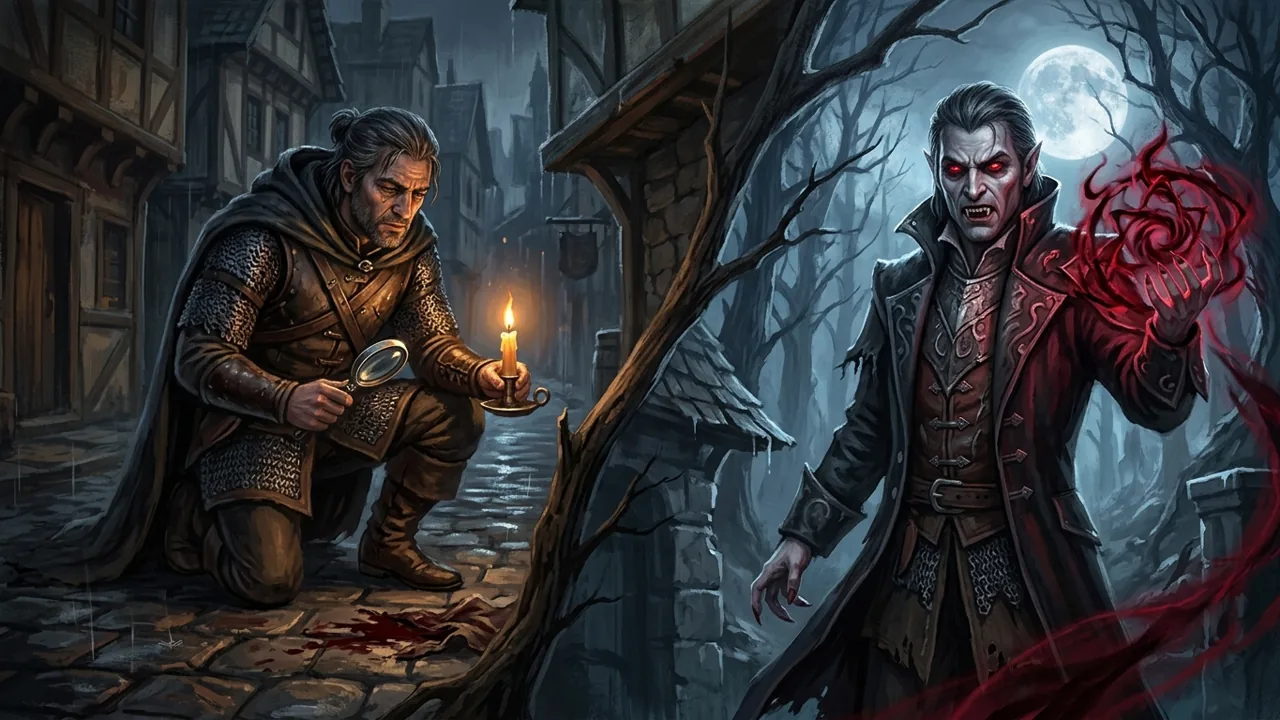
When The Blood of Dawnwalker launches on September 3, 2026, it will arrive in a highly competitive market populated by massive action RPGs. Standing out requires more than just a fresh coat of dark fantasy paint; it requires fundamental shifts in how player agency and open-world environments are handled. Recent community updates and hands-on previews have painted a remarkably clear picture of what developer Rebel Wolves aims to achieve. Instead of relying on sprawling, empty landscapes and repetitive combat loops, the studio is leaning heavily into extreme roleplaying density, highly adaptable swordplay, and a militant stance against open-world filler.
Based on the latest drops of information—ranging from official Steam community bulletins to extensive media previews—the development team is deliberately crafting an experience where your identity shifts radically based on your choices. Whether you are leaning into your human roots as a meticulous investigator or fully surrendering to a bloodthirsty curse, the early hours of the game are designed to overwhelm you with meaningful possibilities.
The Weight of the Blade: Coen’s Mercenary Heritage
Before the supernatural elements take over, the foundation of the protagonist must be firmly established. According to Community Bulletin Board #10, Coen is not a blank-slate avatar who magically knows how to fight. His life is intimately linked to the sword, a direct result of his upbringing. His father, a former mercenary, trained him from a young age to wield weapons as a matter of pure survival.
This grounded backstory is crucial for anchoring the human side of the game’s core duality. By giving Coen a legitimate martial background, the narrative justifies his capability in combat long before any vampire abilities are unlocked. It also frames his perspective on the world. As a trained mercenary, Coen approaches conflicts with a pragmatic, tactical mindset. This heritage sets the stage for the deep story and characters that populate the game, ensuring that even when the narrative pivots into paranormal low fantasy, the protagonist remains deeply tethered to gritty human realism.
Omniblocks vs. Tactical Realism: Adapting the Swordplay
Coen’s rigorous training translates directly into the gameplay mechanics. The developers are implementing a highly adaptable combat framework designed to accommodate multiple playstyles without sacrificing authenticity. The Steam update clarifies that combat in The Blood of Dawnwalker features two distinct operational modes.
For players who want a cinematic, flow-state experience, the game offers “omniblocks” and “omniattacks.” When utilizing these assists, the engine automatically determines the optimal swing directions and deflects incoming strikes based on proximity and enemy positioning. This ensures that encounters look and feel spectacular without requiring fighting-game levels of input precision.
Conversely, players who prefer a methodical, high-stakes experience can choose to fully embrace a directional, tactical approach. By observing opponents’ shoulder movements, reading incoming attacks, and manually choosing the right directional response, players can find precise openings. The developers noted that artists and designers took heavy inspiration from Historical European Martial Arts (HEMA) to make this feel authentic. While they clarify that they are not creating a one-to-one medieval combat simulator, the underlying philosophy dictates that positioning, timing, and commitment are the difference between victory and death. For a deeper look at the minds behind these systems, check out our piece on the sword master shaping combat.
The 4-Hour Crucible: Detective, Witch Lover, or Vampire?
The mechanical flexibility in combat is mirrored by an astounding level of narrative flexibility early in the campaign. A recent hands-on preview published by IGN highlighted a staggering degree of roleplaying density within just the first four hours of gameplay. The previewer noted the ability to seamlessly pivot between acting as a meticulous detective, navigating a relationship as a witch lover, and unleashing brutal violence as a vampire.
How does a vampire play detective? Expected mechanics likely tie into the game’s established day-and-night cycle. During the day, while restricted to his human form, Coen will reportedly have to rely on traditional investigative techniques. This could involve interviewing suspicious townsfolk, manually examining crime scenes, and leveraging his mercenary background to intimidate stubborn informants.
When the sun sets, the dynamic shifts entirely. Unlocking the darker aspects of the skill tree could allow players to lean into supernatural problem-solving. Combat and hex magic might be used to violently bypass locked doors, track blood scents across the valley, or extract confessions through supernatural fear.
Furthermore, the mention of becoming a “witch lover” so early in the game hints at the depth of the available romance options and faction alliances. Aligning with a coven in the opening hours suggests that social relationships are not relegated to the late game, but are immediate, impactful choices that shape how the world reacts to you.
A “Personal Vendetta” Against Open World Bloat
Open-world fatigue is a prevalent issue in modern RPGs, characterized by maps littered with meaningless collectibles, repetitive outposts, and bloated checklists. Game Director Konrad Tomaszkiewicz has publicly declared a “personal vendetta against filler content,” a design philosophy that appears to be the guiding principle for the environment of Vale Sangora.
Instead of populating the map with copy-pasted activities to artificially inflate playtime, Rebel Wolves aims to make exploration inherently meaningful. Every point of interest is reportedly designed to offer substantial narrative or mechanical rewards. “A good open world has a meaning,” Tomaszkiewicz stated in recent interviews.
This philosophy is reflected in the bizarre and highly bespoke encounters players are discovering. For example, recent gameplay footage teased interactions with a devious Pixie—or Macabre Tooth Fairy—who operates out of hidden corners of the map. Players can reportedly trade extracted enemy teeth with this entity to acquire unique treasures or even unlock time-bending abilities. These are exactly the types of handcrafted, memorable encounters that replace standard fetch quests. You can read more about these specific interactions in our breakdown of the Tooth Fairies and time-bending magic.
Embracing the Fear of Missing Out (FOMO)
Because the world is completely bespoke and avoids generic filler, the narrative can afford to be highly branching. In fact, a recent developer interview confirmed a radical stance: you are probably not going to see everything your friend does during their playthrough, and the director is perfectly fine with that.
This level of mutual exclusivity means that choosing to side with a witch coven might permanently lock you out of a questline involving a local magistrate or a rival vampire clan. If you rush to embrace the vampire curse, you might miss the subtle human interactions that a slower, detective-focused approach would yield.
In an era where many games try to let players experience 100% of the content in a single run to avoid frustrating completionists, The Blood of Dawnwalker is taking the opposite approach. The developers want your choices to have permanent, undeniable consequences. If you save a village, you might forfeit a powerful magical artifact. If you execute a target, you lose their questline forever.
For fans of heavily choice-driven narratives, this design philosophy is incredibly promising. It ensures that your version of Coen—whether he ends up as a noble mercenary, a cunning detective, or a monstrous vampire lord—is uniquely yours. As we inch closer to the September release, it is becoming clear that surviving Vale Sangora isn’t just about mastering the sword; it’s about deciding exactly who is holding it.