News
The Blood of Dawnwalker Difficulty Settings and Golden Hour Mechanics Explained
Discover how customizable difficulty levels in The Blood of Dawnwalker will impact combat, Hex magic, and the treacherous transition during the Golden Hour.
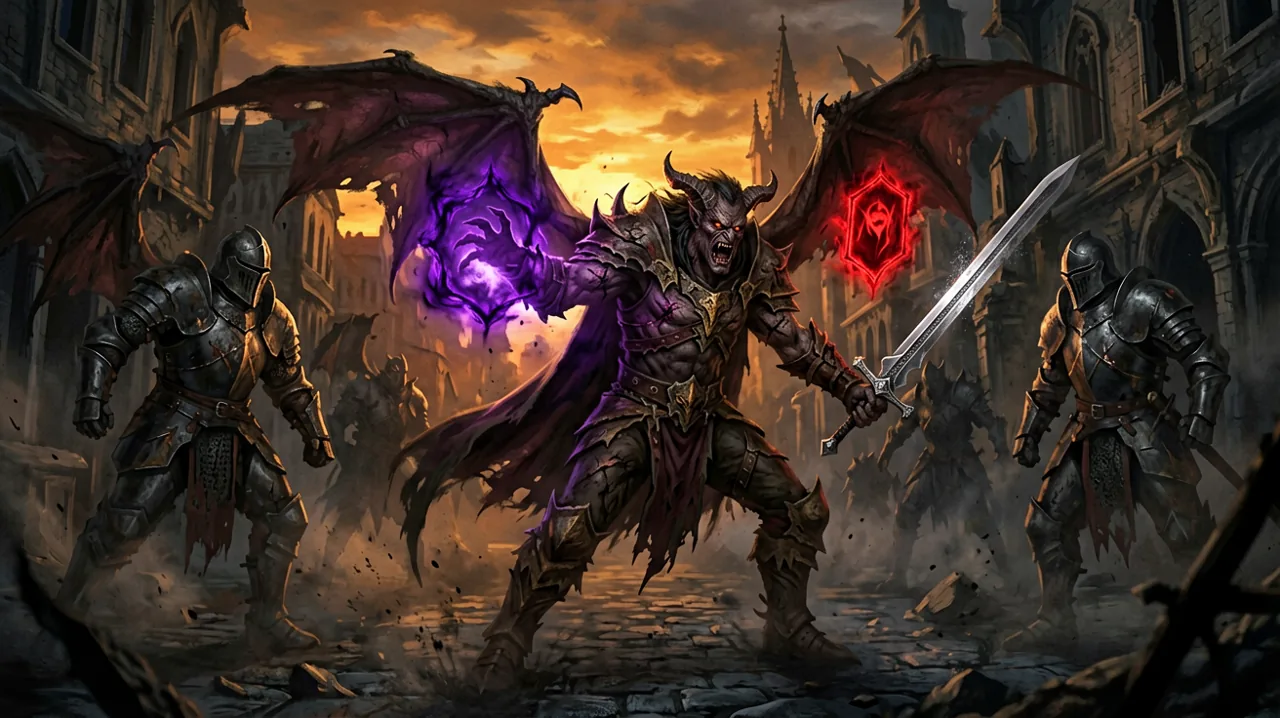
The discourse surrounding accessibility and difficulty in action role-playing games has been a persistent point of friction among gaming communities. As the September 3, 2026 release date for The Blood of Dawnwalker steadily approaches, many potential players have wondered how developer Rebel Wolves plans to balance their dark, brutal fantasy world with mechanical approachability. Recent updates from international outlets confirm a highly requested feature: players will be able to choose their own difficulty level.
Unlike some contemporary action titles that mandate a single, grueling baseline of challenge, this upcoming RPG aims to accommodate a broader audience without compromising its artistic integrity. Coupled with a newly spotted community teaser hinting at the game’s atmospheric “Golden Hour,” the picture of how daytime transitions and varying difficulty modifiers interact is becoming significantly clearer. Whether you are aiming to casually explore the intricately woven story and characters or seeking to test the absolute limits of your reflexes against relentless foes, adjusting the challenge will directly impact your survival strategy in this macabre universe.
Creative Vision Intersecting with Player Choice
According to a recent industry report, Rebel Wolves has continuously prioritized their overarching creative vision over chasing standard AAA sales metrics and homogenized design trends. Historically, studios holding tightly to a specific vision often resort to locking the difficulty, forcing players to master one intended rhythm of combat. However, Rebel Wolves appears to operate on the belief that forcing a singular, punishing difficulty metric actively deters players from engaging deeply with their complex narrative sandboxes.
Offering adjustable difficulty levels essentially guarantees that the studio’s massive efforts in writing, world-building, and branching questlines can be experienced by anyone who picks up the controller. The developers clearly want players to agonize over heavy moral decisions and shifting allegiances, rather than repeatedly dying to a standard mob encounter due to a missed parry window. By offering scalable challenge options, they can retain the oppressive, weighty atmosphere of a cursed land while keeping raw frustration at bay. The emphasis remains firmly on role-playing: your protagonist should feel exactly as vulnerable or as overpowering as you want them to be, fitting seamlessly into the context of your personal playthrough.
Breaking Down the Expected Difficulty Tiers
While the official nomenclature for the difficulty settings remains unconfirmed by Rebel Wolves, industry standards and the development team’s pedigree strongly point toward a robust, multi-tiered approach, potentially supported by granular custom sliders.
- Narrative Mode (Expected): For players who prefer the role of a heavily-armed tourist, this baseline will reportedly weaken enemy damage output significantly and drastically widen parry execution windows. It ensures that those who primarily care about the lore, the dialogue choices, and the multiple endings can experience the journey without severe roadblocks.
- Standard Challenge (Expected): The default balance where resource scarcity and enemy aggression are specifically tuned to provide regular spikes in tension. You will need to maintain a baseline understanding of the core gameplay systems and keep your gear updated to survive the mid-to-late game zones.
- Hardcore Mode (Expected): Tailored for action-game veterans, this tier will reportedly demand flawless execution. Enemies will likely coordinate their attacks, punish poor spatial positioning, and exploit your elemental weaknesses. You can expect healing items to be incredibly scarce, meaning every single point of damage taken is a severe long-term penalty that carries over between fights.
- Custom Parameters (Reportedly): Given the modern push for thorough accessibility, we also expect sliders that control specific combat parameters independent of the global difficulty setting. Players might be able to separately tweak enemy health pools, protagonist stamina regeneration rates, or the severity of the game’s daytime debuffs. Adjusting these parameters allows players to optimize the game exactly to their liking without resorting to external PC mods.
Additionally, community speculation suggests that difficulty may impact the saving system. On the hardest expected settings, saving your progress might require spending rare resources or reaching designated safe havens, rather than allowing quick-saves anywhere on the map.
The Impact on Combat and Hex Magic Integration
Difficulty settings in The Blood of Dawnwalker are not just about modifying numerical values to make enemies absorb more hits. They are expected to fundamentally alter how you must approach every single physical engagement. As you increase the challenge, relying exclusively on basic sword swings will reportedly lead to very quick deaths. You must fluidly integrate Hex magic into your offensive and defensive rotations.
Higher difficulty levels traditionally rewrite enemy artificial intelligence behavior, and early impressions indicate this game will be no exception. Instead of politely waiting their turn to strike, hostile factions might flank you aggressively, utilize environmental hazards to block your escape routes, and intentionally interrupt your spellcasting animations. Your reliance on carefully optimized skill trees will become absolute. A poorly constructed hybrid build might suffice on the narrative setting, but on harder modes, picking the wrong passive buff or failing to manage your internal cooldowns could render a boss encounter mathematically impossible to survive.
Furthermore, managing your supernatural abilities takes on new, terrifying weight. Casting powerful hexes drains your resources, and on brutal difficulties, replenishing those reserves could require executing risky, close-quarters takedowns while exposed to enemy fire. The delicate balance of risk and reward scales directly with your chosen setting, forcing you to constantly adapt your strategy based on the immediate threats present in your environment.
The Golden Hour: Day/Night Dynamics and Tactical Windows
A fascinating piece of the mechanical puzzle surfaced recently when a prominent community content creator, Kazuliski, shared discussions regarding the game’s “Golden Hour.” In real-world photography, the golden hour occurs just after sunrise and right before sunset—a transitional period known for stunning, warm lighting and long shadows. In The Blood of Dawnwalker, this temporal window reportedly holds immense mechanical weight and directly intersects with the difficulty scaling.
Given the protagonist’s dual nature as a human by day and a predatory creature by night, the transition periods of dusk and dawn are highly volatile. Community reports suggest the Golden Hour acts as a tactical buffer zone that you must learn to exploit. During dusk, your vampire form might gradually begin to assert dominance, providing early access to nighttime stat buffs and heightened senses before the sun fully vanishes below the horizon. Conversely, dawn might trigger severe, stacking debuffs as the first rays of sunlight threaten to scorch your flesh.
How difficulty settings interact with the Golden Hour will be crucial to your survival. On lower settings, getting caught outside during a sunrise might merely result in a slight stamina regeneration penalty or a blurred screen effect. However, on the highest expected difficulty, it could mean catastrophic damage over time, turning every early morning into a frantic, desperate sprint for underground shelter. Navigating the treacherous geography of Vale Sangora will require meticulous time management, making your awareness of the in-game clock just as important as the sharpness of your drawn sword.
Consequences in the Open World and the Infamy System
Your selected challenge level will reportedly bleed heavily into the game’s non-combat systems as well. The highly anticipated Infamy system tracks your notoriety, public behavior, and violent actions among the general populace and local law enforcement factions.
If you are playing on a harder difficulty, town guards might become suspicious of your presence much faster, and the threshold for being actively hunted by specialized vampire-killing inquisitors could be significantly lowered. This means that a seemingly minor infraction—such as feeding on an isolated civilian in a dark alleyway—could quickly escalate into a city-wide manhunt that you simply cannot fight your way out of.
Furthermore, the game’s economy will likely shift. Vendors may charge exorbitant prices for blood vials, weapon repairs, and crafting components, forcing you to think twice before engaging in unnecessary skirmishes. The increased difficulty ultimately forces a heavier reliance on stealth, passing difficult dialogue checks, and careful geographic planning over sheer brute force.
Final Thoughts Before Launch
Rebel Wolves is undoubtedly crafting a highly ambitious and layered RPG, but their commitment to letting everyone choose their difficulty level demonstrates a deep respect for their audience’s varied preferences and physical capabilities. Whether you want to quietly enjoy the intricate political plots undisturbed, or suffer through grueling, desperate battles during the fading light of the Golden Hour, The Blood of Dawnwalker appears ready to accommodate your playstyle. As we count down the final days to September 3, 2026, preparing your mind—and brushing up on your parry reflexes—for the trials ahead is the best course of action.