News
The Blood of Dawnwalker Review Embargo Set for August 31, Plus Steam Deck Performance Concerns
With the review embargo dropping days before launch and upscaling now heavily recommended for PC, here is what to expect from the technical side of Rebel Wolves' upcoming RPG.
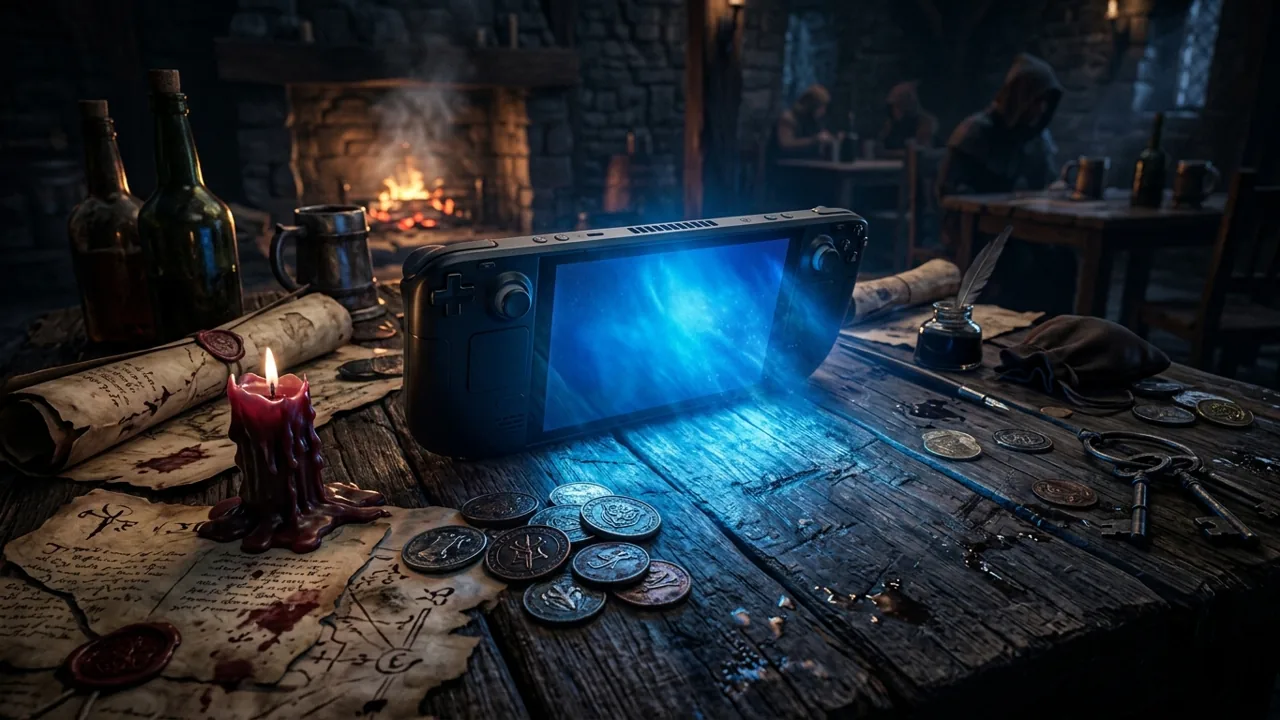
With September right around the corner, the marketing cycle for The Blood of Dawnwalker is shifting from narrative teasers to the hard technical realities of getting a modern AAA game to run on your hardware. Rebel Wolves has maintained a steady drip of information regarding their dark fantasy RPG, and the latest batch of updates clarifies exactly when we will hear the final verdict from critics, alongside some crucial adjustments to the system requirements.
If you have been holding off on pre-ordering until the reviews drop, you will not have to wait until launch day to make a decision. The review embargo for The Blood of Dawnwalker reportedly lifts on August 31 at 5:00 PM CEST. Furthermore, new reports have shed light on the final PC specifications, the game’s surprisingly modest storage footprint, and why handheld enthusiasts might want to temper their expectations.
Here is a breakdown of the latest technical and launch-related developments.
The Review Embargo Lifts Days Before Launch
It is always a reliable indicator of a studio’s internal confidence when they lift a review embargo well ahead of the public release date. According to recent posts circulating on the official community subreddits, the review embargo for The Blood of Dawnwalker is set to expire on August 31 at 5:00 PM CEST. For players in North America, that translates to 11:00 AM Eastern Time or 8:00 AM Pacific Time.
This timing gives prospective buyers a full weekend to digest the critical consensus before the global rollout begins. In an industry where publishers frequently hold reviews until the exact minute a game unlocks—often to mask severe performance issues or underwhelming gameplay loops—giving critics the floor a few days early is a highly welcome move. It suggests that Rebel Wolves is comfortable letting the game’s quality speak for itself.
Players should expect a flood of content hitting the web that Monday. Reviews will likely cover everything from the branching narrative paths to the intricacies of the combat and hex magic. We also anticipate deeper analyses of the game’s bold structural choices, particularly the confirmed ability to bypass huge chunks of the story and engage the final boss immediately after the prologue. Giving critics time to test these non-traditional mechanics ensures that the reviews will act as actual evaluations of the game’s sandbox nature.
If you want to avoid spoilers, August 31 is the day you should start muting related keywords on social media. While major plot points and late-game twists are usually protected by embargo guidelines, specific details about the game’s multiple epilogues and late-game environments will inevitably leak into the public conversation as soon as the embargo drops.
Upscaling is the New Normal for PC Players
Perhaps the most heavily debated piece of news this week revolves around the final PC system requirements. While earlier estimations suggested a relatively high barrier to entry, the finalized specs revealed by Rebel Wolves are technically lower on paper. However, there is a massive caveat attached to these numbers: the developers are now explicitly recommending the use of upscaling technologies to achieve playable frame rates.
Reports from outlets like VideoCardz confirm that features like Nvidia DLSS, AMD FSR, and Intel XeSS are not just optional extras for those chasing 4K resolutions; they are factored into the baseline performance targets. For example, hitting 60fps on the recommended hardware tier seemingly relies on having an upscaler enabled on the ‘Balanced’ or ‘Performance’ preset.
This development feeds into a growing frustration among the PC gaming community. A vocal segment of players feels that studios are increasingly using AI upscaling as a crutch to bypass traditional optimization. Instead of rendering the game natively at the target resolution, engines are rendering at significantly lower pixel counts and letting the algorithm fill in the blanks. While this tech works wonders at higher resolutions, relying on it at 1080p can result in a muddy, artifact-heavy image—especially in a visually dense game filled with the dark, atmospheric environments of Vale Sangora.
For those planning to play on mid-range rigs, this means you will likely need to spend some time in the settings menu finding the right balance between image clarity and framerate fluidity. If you absolutely refuse to use upscalers, be prepared to dial down volumetric lighting, shadow quality, and foliage density to maintain a stable experience. We have updated our PC system requirements analysis to reflect these new baselines, but the true test will come when technical outlets get their hands on the final code.
Steam Deck Compatibility: A Tough Road Ahead
The reliance on upscaling technology brings us directly to the next major concern: handheld performance. With the massive popularity of the Steam Deck, Asus ROG Ally, and Lenovo Legion Go, a significant portion of the audience wants to know if they can take their vampire hunting on the commute.
According to preliminary reports from Steam Deck HQ, running The Blood of Dawnwalker on Valve’s portable machine is going to be a heavy struggle. The Steam Deck relies on older RDNA 2 architecture and a very specific power envelope. If a game already demands FSR to run adequately on a standard desktop GPU, scaling that demand down to a 15W APU usually results in a deeply compromised visual experience.
When you run an upscaler like FSR 2 or FSR 3 on the Steam Deck’s native 800p screen, the internal rendering resolution drops incredibly low—often down to 540p or worse. At those resolutions, upscalers simply lack the necessary pixel data to reconstruct a clean image, leading to a shimmering, blurry mess, particularly on fine details like hair, chainmail, or distant foliage. Given the intricate gothic architecture and dark lighting that defines the story, setting, and characters, a blurry image could severely impact readability and combat responsiveness.
We do not expect The Blood of Dawnwalker to launch with a “Steam Deck Verified” badge. It will likely fall into the “Playable” category, with heavy caveats regarding small text sizes, battery drain, and unstable framerates. If you intend to play primarily on a handheld device, we strongly advise waiting for dedicated performance benchmarks before purchasing. Streaming the game from your main PC or a PS5 via Remote Play might end up being the only viable way to enjoy the experience from the couch.
A Lean 50GB Footprint
Amidst the debates over hardware optimization, there is one piece of unalloyed good news: the file size. In an era where AAA titles routinely demand well over 100GB of SSD space, The Blood of Dawnwalker is notably bucking the trend. According to an Instant Gaming News report covering the PlayStation 5 version, the game will require approximately 50GB of storage.
This smaller footprint is a direct reflection of Rebel Wolves’ design philosophy. The studio has repeatedly emphasized that they are building a dense, highly reactive world rather than a sprawling, empty continent. By focusing the map design and limiting the sheer volume of bloated, repetitive assets, they have kept the game’s file size entirely reasonable. It perfectly aligns with the reports that the map is smaller than genre contemporaries, aiming to cure the open-world fatigue that has plagued recent releases.
A 50GB download also means that preloading the game won’t monopolize your internet bandwidth for an entire day. It is a refreshing change of pace and a testament to efficient asset management. We expect the Xbox Series X/S and PC versions to hover around a similar size, though high-resolution texture packs on PC could push that number slightly higher.
Final Preparations
As the August 31 embargo approaches, the complete picture of what The Blood of Dawnwalker will actually be is finally coming into focus. It is clearly a game making bold structural choices, from its 30-day time limits to its willingness to let players skip content and fail drastically. But on the technical side, it is also a very modern release—warts and all—heavily dependent on the latest rendering techniques to deliver its visual ambition.
Whether your rig is ready for the demands of the dark fantasy world or you are frantically trying to clear space on your console’s hard drive, the final countdown has absolutely begun. Make sure you understand the differences between the various editions before locking in your purchase, as outlined in our release date, platforms, and editions guide, and stay tuned for our comprehensive review coverage as soon as the embargo drops.