News
The Blood of Dawnwalker: 60-Hour Trophies, UE5 Performance, and Why Combat Divides Critics
With a Metacritic score of 83, The Blood of Dawnwalker delivers Witcher-tier storytelling but flawed combat. We analyze the leaked 60-hour trophies, 14th-century plague lore, and UE5 stability.
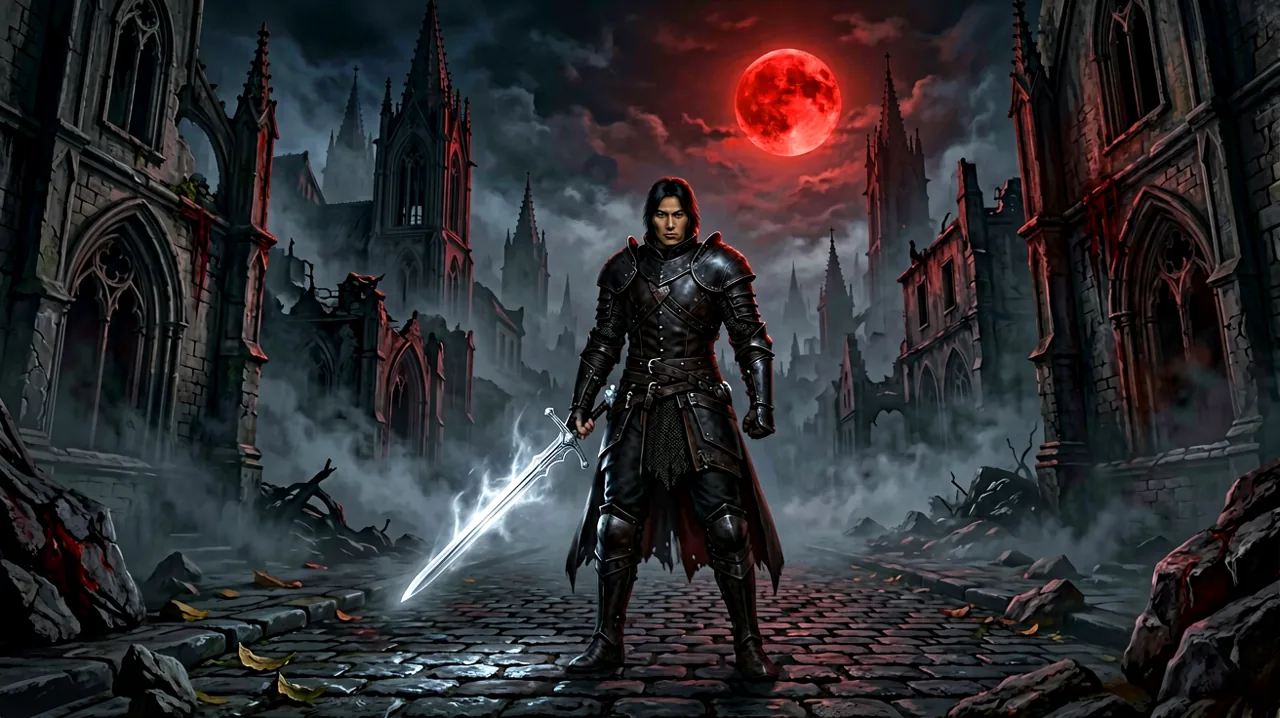
The wait is nearly over. Rebel Wolves’ debut RPG, The Blood of Dawnwalker, officially launches on September 3, 2026. After years of anticipation, cinematic trailers, and developer diaries promising a revolution in dark fantasy storytelling, the review embargo has finally lifted. Sitting at a comfortable 83 on Metacritic, the game is already cementing itself as a polarizing yet fascinating addition to the genre. Critics are universally praising its narrative depth and oppressive atmosphere, drawing heavy comparisons to The Witcher 3, while simultaneously tearing into its combat mechanics and open-world execution.
For players still sitting on the fence, the sudden influx of reviews, coupled with a handful of last-minute community leaks regarding the game’s trophy list and expected completion time, provides a much clearer picture of what to actually expect. Whether you are wondering if the AAA price tag is justified for a debut studio, or if your PC will survive another Unreal Engine 5 release, we have broken down the final pre-launch consensus so you know exactly what you are paying for.
Vale Sangora, The 14th-Century Plague, and Macabre Lore
While early cinematic trailers hinted at a profoundly grim setting, the latest reviews have solidified the exact historical and atmospheric context of the game. As detailed by a RadioTimes review, The Blood of Dawnwalker is explicitly set in the 14th century at the absolute height of a devastating plague. This is not just background dressing; the plague actively shapes the environment, the economy, and the misery of Vale Sangora, contributing to the pervasive sense of dread that critics are highly praising.
The narrative drops players directly into the chaotic aftermath of a “short-lived but disastrous uprising.” Val Sangora has been completely taken over by the vrakhiri, a ruling class of vampires that treats the remaining humanity as little more than livestock and collateral damage. Coen, the protagonist, operates in this violently unstable political climate, balancing his own monstrous nature against the desperation of the human survivors.
Reviewers have highlighted that Rebel Wolves crafted a masterclass in dark fantasy design that values restraint and atmosphere over mindless, sprawling scale. You are not meant to feel like a traditional superhero saving the world; you are a struggling outcast trying to survive a cursed land. The environmental storytelling reportedly leans heavily into the macabre, with the plague victims and the oppressive vampire overlords creating a stark, horrifying contrast. If you were hoping for a rich, uncompromising lore experience, the critical consensus indicates that the writing team—many of whom are veterans of CD Projekt Red—has entirely delivered on their ambitious promises. You can explore more about the cast in our story and characters overview.
Storytelling Triumphs vs. Mechanical Missteps
The most consistent throughline across almost every published review is a sharp division between the game’s writing and its moment-to-moment gameplay. On the narrative front, publications are openly comparing the quest design, moral dilemmas, and character interactions to the golden standard of The Witcher 3. Players can expect complex branching dialogues, morally gray decisions, and compelling companion arcs that make the world feel incredibly alive and reactive.
However, the combat system is taking a significant beating in the press. MSN and Tom’s Guide describe the mechanics as “wonky,” “held back by mechanical missteps,” and feeling “brilliant one minute and broken the next.” For a game that pitched an ambitious directional sword-swinging system alongside blood-fueled hex magic, the execution seems to lack the polish expected of a top-tier action RPG. Reviews suggest that hits often lack physical impact, enemy lock-on can be frustrating during large encounters, and the general flow of combat feels stiff compared to modern action contemporaries.
Beyond the swordplay, the highly publicized 30-day time limit—designed to solve open-world bloat by forcing players to prioritize quests—is receiving heavily mixed reactions. While some critics feel it successfully adds a layer of anxiety and urgency to the campaign, outlets like GameRant argue that there is a “catch.” It apparently struggles to balance the inherent freedom of exploration with the ticking clock, sometimes rushing players past interesting side content or causing a level of stress that detracts from the immersion. We previously discussed the mechanics of this clock in our 30-day time limit explanation, and it seems players will need to carefully manage their schedules to avoid missing out on crucial storylines.
The 60-Hour Platinum and the AAA Price Debate
As the reviews poured in, the community over on Reddit uncovered the official PlayStation trophy list, providing a much-needed benchmark for the game’s actual length. According to early estimates from completionists who received review copies, obtaining the Platinum trophy will take roughly 60 hours. This involves completing the main story, finishing a significant chunk of side quests, and fulfilling specific combat and exploration criteria.
For a tightly focused, narrative-heavy RPG, 60 hours is a highly respectable length. It aligns perfectly with Rebel Wolves’ stated goal of providing a more meaningful sandbox rather than a bloated map filled with endless fetch quests. You can read more about standard playthrough expectations in our how long to beat guide.
However, this revealed length has sparked a fierce debate across PC and console communities regarding the game’s pricing. The Blood of Dawnwalker is launching at standard AAA pricing—$70 USD, £70, and up to $94 CAD or ₹3,999 in regional markets. Some vocal players argue that charging a premium price for a debut game from an independent studio is difficult to justify, especially when the combat is admittedly flawed. In community forums, gamers pointed out that with the rising cost of living and the expense of modern PC hardware required to run these games, asking $94 CAD for a 60-hour experience with clunky combat feels steep. Comparisons have been inevitably drawn to other massive RPGs that offer 100+ hours of polished content for the same or less money.
Conversely, others defend the price, noting that a curated 60-hour experience with zero microtransactions, a complete story on the disc, and high-quality writing is exactly what the industry needs right now. If you value deep role-playing and consequential choices over endless grinding, the price of admission appears justified.
Avoiding the Unreal Engine 5 Pitfalls
Perhaps the biggest and most pleasant surprise from the review roundup is the game’s technical stability. Unreal Engine 5 has gained a notorious reputation over the last couple of years for severe stuttering, poor optimization, and crippling hardware demands on PC, leading to a string of disappointing high-profile launches.
According to a hands-on technical report from IGN, The Blood of Dawnwalker has miraculously managed to avoid the classic UE5 pitfalls. Reviewers playing on PC have reported smooth framerates, minimal shader compilation stutter, and gorgeous visual fidelity that makes the plague-ridden streets and gothic architecture of Vale Sangora look stunningly bleak. It is a massive relief to see a modern release that does not rely entirely on aggressive AI upscaling just to reach a baseline playable framerate.
Console players also have plenty of reason to celebrate. Despite early fears that the heavy dynamic lighting and dense environments would force a 30fps cap, the developers successfully implemented a confirmed 60FPS performance mode for both the PlayStation 5 and Xbox Series X. While you might still encounter the occasional bug or physics glitch—standard fare for large-scale open-world games—the core technical foundation seems robust and stable.
If you are planning to play on PC, make sure your rig is prepared by checking our PC system requirements guide. The hardware demands are reasonable, but pushing the game to 4K resolution with maximum ray-tracing settings will still require a high-end GPU.
Final Verdict for Day One Buyers
With just one day left until the global rollout, the picture of The Blood of Dawnwalker is complete. It is not the flawless, genre-defining masterpiece that marketing hype might have promised, but it is a remarkably atmospheric, ambitious RPG that excels where it matters most for storytelling fans.
If you demand razor-sharp, flawless combat and endless hundreds of hours of map-clearing, you might want to hold off for a sale or wait for future performance patches to address the mechanical missteps. But if you are hungry for a dark, consequential narrative filled with vicious vampires, a beautifully grim 14th-century world, and characters that rival the best of the genre, Coen’s journey is shaping up to be a compelling, if slightly jagged, adventure.
The game officially launches on September 3. Be sure to check your regional release times so you can step into the shadows the moment the gates open.