News
The Blood of Dawnwalker Sequel Might Drop the Time Limit, Director Says
Rebel Wolves addresses the controversial time restriction in The Blood of Dawnwalker. Plus, community map tools and directional parry meta.
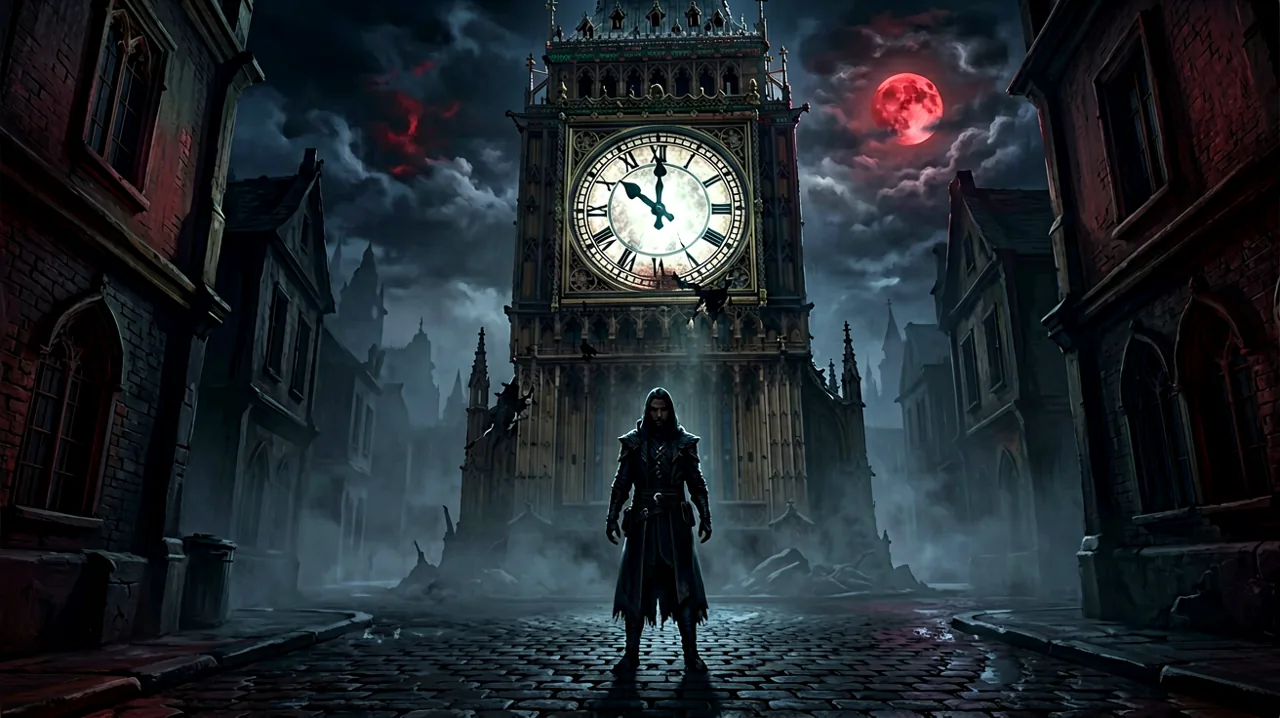
Two weeks after its highly anticipated launch, Rebel Wolves’ dark fantasy RPG continues to dominate the discourse. While millions of players are currently navigating the plague-ridden streets of Svartrau, the studio is already addressing feedback that could shape the future of the franchise. The brutal pacing, uncompromising combat mechanics, and high-stakes narrative choices have solidified the game’s reputation, but not without significant debate across the community.
From official comments regarding the controversial time limit structure to impressive player-engineered mapping tools, the ecosystem surrounding the game is rapidly evolving.
The Sequel Won’t Necessarily Force You Onto a Clock
The ticking clock hanging over the protagonist’s head is arguably the most polarizing feature of the campaign. Tying exploration and quest progression to a strict 30-day countdown fits perfectly with the narrative urgency of the Black Death and the protagonist’s own silver poisoning. It forces players to make agonizing decisions about who to save, which factions to support, and which corners of the map to ignore entirely.
However, this design philosophy has sharply divided the player base. Many RPG veterans praise the tension it creates, while others express frustration over the inability to casually explore the meticulously crafted world without impending doom.
According to recent statements from the game director, this mechanic is reportedly under consideration for removal—or at least a massive overhaul—in future installments. While the sequel is already in development, the director confirmed that the controversial time mechanic won’t necessarily be a staple of the franchise moving forward. Rebel Wolves is closely monitoring player completion rates and feedback.
This suggests a potential pivot toward a more traditional open-world pacing for the next chapter. A shift away from the countdown timer wouldn’t mean abandoning consequence-driven design, but it would alleviate the constant pressure that currently pushes players to rush through critical dialogue and skip intricate side content.
Community Innovations: The Ultimate Vale Sangora Map
For those currently struggling with the vanilla experience, the community has stepped up to mitigate the time crunch. A dedicated player has engineered a complete, interactive companion app that fundamentally changes how exploration is handled.
The tool provides an exhaustive overlay of Vale Sangora, documenting every chest, herb spawn, and point of interest. What makes it particularly valuable for the current meta is the inclusion of all 54 merchants across the map. The app tracks their specific inventory and dynamic pricing, completely eliminating the time wasted running between vendors to compare gear costs.
Furthermore, the companion app features a live tracking mode for dual-monitor setups or overlays, automatically removing herbs from the map once they are picked and sorting enemy spawn areas according to the in-game bestiary. By streamlining the logistics of survival, this tool allows players to maximize their limited 30 in-game days, turning a frantic scramble into a calculated tactical deployment.
Redefining Hardcore Combat: The Directional Parry
While the narrative pacing is under scrutiny, the combat system is receiving high praise from action purists. The discourse within hardcore gaming circles—particularly the soulslikes community—is currently fixated on the game’s directional parrying mechanics.
Standard action RPGs typically require players to memorize timing windows. Rebel Wolves took this a step further by implementing a system that requires reading the exact spatial angle of an incoming strike. Deflecting a swift combo from an elite Vrakhiri officer doesn’t just mean tapping the block button; players must actively match the direction of the assault. An overhead cleave requires an upward deflection, while a sweeping halberd demands lateral positioning.
Community-reported speculation is already suggesting that this spatial requirement could become a new standard for the genre. Players are comparing the posture and deflection flow to older precision-based action games, but noting that the directional requirement forces a much higher level of visual awareness. Instead of relying on muscle memory for timing, players must constantly observe enemy shoulder movements and footwork, bridging the gap between traditional action-RPG combat and fighting game mechanics.
High-Stakes Decisions: Vicho, Farkas, and the Family
Navigating the murky politics of Svartrau requires more than just sharp reflexes; the mid-to-late game sidequests are proving to be exceptionally ruthless. The studio has designed scenarios where the “right” moral choice often yields terrible gameplay consequences, and vice versa.
A prime example currently trending across strategy forums is Vicho’s questline. Keeping Vicho alive requires meticulous planning and a deep understanding of the underground faction dynamics. A single misread dialogue prompt or a delayed intervention will result in his permanent death, locking players out of specific vendor inventories and late-game backup during the final siege.
Similarly, “The Ring” quest involving Farkas presents a agonizing dilemma. Farkas tasks you with recovering his lost family heirloom—a unique amethyst ring. Returning it to him provides a modest reputation boost and some narrative closure. However, keeping the ring for yourself grants exceptional stat bonuses that are highly sought after for specific legendary builds. The game forces you to choose between roleplaying an honorable mercenary or prioritizing raw mechanical advantage.
These micro-decisions feed into the overarching quest to protect the protagonist’s family. Finding the optimal route to save your loved ones while dealing with Brencis and the plague requires carefully balancing your infamy and resources. Brencis is a fascinating antagonist; while his methods involving the Church are brutal, players are realizing that killing him might actually drag the city into worse chaos, leaving the region utterly defenseless against the Black Death.
Controller Quirks and PC Optimization
On the technical front, players are continuing to refine the hardware experience. Steam Deck users have identified a frustrating quirk regarding the left joystick’s reverse deadzone. Due to hardware calibration, pointing the stick to the upper-left can occasionally register below the 100% threshold, instantly killing the running animation and forcing the character into a slow walk. Community workarounds involving custom Steam Input deadzone curves are currently the best way to maintain momentum during intense combat encounters.
For PC players, optimization discussions are centered around mid-range hardware. Extensive benchmarking confirms that pairing an RTX 3060 with a Ryzen 5 3600X can achieve stable frame rates at 1440p, provided players aggressively utilize DLSS and frame generation mods. Ensuring fluid performance is strictly necessary, as any frame drops during a multi-enemy encounter will completely ruin the tight timing required for the aforementioned directional parries.