News
The Blood of Dawnwalker Post-Credits Scene Explained: The Vrakhiri Cycle Theory
Analyzing the community's 'Creator Kills Creator' theory in The Blood of Dawnwalker. We break down the post-credits scene and the Vrakhiri lineage secrets.
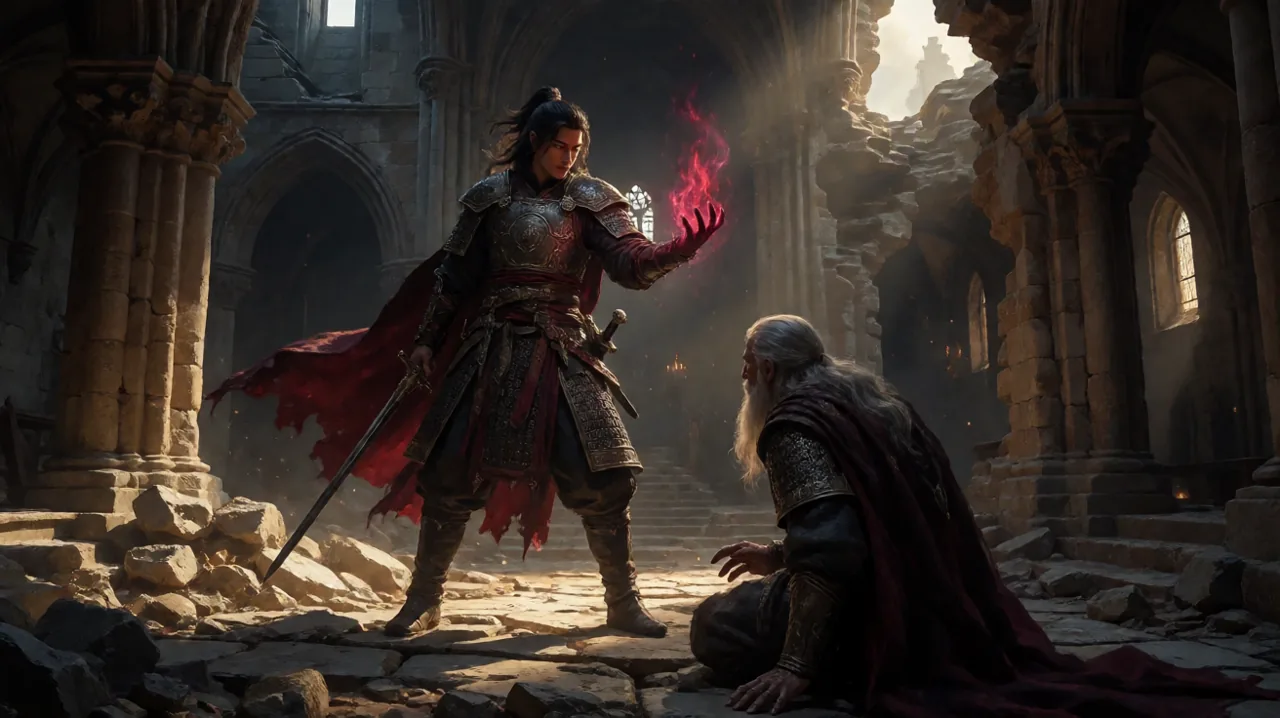
The dust has finally settled on the launch of Rebel Wolves’ highly anticipated debut RPG, and a significant portion of the player base is now reaching the finish line. While the initial discourse surrounding The Blood of Dawnwalker was heavily focused on optimized builds, performance metrics, and surviving the early-game difficulty spikes, the conversation has recently shifted toward something much darker. Players navigating the endgame are uncovering a labyrinth of hidden lore, culminating in a post-credits scene that recontextualizes the entire narrative structure of the game.
Over on the game’s subreddit, lore enthusiasts have begun piecing together a massive narrative framework involving the Vrakhiri lineage. Dubbed the “Creator Kills Creator” cycle, this community theory suggests that the tragic fates of the game’s most powerful vampires are not isolated incidents born of circumstance, but part of a repeating, inescapable generational curse. Today, we are examining the evidence behind this community theory, what it means for Coen’s overarching journey, and how it might actively shape the future of the franchise.
The Evolution of the Clock and the Mechanics of Discovery
Before analyzing the endgame spoilers, it is crucial to understand how players are even managing to uncover these obscure historical fragments in the first place. Finding the buried memories of ancient vampires requires significant exploration across the map, something that inherently conflicts with the game’s ticking clock. Balancing your daytime human activities with your nighttime vampire form demands meticulous planning, and venturing off the beaten path usually costs precious hours.
However, a recent report from Rock Paper Shotgun revealed that the notorious 30-day time limit was originally designed to be much harsher. According to the outlet, intense pre-release complaints prompted Rebel Wolves to significantly soften the timer mechanic right before launch. This adjustment is largely the reason why the community currently has the breathing room to truly explore the intricate map of Vale Sangora, discovering the hidden texts and environmental storytelling that make complex theories like this one possible.
Furthermore, the community has heavily praised the game’s unique approach to failure. As discussed extensively on the game’s subreddit, running out of time on a specific quest objective does not result in a traditional “Game Over” screen requiring a reload. Instead, the game utilizes a robust “fail forward” mechanic. The story simply continues, forcing you to live with the permanent consequences of your missed opportunities. This design choice means that every individual player’s understanding of the lore is fragmented based on their successes and failures, requiring the community to pool their findings together to see the bigger historical picture.
The First Link in the Chain: Isbrand and Brencis
To fully grasp the “Creator Kills Creator” theory, we have to look back at the origins of the Vrakhiri curse. During the Lakra questline, players who invest the time to explore can experience interactive memories detailing the relationship between two ancient figures: Isbrand and Brencis.
According to the lore pieces uncovered by the community, Isbrand was a formidable original progenitor who defeated a human Brencis and forcibly turned him into a Vrakhiri. This violent act established the very first “Creator” and “Creation” dynamic in the game’s known history. Isbrand attempted to mold Brencis into a ruthless, emotionless immortal, demanding that he entirely abandon all ties to his former human life and morality. Brencis, however, actively resisted this philosophy, holding onto the remnants of his humanity despite the monstrous nature of his new existence.
The ideological tension between the two eventually reached a boiling point. The community-reported memories show that Brencis eventually staged a massive rebellion against his master. Against all odds, he successfully defeated Isbrand and left him eternally imprisoned. This act—a creation violently overthrowing its creator to assert its own autonomy—established a dark, bloody precedent for the Vrakhiri bloodline. It was a precedent that would lie dormant for centuries until the wheel of time was ready to turn once more.
History Repeats Itself: Brencis and Coen
This historical context brings us directly to the events leading up to the main campaign of The Blood of Dawnwalker. Centuries after imprisoning Isbrand, Brencis assumes the role of the creator, passing the vampiric curse onto the game’s protagonist, Coen.
The tragic irony, heavily discussed by lore enthusiasts analyzing the story and characters, is that Brencis ends up repeating the exact same mistakes as his former master. Despite despising Isbrand’s tyrannical methods, Brencis tries to exert complete, suffocating control over Coen. The ideological clash between the two is remarkably similar to the ancient conflict that birthed their lineage.
The game’s core mechanic—the dual nature of playing as a human during the day and a vampire at night—perfectly mirrors this internal and external struggle. Coen is constantly fighting for autonomy, not just against the feral beast within his own mind, but against the expectations and commands of his sire. As detailed in our guide on breaking Brencis and deciding Ocha’s fate, this mounting tension inevitably leads to a massive confrontation.
Coen’s combat style itself reflects this rebellion. While Brencis relies on ancient, traditional vampiric strength, players have the freedom to spec Coen into entirely different skill trees. Whether you lean into heavy combat and hex magic, aggressive swordplay, or a hybrid build focusing on the daytime human form, every progression choice feels like a rejection of Brencis’s original design. Coen is not just fighting his creator narratively; players are actively building a character that mechanically defies the old ways. Following in the exact footsteps of his creator, Coen is forced to turn against Brencis. The cycle repeats flawlessly: the creation overthrows the creator.
The Cost of Rebellion and Unintended Consequences
This overarching theme of betrayal and tragic consequence is not merely reserved for the main antagonist storyline; it permeates the entire structure of the game. Rebel Wolves engineered a gritty world in Vale Sangora where power dynamics constantly shift and loyalty is incredibly fragile.
A recent editorial from GamesRadar+ highlighted just how easily these carefully maintained relationships can fall apart. The writer recounted how a series of poor dialogue choices and failed skill checks resulted in permanently losing a vital ally and, through a shocking chain of events, accidentally sending another beloved character straight to hell. The game does not pull its punches, and the “fail forward” system ensures you cannot easily undo these mistakes.
When you combine this brutal consequence system with the overarching narrative theme of generational betrayal, it becomes abundantly clear that The Blood of Dawnwalker is fundamentally a story about the inescapable gravity of one’s actions. Escaping the shadow of your creator is only half the battle; surviving the emotional and physical fallout of that rebellion is where the real game begins.
The Post-Credits Reveal: A New Generation
This brings the community’s investigation to the highly debated post-credits scene. For players who manage to navigate the branching paths, manage their time efficiently, and reach the true ending, a brief cinematic reportedly plays after the credits roll. (Be warned, heavy thematic spoilers follow for those who haven’t finished the campaign).
The scene reportedly shifts focus to Coen’s son. While very brief, it firmly establishes that Coen’s legacy is far from over. This single cinematic is where the Reddit community’s theory kicks into high gear. If the established historical pattern holds true—Isbrand created Brencis and was destroyed by him, Brencis created Coen and was defeated by him—what does this mean for Coen now that he is the patriarch figure of the bloodline?
According to the theory, Coen is now occupying the dangerous “Creator” slot in the cycle. This strongly implies that his son is destined by the curse of their lineage to eventually turn against him. Will Coen succumb to the same paranoia and try to control his son, just as Brencis tried to control him? Or will he recognize the generational pattern and attempt to break the cycle through different means?
What This Means for The Sequel
We already know that a sequel is reportedly in the early stages of development following the game’s massive commercial success. The deliberate inclusion of this post-credits scene strongly suggests that Rebel Wolves has a sprawling, multi-game narrative arc planned, potentially shifting the focus to a completely new protagonist.
Community speculation is currently running wild regarding how this will be handled. Some players expect the expected sequel to put us directly in the shoes of Coen’s son, forcing players to navigate a dark world shaped entirely by Coen’s endgame choices from the first game. Others believe we will continue playing as Coen, actively fighting against this generational curse to prevent his own son from betraying him, perhaps seeking a permanent cure for the Vrakhiri condition. As seen in discussions regarding the multiple epilogues, the sheer number of branching paths makes transferring save data a monumental narrative task for the developers.
It is important to note that all of this remains firmly in the realm of community speculation. Rebel Wolves has not officially confirmed any story details for the sequel, nor have they verified the accuracy of the “Creator Kills Creator” theory. However, given the studio’s pedigree in crafting intricate, choice-driven narratives, it is hard to view the distinct thematic parallels between Isbrand, Brencis, and Coen as mere coincidence.
Whether you are currently stressing over the nerfed time limit, mourning an ally you accidentally doomed, or experimenting with new builds and skill trees, the lore of Vale Sangora clearly demands closer inspection. As more players inevitably finish the game and share their fragmented findings online, we expect even more layers of this dark fantasy epic to be peeled back.